Ingatlan
Wekerle+: new and existing home prices may diverge in 2027
MBH’s analysis suggests that Wekerle+ could shift demand towards new homes, while Erste’s information indicates that energy renovation programmes are due to launch in early 2027. Buyers and those planning improvements may need to weigh up different considerations.
2026-11-15 · 5 min read
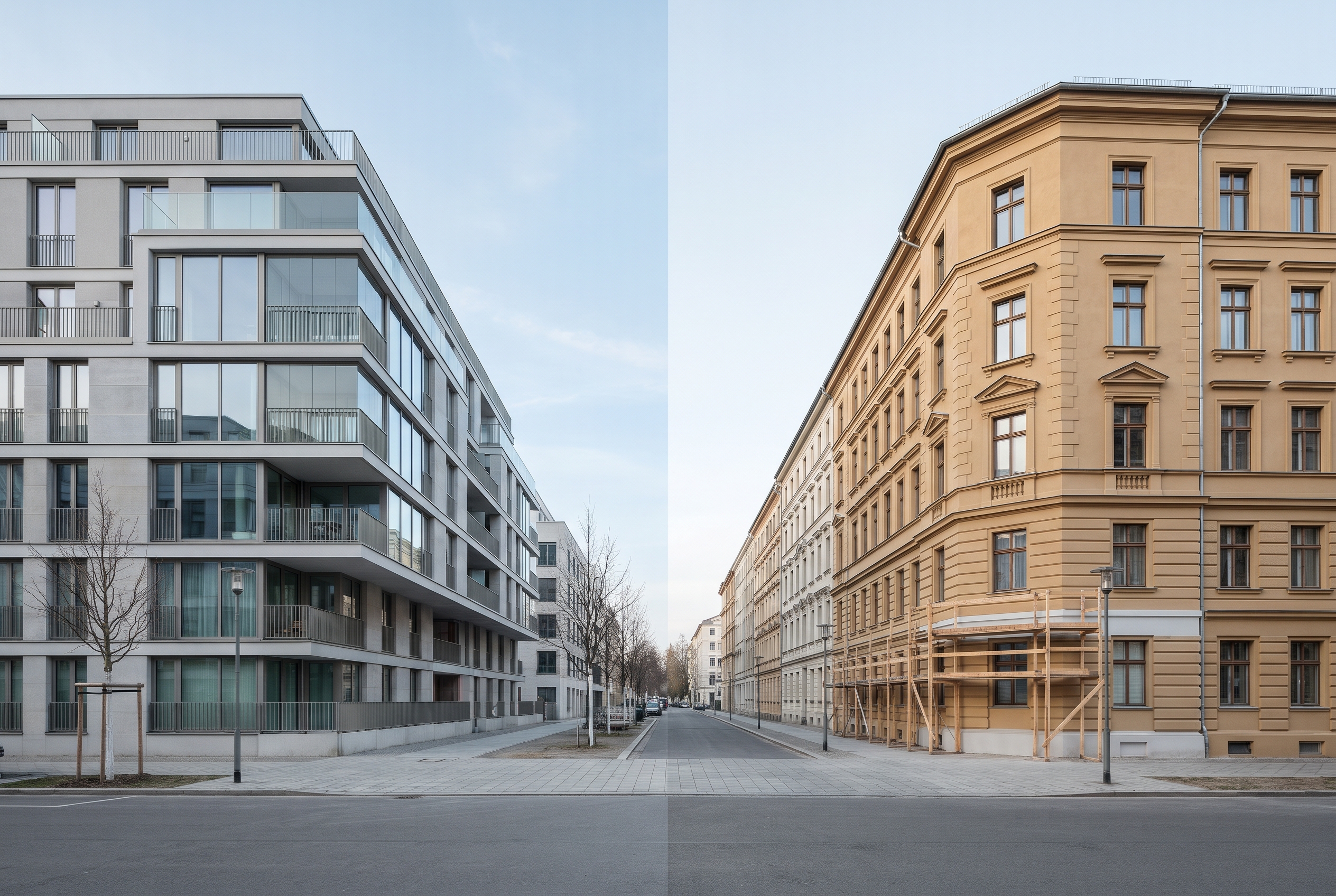
Prices for new and existing homes will not necessarily move in the same way: according to an analysis by the MBH Analysis Centre, the financing terms of Wekerle+ could strengthen demand for new-build homes. Families planning renovations, meanwhile, may need to work to a different timetable: Erste’s information indicates that the energy efficiency sub-programmes are due to launch in early 2027. When making housing decisions, it is therefore worth considering purchasing, borrowing and improvements separately.
Not every part of the programme launches at the same time
Under Wekerle+, there is an important distinction between financing for purchases and construction, and the options for energy efficiency renovations. According to Portfolio’s report, the purchase and construction loan launched on 28 October 2026, rather than at the later date previously expected. Based on the publication’s reporting, it is therefore incorrect to treat the entire programme as an opportunity launching in 2027.
According to Erste’s information, the Family House Programme could launch in February 2027, followed by the Condominium and Prefabricated Housing Programme in March 2027. This may call for different preparations from a homebuyer and a family wishing to improve their existing home. For the former, the priority may be matching the chosen property with suitable financing; for the latter, it may be defining the technical objectives and preparing a renovation budget.
Why could new homes gain an advantage?
MBH’s analysis assumes loan interest rates of 3 per cent for new homes and 5 per cent for existing homes, highlighting the potential shift in demand this could cause. In the bank’s assessment, more favourable financing could steer buyers towards new-build properties. Its analysts believe this could put renewed upward pressure on prices in this segment from 2027, as supply can only adjust more slowly.
This is a forecast, however, not a guarantee of rising prices. For buyers, the key question is how much the home itself costs alongside the more favourable financing: a property available with a lower-interest loan does not necessarily mean a lower total outlay. A comparison can be useful when it includes the purchase price, financing and any further work that may be needed.
When buying a first home, it may therefore be worth examining several ways of meeting the same housing needs. When comparing a new home with an existing property requiring renovation, for example, the planned moving date and the renovation work the buyer can take on may matter alongside floor area. A favourable interest rate is an important consideration, but it does not determine on its own which home is better suited to the household’s circumstances.
MBH expects more moderate changes for existing homes
According to MBH’s analysis, the existing-home market is not expected to face the same strong upward price pressure as the new-build segment; its analysts link this partly to more targeted eligibility and owner-occupancy requirements. This should not be read as a general forecast of falling prices. Slower price growth, unchanged prices and falling prices represent different market conditions.
The bank does not regard a recovery across the whole market as certain either: according to MBH’s statement, 110,000–120,000 sales are expected in 2026, with a further slight decline in transaction numbers considered likely in 2027. The bank’s forecast can therefore envisage rising prices for some types of homes alongside a fall in overall sales activity. Fewer transactions do not, in themselves, mean that every property will become cheaper.
Energy performance takes centre stage in renovation
According to Erste’s information, energy efficiency improvements are expected to carry a requirement for energy savings of at least 30 per cent. Based on the condition described by the bank, planning should focus not just on the renovation work itself, but also on its energy performance outcome. A solution that appears more modern is not the same as demonstrable savings.
For family houses, Erste’s information describes a loan option of up to HUF 15 million at 3 per cent interest and a non-repayable grant component of 30–50 per cent. These should not be treated as amounts automatically available to everyone undertaking renovation work. It may be worth planning the financing of an individual project only after clarifying the conditions relating to the proposed work and the applicant’s circumstances.
A useful starting point for technical preparations may be to identify the biggest problem in the home and the outcome the family wants to achieve. This can be followed by a renovation plan and cost estimate discussed with a qualified professional. This approach starts with the work the building needs, rather than the amount of support that appears to be available.
Joint planning also matters in apartment buildings
The owner of a flat in a jointly owned building may need to consider different questions from someone living in a family house. Alongside plans for their own flat, it may be useful to find out about proposed work on the building as a whole, the shared budget and the intentions of the owners’ community. This may help avoid individual and communal renovation plans being drawn up independently of one another.
Owners can help prepare by gathering questions for the building’s management representative: what work has been proposed, whether a technical survey has already been carried out, and what timetable would be feasible. These questions do not, in themselves, establish eligibility for support. They may, however, help the owners’ community begin discussions with clearer objectives.
What kind of budget can help with the decision?
To compare buying and renovating, it may be worth listing one-off expenses, regular payments and work planned for later separately. This can make it clearer how much financial flexibility the chosen home would leave. The following questions may help with an initial assessment:
- How much of your own money can be put towards your housing goal while retaining a reserve for unexpected expenses?
- What level of regular payments could fit within the household budget?
- Which jobs would need to be completed before moving in, and which could be postponed?
- How would the plan change if the support received were lower than expected, or the project went ahead later?
The opportunities offered by Wekerle+ are best assessed against your own housing goals, rather than in isolation. MBH considers stronger demand for new homes likely, while Erste indicates a separate timetable for the energy renovation sub-programmes; this does not point to the same decision for every buyer. This article provides general information, not personalised financial, legal or technical advice; before making a specific commitment, it may be advisable to check the current conditions with the lender and discuss technical plans with an appropriately qualified professional.
Sources used
- 1.Wekerle-program: Hogyan alakíthatja át a magyar lakáspiacot?mbhbank.huverified
- 2.Wekerle Plusz Program Terméktájékoztatóerstebank.huverified
- 3.Olyan gyorsan megérkezett a Wekerle Plusz, hogy elmarad az év végére várt rohamportfolio.huverified
- 4.MBH Elemzési Centrum sajtóközleménymbhbank.huverified
- 5.Magyarország Kormánya - Wekerle Programwekerle.kormany.hu
- 6.MBH: Újabb drágulást hozhat a Wekerle Plusz az új lakások piacánnovekedes.hu
- 7.Wekerle Plusz: visszatér a legendás hazai panelprogramvg.hu
These sources were used during our editorial fact check.