
Életmód
Winter driving: prepare your car for slippery roads
Alongside your tyres, check your screenwash, coolant and visibility. Here is how to prepare for the first slippery roads of the season and what to expect from snow clearance.
2026-11-23 · 4 min read
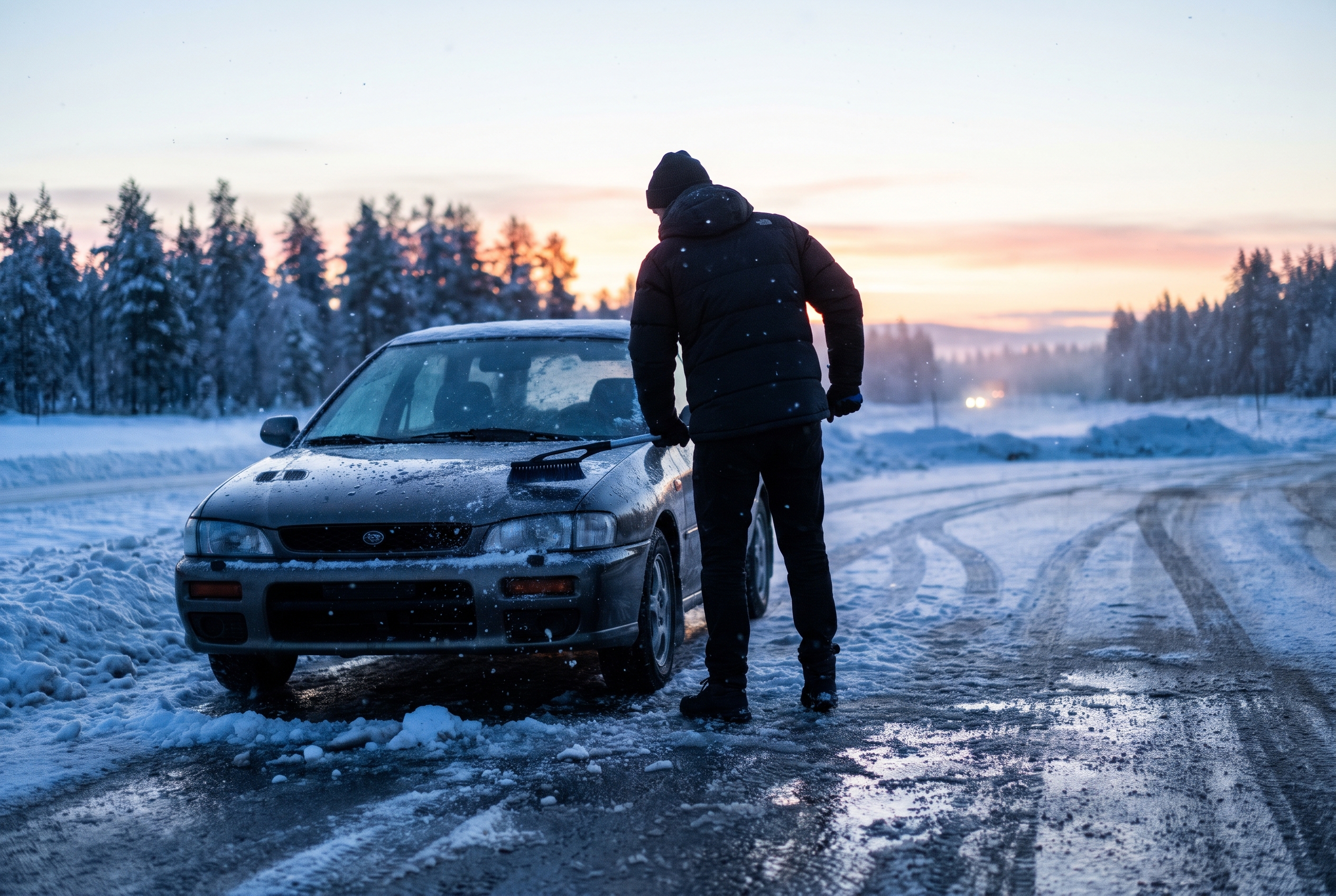
Infostart reported snowfall on Kékestető and wintry precipitation in north-eastern Hungary on 22 November. If you are about to drive, set aside time for a check before you leave: look beyond your tyres to your screenwash, demisting system and any weather warnings along your route.
Check tyre condition when changing to winter tyres
Magyar Közút, the Hungarian road operator, emphasises both winter tyres and longer following distances in its winter driving guidance. Do not consider your preparations complete simply because your winter wheels have been fitted: it is worth having the condition of the tyres checked too.
According to the police's road safety guidance, winter checks may cover the vehicle's mechanical condition and tyre tread depth. If you are unsure about wear, damage or whether a tyre is fit for use, ask a tyre specialist to assess it. When checking the correct pressure, follow your vehicle manufacturer's specifications rather than another driver's usual setting.
If you use all-season tyres, take the expected road conditions into account when deciding whether they are suitable. Telex's winter driving overview describes them as a compromise and highlights the advantages of winter tyres in difficult winter conditions. This does not mean, however, that either tyre type alone is sufficient for every snowy or icy road.
Check coolant and screenwash separately
Treat winter fluid checks as two separate tasks: establish what the engine's cooling system needs and what should go into the screenwash reservoir. If you do not know which coolant is in your car, or when it was last checked, ask a garage about its frost protection and condition. Before topping it up, consult the owner's manual or a professional about the correct fluid.
Telex's preparation guide also recommends checking the frost protection of your screenwash. Read the product label when buying it, and follow the manufacturer's dilution instructions if you choose a concentrate. If you do not know what is left in the reservoir, do not guess the mixture's frost protection; ask for help with filling it correctly instead.
Do not wait until the first junction to discover poor visibility
Telex's winter overview also highlights demisting and clearing snow from your car. Before setting off, check the windows, mirrors and lights, not just the section of windscreen in front of the driver. Allow time for clearing the car when planning your departure.
Test the ventilation, demisting setting and windscreen wipers while the car is still parked. If the glass cannot be cleared properly, or visibility quickly deteriorates again, establish the cause before leaving. Your owner's manual can provide precise guidance on your car's settings.
Check the weather along your route, not just outside your window
According to HungaroMet's description of its weather warning system, just a few tenths of a millimetre of freezing rain can justify a yellow warning. When interpreting a warning, do not focus solely on how much snow is forecast: the type of precipitation matters too.
Before leaving, check the forecast for your route and destination, especially on longer journeys. Look for current information rather than relying on a map you saw the previous evening. If freezing rain is forecast, consider whether the journey is essential or could be postponed until conditions improve.
Make a conscious effort to leave a larger following distance
Magyar Közút's winter advice describes increasing following distances as part of road users' shared responsibility. In practice, combine this with allowing yourself more time to slow down and observe the traffic ahead. Do not try to keep up with the vehicle in front at all costs.
In slippery conditions, aim for smooth, planned movements and avoid abrupt braking, acceleration or steering wherever possible. When choosing your speed, consider more than your arrival time: if you feel unsure about how the car is handling, slow down. These are general preparation tips, not a substitute for practical driver training.
Snow clearance does not mean roads are immediately clear
According to Magyar Közút's winter guidance, preventative gritting is carried out before frost or freezing rain is expected. The road operator says mechanical snow clearance generally begins once 3–5 centimetres of fresh snow has accumulated. This is a threshold for starting work, not a promise that every affected stretch of road will be snow-free from that moment.
The road operator explains that freezing rain can wash away the de-icing material that has been spread, meaning treatment may only become effective once the rain stops. Do not automatically assume that a previously treated stretch of road is safe. Base your travel decision on current conditions, not simply on whether you have seen a gritting vehicle.
Prepare for possible delays before a longer journey
A winter preparation article by Vezess also identifies a lack of winter equipment on longer journeys as a common problem. Think ahead about what you might need to clear your car, or if the journey takes longer than planned.
- Keep the ice scraper and snow brush you use to clear the car within easy reach.
- Set off with a charged phone and pack its charger.
- For longer journeys, consider taking warm clothing, a blanket and drinking water.
- Plan your departure so that clearing the car or encountering a slower stretch of road does not leave you rushing.
Before setting off, check tyre condition, the correct fluids, clear visibility and current road conditions together. Completing one task does not remove the need for the others, and even with a prepared car, postponing the journey may still be necessary. These are general pointers for mechanical checks; consult the manufacturer's manual and, where necessary, a specialist garage for the precise requirements for your car.
Sources used
- 1.GYIK - Téli tanácsok közlekedőknekinternet.kozut.huverified
- 2.Téli közlekedés: közös felelősség az utakoninternet.kozut.huverified
- 3.Baleset-megelőzési információk és téli ellenőrzésekpolice.huverified
- 4.Veszélyjelző rendszer és téli csapadékformákmet.huverified
- 5.Téli autókozás és közlekedésbiztonságtelex.huverified
- 6.Téli felkészülési tanácsok autósoknakvezess.huverified
These sources were used during our editorial fact check.
Related Articles



Latest Articles

Technológia
Self-driving cars tested in Debrecen with safety drivers
2026-11-22 · 4 min read

Zene és Koncert
André Rieu Budapest 2027: concert and ticket information
2026-11-22 · 4 min read

Igényelhető támogatások és kedvezmények
December pension arrives on 2 December: plan to January
2026-11-22 · 4 min read