
Életmód
Hortobágy crane migration: when to go and what to see
According to the Hortobágy National Park Directorate’s count, 51,810 cranes were in the area on 24 September. We explain why Hortobágy is the cranes’ main resting place in Hungary, what guided tours are available, and how to watch the birds without disturbing them.
2026-10-02 · 5 min read
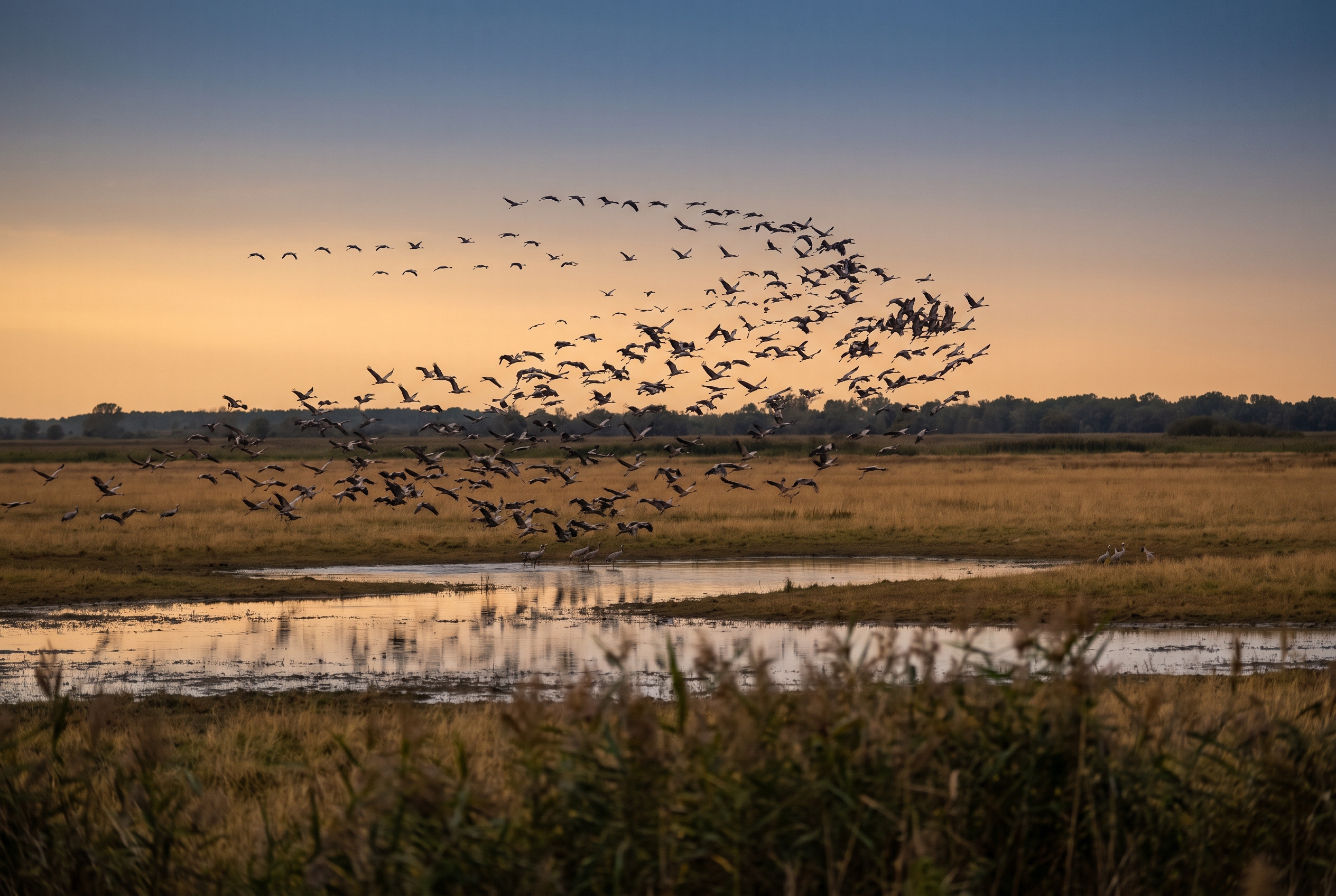
One of the most spectacular phases of the autumn crane migration has begun in Hortobágy. According to the Hortobágy National Park Directorate’s synchronised count, 51,810 cranes had already been recorded in the area on 24 September, and the number of birds may continue to rise in the coming weeks. In this article, we explain why cranes come here in particular, what organised tours are available, and what to keep in mind if you want to see the cranes flying in at dusk on site.
What do the latest count data show?
The national park directorate uses coordinated, so-called synchronised counts to track how many cranes are present in the area at the same time. According to the directorate, these surveys are repeated weekly, making it easy to see how the migration is developing. Based on the crane synchronised count data, 51,810 birds were counted on 24 September.
A report published on 27 September by Sokszínű Vidék (24.hu) also wrote that the number had passed the 50,000 mark by the end of September. According to the outlet, the migration peak is expected in mid-October. Exactly how high the maximum will be this year will only become clear from later counts.
For comparison, it is also worth recalling the earlier peak. According to the national park’s data, the Hortobágy record was measured on 20 October 2023, when 194,750 cranes were counted in the area.
Why Hortobágy in particular?
For common cranes heading south from their northern European breeding grounds, Hortobágy is one of Europe’s most important inland stopover sites. The vast, open steppe and wetland habitats can provide safe roosting places at night, while the surrounding areas can offer feeding opportunities during the long journey. The birds are typically present here in large numbers from late September to early November.
According to the Hortobágy National Park Directorate, around 95 per cent of the cranes migrating through Hungary stop to rest in Hortobágy. This also means that for anyone who wants to see the crane migration in Hungary, Hortobágy offers the best chance.
The common crane (Grus grus) is a protected species in Hungary. According to the species profile of BirdLife Hungary and the information provided by the Hortobágy Bird Hospital, its conservation value is HUF 50,000. The association also notes that the species’ wintering habits have changed: more and more cranes no longer continue to southern Europe or North Africa, instead spending the winter in the Carpathian Basin. BirdLife Hungary links this to milder winters.
Why is there no fixed viewing point in advance?
One of the most memorable moments of the crane migration is the dusk flight to roost, when the birds fly in large flocks from feeding grounds to their night roosts, calling with their characteristic voices. However, this spectacle cannot be reliably caught from a pre-designated point.
The cranes’ night roosts can change from day to day depending on water levels and the weather, so the exact viewing location can only be determined shortly beforehand. This is one of the main reasons why organised guided tours offer a more convenient solution for most visitors: the guides usually know where the birds are at that moment.
Two organised options: car convoy or off-road tour
In Hortobágy, two main organisers offer guided crane-watching programmes, and the two formats differ from each other. It is worth clarifying in advance which one better suits your own preferences.
- Tours by the Hortobágy National Park Directorate: according to the directorate’s information page, the guided tours run from late September to early November, and participation requires prior online registration. Participants use their own cars and follow the tour leader in convoy to the viewing point selected for that day.
- Tours by the Hortobágy Bird Hospital: according to the Bird Hospital’s crane migration page, they organise small-group off-road vehicle tours to observation points on the saline steppe. In this case, visitors do not use their own cars but travel into the field in the organiser’s vehicle.
For those arriving by car and wanting to move around flexibly, the convoy format may be the obvious choice, while the off-road tour may appeal to those who would rather take part in a smaller group and leave the transport to the organiser. For current dates, participation conditions and fees, it is always worth checking the organisers’ own websites, as these may change even within the season.
How should visitors behave at the viewing point?
Cranes are cautious birds, and disturbance can not only spoil the viewing experience but also disrupt their rest during the long migration. The Hortobágy Bird Hospital’s practical advice includes dark clothing, the use of binoculars and quiet behaviour.
- Subdued, dark clothing: conspicuous colours can alert the birds even from a distance.
- Binoculars: cranes can usually be observed only from a greater distance, so many details may be lost without binoculars.
- Quiet: loud conversation and sudden movements can scare off the flocks.
- Avoiding light sources: at dusk, a camera flash or strong torchlight can also be disturbing, so it is worth avoiding them when taking photos.
- The tour guide’s instructions: the selection and approach of viewing points also serve to minimise disturbance to the birds, so it is worth following them.
Autumn evenings on the steppe can cool down quickly, and the wait may be longer than expected. Layered, warm clothing and comfortable footwear suitable for the terrain can help ensure that watching the cranes fly in remains an enjoyable experience.
When is it worth setting off?
The migration has already begun, and the national park’s organised tours run until early November, so there is still plenty of time over the next few weeks to observe it. According to 24.hu’s report, the peak is expected in mid-October, but the number of birds may remain significant throughout the whole period. As the tours require registration and the viewing point may change daily, it is worth signing up in advance and checking the organisers’ websites for the latest information before setting off.
Sources used
- 1.Daruszinkron adatbázishnp.huverified
- 2.Vezetett túrák a darvak nyomában 2026hnp.huverified
- 3.Daruvonulási tájékoztató és szakmai túrákmadarpark.huverified
- 4.Szürke daru fajadatlapmme.huverified
- 5.Több mint 50 ezer daru érkezett a Hortobágyrasokszinuvidek.24.huverified
These sources were used during our editorial fact check.