Életmód
Ferihegy night flights: what could change?
A working group is reviewing the rules on night-time noise around Budapest Airport after 24.hu and Telex reported that in the first quarter of 2026, there were an average of 9.2 aircraft movements during the midnight-to-5am deep-sleep period, instead of the permitted daily maximum of 6. We summarise what is known about the health effects of night noise and the legal options recognised in court practice.
2026-10-15 · 5 min read
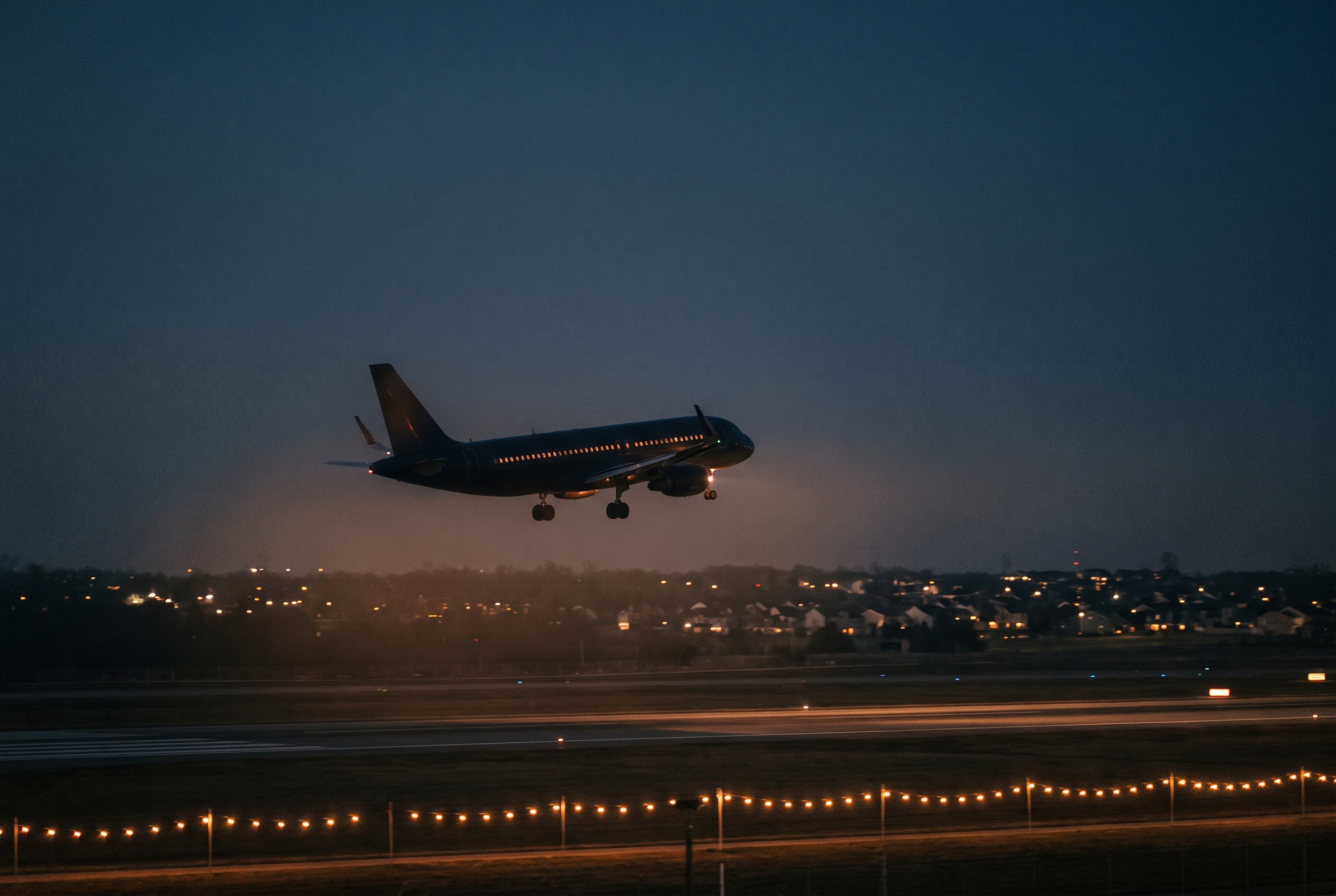
A dispute that has been going on for months has gained fresh momentum around Liszt Ferenc Airport. According to a report by 24.hu, a working group was set up on 1 October 2026 to review the rules on night flights at Ferihegy. The background to the move is that data from the first quarter of this year became public, showing that the night-time restriction had been regularly exceeded. Below, we look at what happened, why noise in the middle of the night matters in particular, and what legal tools affected residents may be aware of.
What do the first-quarter data show?
According to reports by 24.hu and Telex, the rules at Ferihegy allow a maximum of 6 aircraft movements per day during the so-called deep-sleep period, between midnight and 5am. According to the outlets, in the first quarter of 2026 there were an average of 9.2 take-offs and landings per day in this time slot.
Based on the reports, the limit was exceeded on 65 of the 90 nights examined. This means the overrun was not an isolated case, but occurred during the larger part of the period. According to the news sites, the ministry referred to by 24.hu as the Ministry of Transport and Investment then set up the working group carrying out the review.
Exceptional situation or regular loophole?
Opinions differ sharply on the reasons for the overruns. According to Telex, airlines and air traffic control argue that the night-time aircraft movements are the result of unforeseeable situations stemming from congestion in European airspace and weather-related delays.
The affected local authorities and residents, however, see the situation differently. According to a report by HelloMagyar, districts of the capital and settlements in the agglomeration believe that airlines are making systematic, business-like use of the possibility of exceptional permits, and are therefore calling for tighter rules, with some actors demanding a full night-time ban. This is the position of those affected; whether the exceptions are in fact being exploited for business reasons has not so far been confirmed by an independent investigation.
What is the current legal framework, and what could change?
It is worth separating the rules currently in force from what is now on the table. One of the foundations of noise protection around airports is Government Decree 176/1997 (XI. 11.), which, according to the text of the legislation, provides for noise protection zones around the airport and imposes noise protection duties on the operator.
Air traffic control also plays a role in reducing noise. According to HungaroControl's information page, the company seeks to reduce noise exposure in residential areas through air traffic procedures, and continuously measures and publishes noise data.
Exactly what will come out of the review is not yet known. Based on the 24.hu article, tighter penalty levels and stricter noise exposure requirements have been raised, but at the current stage these are possibilities, not decisions that have been taken. It is also not yet publicly known whether the affected district and agglomeration local authorities are officially participating in the work of the group.
Why is night noise more harmful?
The hours between midnight and dawn are particularly sensitive because this is when most people are in the deepest stage of sleep. Noise at this time can disturb rest even if the sleeper does not fully wake up: sleep may become lighter, and the body may trigger a stress response.
According to the World Health Organization's European guideline Night Noise Guidelines for Europe, average night-time noise exposure above 40 decibels (Lnight) may already be associated with measurable health effects. According to the document, these may include sleep disturbance and, in the case of long-term exposure, an increased risk of cardiovascular problems. The guideline considers reducing night-time noise exposure particularly important.
It is important to note that the health effect of a few aircraft movements per night depends on the distance of the home from the airport, flight paths, the insulation of the building and individual sensitivity. This article is general information, not medical advice; anyone experiencing persistent sleep problems should consider contacting their GP.
What legal options are available to residents?
Noise-related legal disputes are not new in Hungarian courts. According to the Curia's summary of court practice on neighbour law and possession protection cases, the injured party may take action in several ways because of excessive and persistent disturbance. Based on the summary, these include:
- possession protection, by which the disturbance may be requested to stop;
- compensation for injury to personality rights, which may be claimed for the violation of personality rights;
- damages, which according to the Curia's summary may, under certain conditions, also extend to the depreciation in the value of the property.
Which of these may be successful in a specific case always depends on the individual circumstances: the extent and duration of the disturbance, and how well it can be proven. Even on the basis of court practice, it is not possible to predict with certainty in advance how a lawsuit will end. Anyone considering such a step should consult a lawyer; this article does not constitute legal advice.
From a practical point of view, it may be useful for those affected to record on which nights and at what times the noise disturbed them, and to monitor the publicly available noise data. At community level, the local authority where they live may be the actor through which local experiences can reach decision-makers.
What can be expected in the coming months?
The review began in October 2026, so final decisions are still some way off. At the heart of the debate is how to reconcile the operation of air transport with the interest of people living around the airport in getting a night's rest. Whether the working group will propose stricter limits, higher fines or another solution may become clear in the coming months; until then, the framework is provided by the rules currently in force and court practice.
Sources used
- 1.176/1997. (X. 11.) Korm. rendelet a repülőtér környezetében lévő zajgátló védőövezetekrőlnjt.jog.gov.huverified
- 2.Night Noise Guidelines for Europeiris.who.intverified
- 3.Kúriai összefoglaló a szomszédjogi és birtokvédelmi perekrőlkuria-birosag.huverified
- 4.Ferihegyi repülőgépek zajterhelése és felülvizsgálatatelex.huverified
- 5.Zajvédelem és légiforgalmi irányításhungarocontrol.hu
- 6.Éjszakai repülés Ferihegyen: az önkormányzatok szigorítást követelnekhellomagyar.hu
These sources were used during our editorial fact check.