Egészség
Olive Oil Before Carbs: Promising, Not a Cure-All
Olive oil may slow gastric emptying, potentially moderating the early rise in blood sugar after a meal. The findings are promising, but the latest observations on precise timing come from mouse studies, and oil also adds extra energy.
2026-10-30 · 5 min read
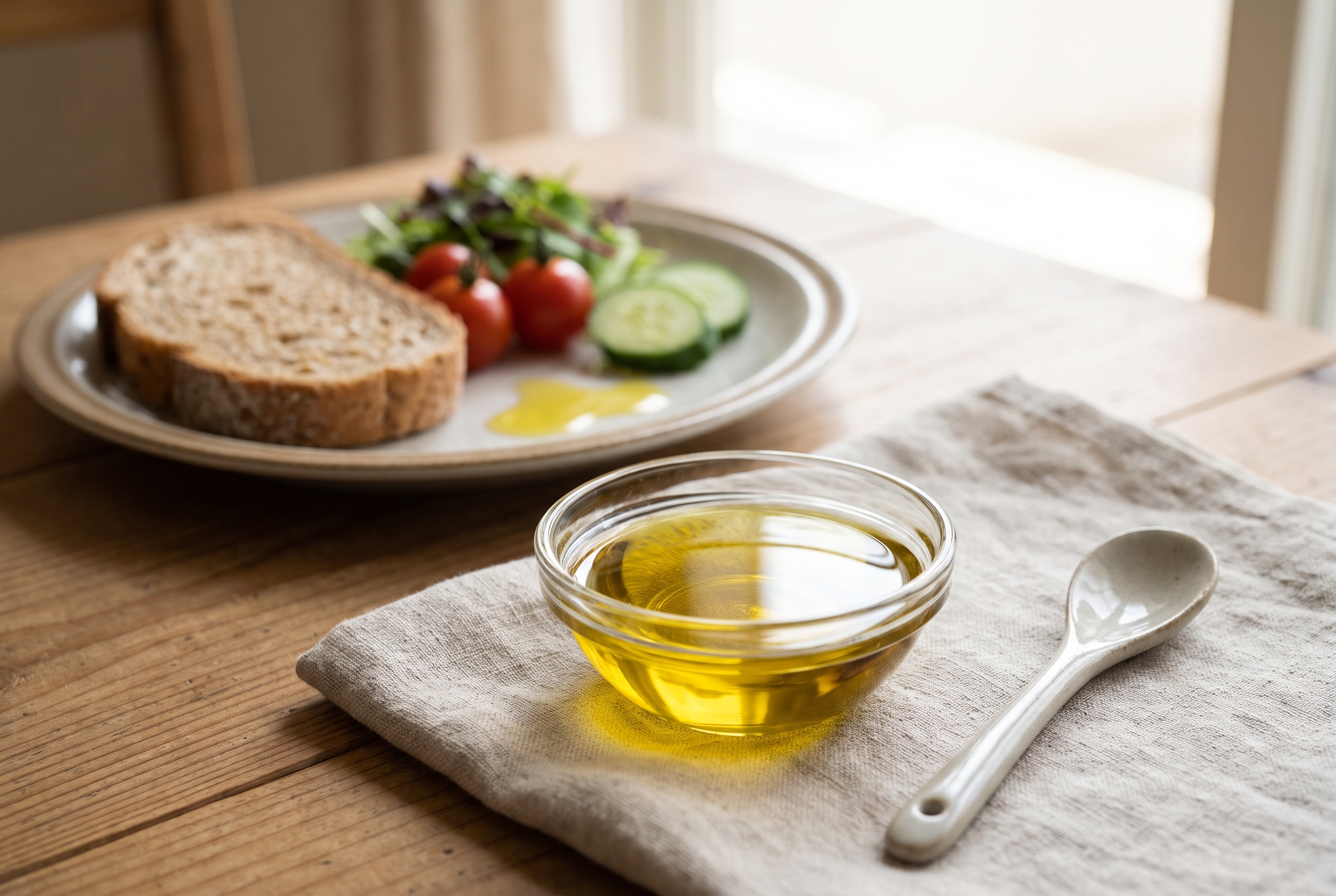
Consuming olive oil before a meal may seem like a simple way to prevent a sudden rise in blood sugar. Previous human studies suggest that extra virgin olive oil can indeed have a beneficial effect on the post-meal blood sugar response, while the latest findings indicate that timing may also play a role.
However, the picture is more nuanced than simply recommending drinking oil on its own before every carbohydrate-rich meal. The recent observations on timing and physiological effects come from mouse models, while the method’s long-term effects in humans and optimal dosage remain unclear.
What have previous human studies found?
According to a clinical trial reported in the journal Diabetes Care, the presence of extra virgin olive oil moderated the early rise in blood sugar following a high-glycaemic-index meal in participants with type 1 diabetes. The research also indicated that not only the amount of fat but also its type may affect the post-meal glycaemic response.
In another study involving people with impaired fasting glucose, 10 grams of extra virgin olive oil was added to the meal. The researchers observed lower post-meal blood sugar and DPP-4 activity, as well as higher insulin and GLP-1 levels. However, this study was conducted under controlled conditions in a specific group of participants, so its findings cannot be used to establish a dosage rule that applies to everyone.
Why might the order of eating matter?
The stomach does not pass an entire meal into the small intestine all at once. If gastric emptying is slower, glucose from carbohydrates may also reach the part of the intestine where it is absorbed more gradually. As a result, the early peak in the post-meal blood sugar curve may be flatter.
According to a ScienceDaily report, a new mouse study found that olive oil given 15 minutes before glucose slowed gastric emptying and moderated the early rise in blood sugar. A summary by Diabetes.co.uk also emphasises that this was an animal study. The 15-minute timing therefore cannot be regarded as a proven recommendation for humans.
Hormones and nerve signals may also be involved
According to the ScienceDaily report, incretin hormones including GLP-1 and GIP, as well as glucagon and signalling via the vagus nerve, played a role in the effect observed in the mouse model. Together, these systems influence digestion and the body’s metabolic response to food.
Among other functions, GLP-1 is associated with the post-meal insulin response and the regulation of gastric emptying. The earlier human study measured higher post-meal GLP-1 levels with extra virgin olive oil, but this alone does not prove that exactly the same overall mechanism operates in humans as in the recent mouse study.
Oil does not make carbohydrates disappear
The method’s potential benefit is primarily related to the timing of absorption. According to a health summary by The Indian Express, fat may delay gastric emptying, but this does not remove carbohydrates or energy from the meal. Total intake still matters.
Olive oil is itself an energy-dense food. If someone regularly adds a separate serving of oil without changing their usual diet, this may increase their total energy intake. It would therefore be misleading to treat oil before meals as an unrestricted ‘blood sugar trick’.
How can it be sensibly incorporated into a diet?
The current findings do not support a general recommendation specifying exactly how much oil should be consumed or how many minutes before a meal it should be taken. A more practical approach may be to include olive oil as part of the meal rather than drinking it separately as a ‘shot’, and not to add it automatically to dishes that already contain enough fat.
For example, olive oil could be used on a salad or vegetable starter, or included in a dish that already calls for fat. A lifestyle summary by HáziPatika likewise highlights incorporating it into the diet rather than drinking oil on its own. The point is not to increase the amount of oil, but to consider the meal as a whole.
Who should be particularly cautious?
For people with diabetes, this method does not replace a prescribed diet, medication or insulin treatment, or self-monitoring. Changing the composition or order of a meal may alter the post-meal blood sugar curve, which may also be significant for the timing of treatment.
People with gastrointestinal disease, a diagnosed gastric emptying disorder or individual symptoms should also consult a professional. The information provided here is general and does not constitute personalised medical or dietary advice.
What do we still not know?
An improvement in the short-term blood sugar response is not the same as a long-term metabolic improvement. Based on the current findings, it is not possible to determine whether consuming olive oil before meals produces a lasting reduction in HbA1c, which reflects blood sugar levels over several months.
It is also unclear what dose and timing would provide a meaningful benefit in humans while keeping energy intake at an acceptable level. Further human studies are needed to distinguish how much of the effect is due to olive oil itself and how much is due to consuming fat before carbohydrates.
In brief
Extra virgin olive oil may have a beneficial effect on the post-meal blood sugar response, as supported by previous human studies. However, the new findings on the precise timing and mechanism of consuming it before carbohydrates come from mouse models, so they do not yet support a general recommendation for humans.
Olive oil is better regarded as part of a balanced meal rather than as a standalone treatment or cure-all. Particularly for people with diabetes, significant dietary changes should be discussed with a doctor or dietitian.
Sources used
- 1.Extra Virgin Olive Oil Reduces Postprandial Glycemia in Type 1 Diabetespubmed.ncbi.nlm.nih.govverified
- 2.Extra Virgin Olive Oil Improves Postprandial Glycemia and DPP4 Activity in IFG Patientspubmed.ncbi.nlm.nih.govverified
- 3.Olive Oil Before Carbohydrates Delays Gastric Emptyingsciencedaily.comverified
- 4.Olive oil before carbohydrates reduces early blood sugar rise in micediabetes.co.ukverified
- 5.Tippek a jobb étkezéshez és a vércukorszint beállításáhozhazipatika.comverified
- 6.Blood sugar spikes and olive oil shotsindianexpress.comverified
- 7.Olive Oil Before Oral Glucose Delays Gastric Emptyingdiabetesjournals.org
These sources were used during our editorial fact check.