Egészség
Nerve Stimulation for High Blood Pressure: Evidence
A home-use device stimulates branches of the vagus nerve in the ear with weak electrical impulses. An early trial showed favourable results in one patient subgroup, but no clear benefit over sham treatment was demonstrated in the full sample.
2026-10-28 · 5 min read
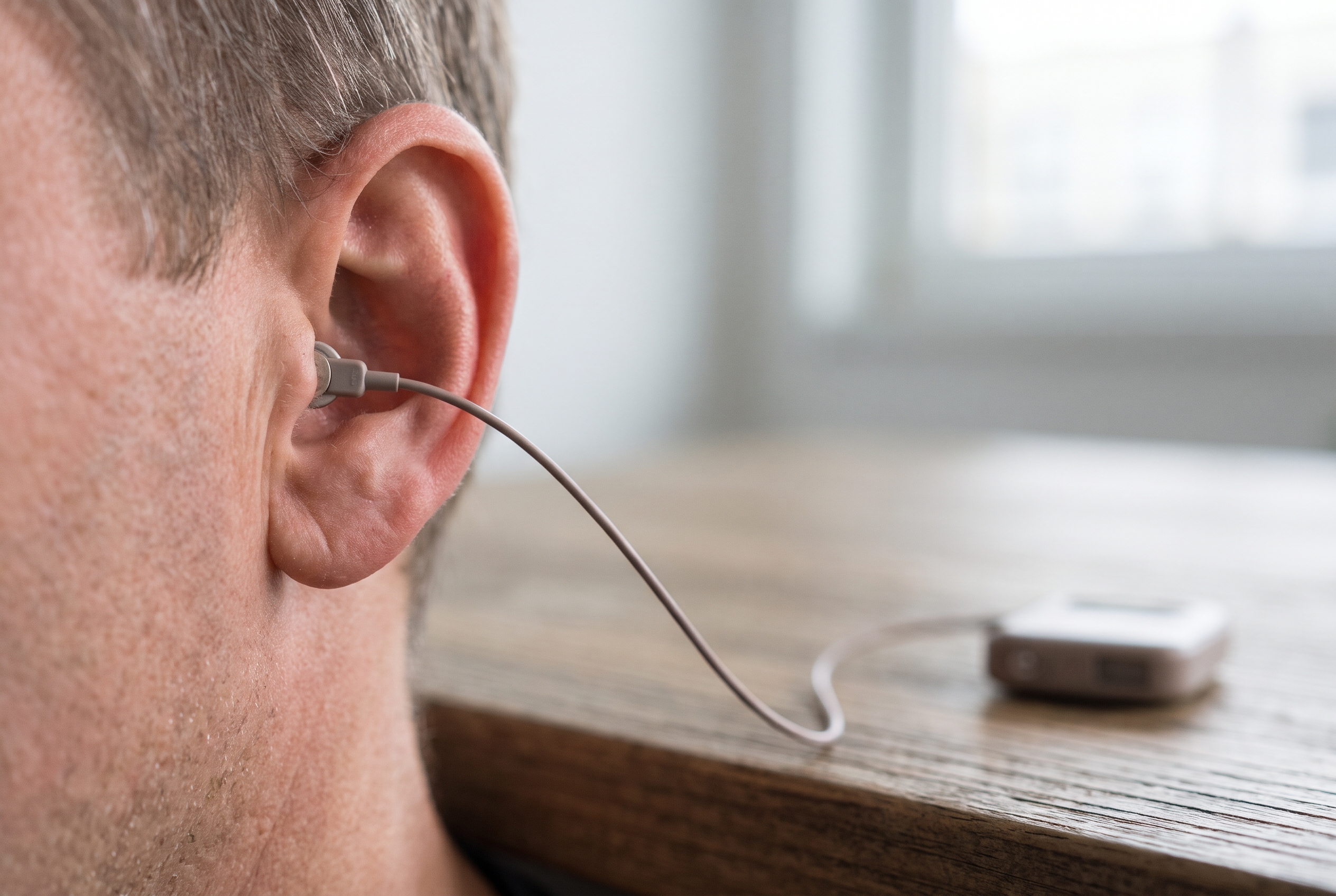
A non-invasive nerve stimulation device designed for home use could offer a new option as an adjunctive treatment for high blood pressure that is difficult to control. The technology aims to influence nervous system processes that also regulate circulation by stimulating a specific point on the ear, but based on the evidence so far, it would be premature to regard it as a proven blood pressure treatment.
The key detail is that the device is placed not on the earlobe, but on the tragus, the cartilaginous area in front of the ear canal. In the early clinical trial, the treatment proved safe and well tolerated, but it did not show a statistically significant benefit over a sham device across the full group of participants, according to a statement from Queen Mary University of London.
The tragus, not the earlobe, is stimulated
The method is often described as nerve stimulation through the earlobe, but this is anatomically inaccurate. The clips are attached to the tragus. This is the small cartilaginous structure in front of the ear canal and is not the same as the soft lower part of the ear.
According to the Queen Mary University statement, the handheld device delivers weak electrical impulses through two clips. These stimulate branches of the vagus nerve that can be accessed through the ear. The procedure does not require surgery and is therefore known as transcutaneous neuromodulation, meaning neuromodulation through the skin.
According to data from the ISRCTN clinical trial registry, the study investigated a transcutaneous autonomic neuromodulation device called Affex-CT. This is a medical device under development, rather than a general-purpose electrical stimulator that could be used for the same purpose without appropriate medical supervision.
What does the vagus nerve have to do with blood pressure?
The vagus nerve is an important part of the autonomic nervous system. The autonomic nervous system regulates largely involuntary bodily processes such as heart function, blood vessel tone and digestion. Of its two major functional divisions, the sympathetic nervous system is generally associated with a heightened state of alert, while the parasympathetic nervous system is linked to rest and recovery.
According to a scientific paper published in Frontiers in Cardiovascular Medicine, stimulation of the vagus nerve branches in the ear may alter the activity of brainstem neural pathways involved in cardiovascular regulation. The proposed mechanism is based on favourably influencing the autonomic balance.
This does not, however, mean that blood pressure will fall directly and sustainably in everyone. A physiologically plausible mechanism of action does not in itself prove a treatment's clinical effectiveness; that requires appropriately designed studies with larger samples and longer follow-up periods.
What did the SCRATCH-HTN study examine?
According to Queen Mary University, the phase IIa clinical trial known as SCRATCH-HTN enrolled 63 adults whose blood pressure remained high despite taking at least one antihypertensive medication. The study was funded by the UK's National Institute for Health and Care Research.
According to the university's statement, participants used the device for 30 minutes a day for two weeks, followed by once a week for a further ten weeks. The possibility of home use is important because any future adjunctive treatment would need to fit into everyday life.
The trial was double-blind and sham-controlled. This means that neither the participants nor those assessing the results knew who received the active treatment and who used a control device that mimicked the intervention. This design helps distinguish the device's actual physiological effect from changes resulting from expectations, increased monitoring or other circumstances.
Results from the full group warrant caution
According to the statement from the university that conducted the research, there was no statistically significant difference between active treatment and the sham device across the full group of participants. This is crucial to the trial's primary interpretation: the result does not demonstrate that the treatment is generally effective for all patients with difficult-to-control high blood pressure.
However, a more substantial reduction in blood pressure was observed in the subgroup with more severe hypertension at baseline, and the treatment proved safe and well tolerated, the university reported. This is a signal that may justify further targeted research, but the subgroup finding does not override the result obtained in the full group.
Subgroup analyses generally need to be interpreted with particular caution. The smaller the group being examined, the greater the potential role of chance, and a favourable difference must also be confirmed in a new study designed in advance to address that specific question.
Why does safety matter, and what remains unknown?
For a home electrical stimulation device, it is important not only to determine whether a favourable effect can be measured, but also whether its use causes adverse events and whether users can follow the prescribed treatment schedule. According to a ScienceDaily report, home use was accompanied by high participant adherence, and the results were published in the American Heart Association's peer-reviewed journal Hypertension.
However, the study period does not show whether any blood pressure-lowering effect would persist over the longer term. Nor can this early research establish precisely which patient groups might derive a genuine clinical benefit from the method, or how its effect compares with treatments already in use.
It would also be unwise to speculate about commercial availability, the regulatory approval timetable or price. The device used in the clinical trial is a promising research tool, but examining whether it can be used at home is not the same as establishing that the technology is already routinely available or generally recommended as a treatment.
It does not replace medication or medical supervision
Nerve stimulation through the ear should not currently be regarded as an alternative to prescribed antihypertensive medication. The trial tested the method in participants who were taking medication, meaning that it investigated the technology's possible role as an adjunctive treatment.
High blood pressure often causes no noticeable symptoms, so treatment changes should not be based solely on how a person feels or on an isolated home reading. Changing the dose of prescribed medication or stopping it without consulting a doctor can be dangerous. Nor is it advisable to attempt to reproduce the clinical trial procedure with an ear stimulation device of unknown origin.
The information provided here is general and does not replace a medical examination or personalised treatment advice. Anyone with persistently high readings at home, unusual symptoms or questions about medication should consult a healthcare professional.
A promising research direction with limited evidence
Nerve stimulation through the tragus presents an attractive possibility: it is non-invasive, can be used at home, and an early trial found a favourable signal in a subgroup with more severe hypertension. It is equally important, however, that no significant benefit over the control device was demonstrated across the full patient group.
The method therefore cannot currently be regarded as a proven home treatment for lowering blood pressure. Larger and longer studies may provide the next decisive step by determining whether it is truly effective, who may benefit from it, and whether it can be used safely over the long term as an adjunct to existing therapy.
Sources used
- 1.Non-invasive nerve stimulation shows potential for treating uncontrolled high blood pre…qmul.ac.ukverified
- 2.SCRATCH-HTN Study Registrationisrctn.comverified
- 3.Vagus Nerve Ear Stimulation for Blood Pressure Controlhealatlas.comverified
- 4.Ear Nerve Stimulation Hypertension Trial Overviewgeekslop.comverified
- 5.Ear stimulation device for hypertension controltheeru.comverified
- 6.Transcutaneous auricular vagus nerve stimulation in hypertensionpmc.ncbi.nlm.nih.gov
These sources were used during our editorial fact check.