Oktatás & Család
School bomb threats: how parents can help children
A school bomb threat can frighten children even when a search finds no danger. Calm, age-appropriate conversations, following official instructions and recognising signs of persistent anxiety are important.
2026-10-30 · 5 min read
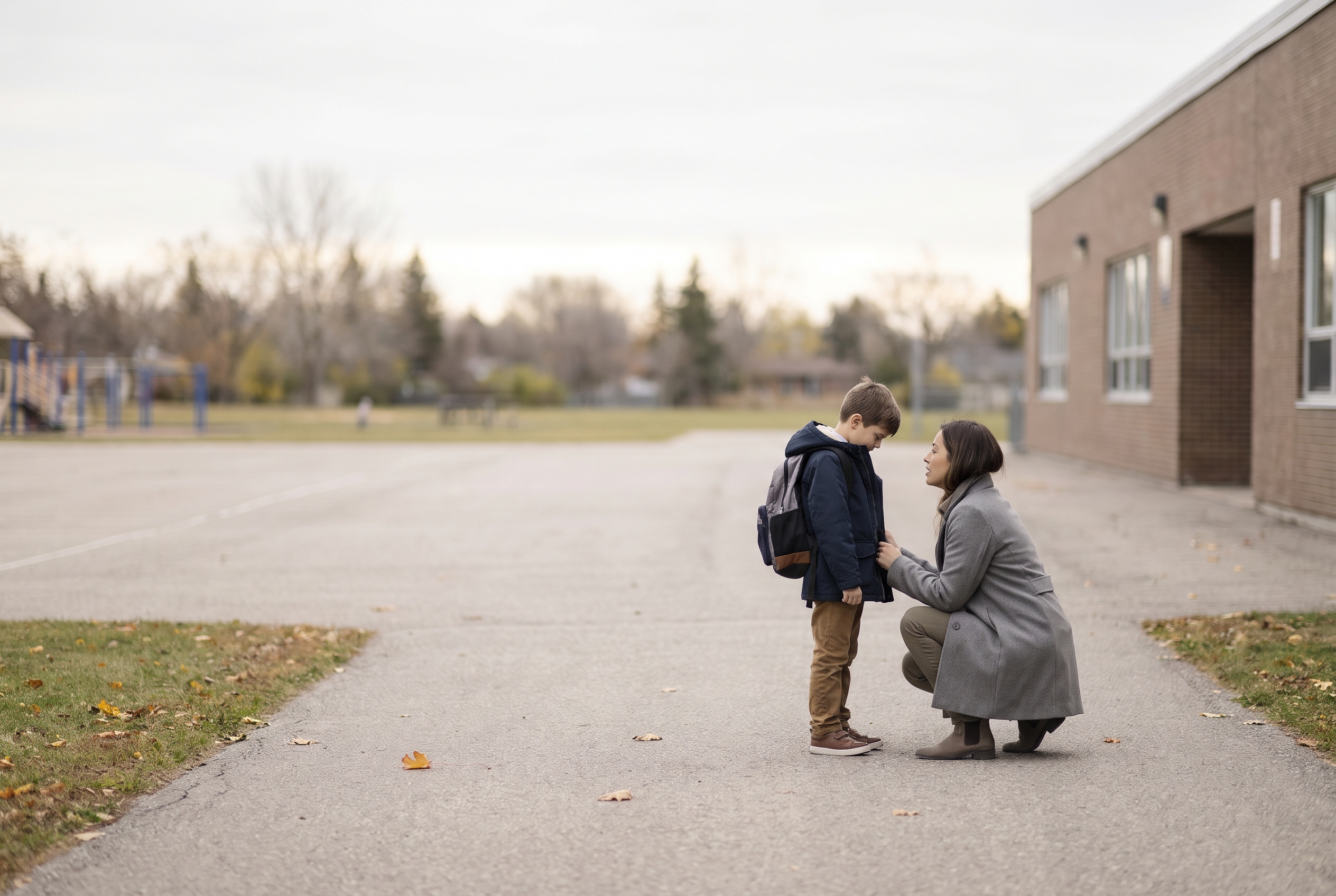
Police took action over threats affecting schools in Budapest and other municipalities in October 2026. According to information from the National Police Headquarters reported by Infostart, more than 70 educational institutions across the country received threatening messages. According to Portfolio’s report, searches at the Budapest locations found no explosives, while the National Bureau of Investigation opened proceedings over threats to commit an act of terrorism.
The finding that there was no danger is reassuring, but it does not undo the alarm. Evacuation, the presence of police, personal belongings left behind and the uncertainty of waiting can cause genuine stress for a child. At such times, a parent’s most important task is to help them understand what happened in an honest, calm and age-appropriate way.
Parents should first manage their own anxiety
An unexpected notification from a school can also cause considerable anxiety for parents. This is a natural reaction, but it is advisable to verify the information and collect one’s thoughts before speaking to the child. Frantic phone calls, speculation or angry conversations in front of the child may further increase uncertainty.
Professional guidance from the Kék Vonal Child Crisis Foundation notes that an adult’s own attitudes and anxiety can affect a child. This does not mean that parents must hide every emotion. Rather, it means distinguishing between honest concern and uncontrolled panic.
For example, a reassuring response might be: “It is understandable that this frightened you. The school and the police took action to make sure everyone was safe.” However, parents should not promise complete certainty or dismiss the child’s fear as insignificant.
What should parents say, and what should they avoid?
It is advisable to begin the conversation by asking what the child saw, what they heard and what they think happened. Open questions such as “What was the most frightening part for you?” or “Is there anything you do not understand?” may reveal more about their emotional state than immediately launching into a lengthy explanation.
According to Eduline’s guidance from a psychologist, it is important to make clear that the evacuation and other measures are intended to keep children safe. The emphasis can be on the existence of procedures for managing the situation and on teachers and the authorities acting in accordance with them.
- Worth saying: “You are in a safe place now, and we are waiting for reliable information.”
- Worth acknowledging: “It is completely understandable if you feel frightened or angry.”
- Not helpful: “There is nothing to be afraid of” – this may invalidate the child’s feelings.
- Not helpful: passing on unverified reports, screenshots and speculation.
- Best avoided: speculating about the motives of the person making the threat or describing events in dramatic detail.
Younger children and teenagers need different explanations
A younger child needs short, specific sentences. It may be enough to explain that the school received a message that had to be taken seriously, so everyone left the building while it was searched. There is no need to burden them with details that do not help them understand the situation.
Older children and secondary school pupils usually receive more information from social media and classmates. It is worth discussing with them that a rapidly spreading post is not necessarily accurate. It may be helpful to check together whether the information came from the school’s official channel or another identifiable source.
A teenager’s apparent indifference does not necessarily mean the event had no effect on them. Humour and detachment can be ways of relieving tension. It is therefore better to offer a conversation than to force one: parents can make clear that they will still be available later if questions or fears arise.
What should parents do if a school is evacuated?
In the immediate situation, information from the school and the authorities should be followed. Parents should, if possible, avoid automatically going to the institution or attempting to enter a restricted area, as this could obstruct the response. The first step is to establish where the children are and when and how they can be collected.
Procedures may differ between institutions, so it is useful to know in advance which electronic school diary, email address, application or telephone number the school uses for official notifications. Keeping contact details up to date and knowing the designated collection arrangements can reduce confusion.
The public crisis protocol of Budapest School divides crisis management into three stages: preparedness, crisis intervention, and closure and evaluation. This is the school network’s own policy, but it clearly illustrates that crisis management does not end when the building has been searched: subsequent communication and processing also have a role.
How can the normal routine be restored?
After an emergency, a predictable routine can provide stability. Familiar mealtimes, evening preparations, rest and plans for the next day convey that family life is continuing. There is no need to discuss the same subject all evening, but it is also inadvisable to close the conversation by saying that “everything is fine now”.
Repeatedly following the news may increase tension, particularly when the same footage and speculation appear instead of new facts. A family may decide to check the school’s updates at a set time and focus on other activities in between. Children should also be asked not to share unverified messages.
If they wish, children can talk about or draw what happened to them. Others may find movement, play or ordinary conversations with friends helpful. There is no single required way to process the experience, so parents should primarily pay attention to what their child needs.
When is it appropriate to seek professional help?
After a frightening event, restlessness, difficulty sleeping, increased clinginess or fear of returning to school may temporarily occur. Not every such reaction indicates a lasting problem. However, the symptoms should be taken seriously if they do not ease, become more severe or noticeably interfere with the child’s sleep, learning, relationships and everyday activities.
In such cases, the school psychologist, paediatrician or another mental health professional who works with children can help assess the situation. Immediate help must be sought if there is an urgent danger or the child makes statements about self-harm. This information is general and does not replace an in-person professional assessment of the child’s condition.
Staying calm does not mean downplaying the danger
A threat against a school must always be handled by the relevant authorities and the institution; it is not the family’s role to decide whether it is credible. Parents can help most by following official instructions, not spreading unverified information and providing a steady presence.
A child’s sense of security is strengthened when they see adults taking the situation seriously without allowing panic to control their decisions. Honest, age-appropriate explanations, acceptance of the child’s feelings and a gradual return to the usual routine can together provide stability after such an extraordinary situation.
Sources used
- 1.Budapest School Modell – Krízisprotokollmodel.budapestschool.orgverified
- 2.Kék Vonal Gyermekkrízis Alapítvány – Szakmai útmutatókek-vonal.huverified
- 3.Infostart.hu – ORFK tájékoztatás az iskolai fenyegetésekrőlinfostart.huverified
- 4.Portfolio.hu – Budapesti iskolák és az NNI nyomozásaportfolio.huverified
- 5.Eduline – Pszichológusi útmutató bombariadó utáneduline.huverified
- 6.Szülők Lapja – Szakértői tanácsok szülőknekszuloklapja.hu
- 7.444.hu – Zuglói egyedi iskolai fenyegetés444.hu
These sources were used during our editorial fact check.