
Gazdaság / Üzemanyag
Why diesel does not become cheaper straight away
The rapid fall in Europe’s wholesale diesel price does not show up immediately or proportionally at Hungarian petrol stations. The forint exchange rate, taxes, margins and haulage contracts all slow and soften the effect.
2026-10-09 · 5 min read
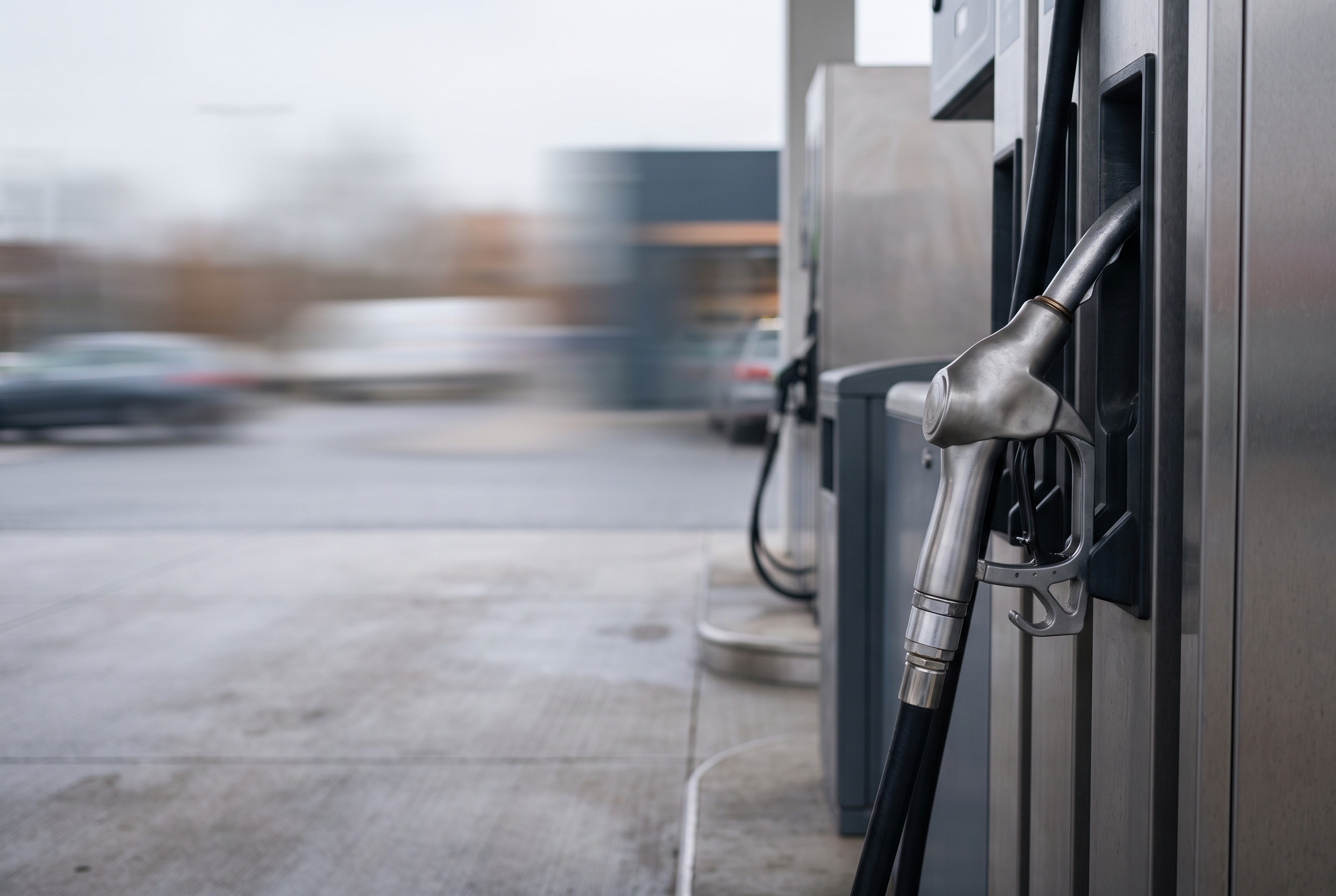
When the price of diesel suddenly starts falling on European exchanges, many drivers and hauliers understandably ask when refuelling will become cheaper, and by how much. The short answer is that some of the wholesale market move usually reaches petrol stations, but rarely immediately and almost never in full. Below, we look at what slows and softens this process, and what is worth watching if you are planning your own costs.
Why does the exchange price move so quickly?
In commodity markets, traders price in not only the volume actually delivered, but also expected supply. Because of this, an announcement, a planned measure or even a leaked report can be enough to move the quoted price significantly within a few hours.
Such news may include, for example, governments or international organisations considering releasing part of their strategic reserves onto the market. If the market expects more supply, the price falls even before a single additional litre of fuel has actually changed hands. But if the plan is amended, postponed or ultimately does not happen, the quotation may also correct back upwards.
The exchange quotation and the pump price are two different things
On the exchange, it is the wholesale product price that moves, and this is typically quoted in dollars. At the filling station, however, we pay in forints, and that price also includes taxes, refining and commercial margins, as well as transport and storage costs. The exchange-traded product price is therefore only one part of the final price, so its percentage change appears at the pump to a lesser extent.
According to analyses by Holtankoljak.hu, both the dollar/forint exchange rate and wholesale margins affect how international price changes appear in domestic prices. If diesel becomes cheaper in dollar terms but the forint weakens at the same time, Hungarian buyers may feel less of the change, or in extreme cases nothing at all.
A simple numerical example: what would the theoretical upper limit be?
Purely for illustration: 7 per cent of a hypothetical diesel price of 700 forints per litre is about 49 forints. However, such a drop would occur only if the entire pump price moved in the same proportion as the exchange quotation.
Since a significant part of the pump price consists of taxes and other costs unrelated to the exchange, such a figure should be seen more as a theoretical upper limit than a realistic expectation. The actual fall is typically smaller than this, and it also depends on exchange-rate movements.
How long does it take for the change to reach petrol stations?
According to market practice, a fall in the exchange price does not appear in retail prices immediately, but with some delay. Wholesalers and filling-station networks generally do not follow every daily market move, but adjust list prices to an average price level over a period, which smooths out sudden swings.
It is also important to distinguish between market sentiment and actual supply. Expectations can feed into pricing quickly, but the release of physical stocks onto the market may take longer for logistical reasons. If the fall on the exchange is only short-lived and the quotation rises again within a few days, then at petrol stations only a temporary and smaller change is likely at most.
For hauliers, the process is even slower
The price of diesel is one of the most important cost factors in road freight transport, so changes in it may also show up indirectly on shop shelves. However, freight rates usually react more slowly than pump prices.
One reason is that haulage contracts often include fuel clauses or diesel surcharges, which are adjusted to current prices at pre-set intervals. Because of longer-term logistics agreements, cost reductions therefore usually feed through with a delay and in several steps. In consumer prices, they may appear even later, if they are noticeable at all, as product prices are influenced by many other factors as well.
What role do Hungary’s strategic reserves play?
In Hungary, strategic crude oil and fuel reserves are managed by the Hungarian Hydrocarbon Stockpiling Association (MSZKSZ). According to the association’s information, the release of reserves is subject to a state or ministerial decision, meaning that releasing domestic stocks onto the market is not automatic.
This matters because a possible Europe-wide release of reserves would affect supply in the common market and would not automatically mean the use of Hungarian stocks. For domestic pump prices, the European wholesale price level and the forint exchange rate are likely to have the most direct impact.
What should drivers and businesses watch now?
How much we ultimately feel from a fall on the exchange will mainly depend on three factors: whether an official, final decision is made on measures affecting supply, whether the lower quotation remains in place for a sustained period, and which way the forint moves against the dollar.
Those who refuel regularly may find it worth following changes in weekly average prices, while businesses calculating with transport costs should check how often the fuel clauses in their contracts are repriced. This article provides general information and does not constitute financial advice; depending on the factors above, prices may also develop differently from expectations.
Sources used
- 1.Magyar Szénhidrogén Készletező Szövetség hivatalos oldalahusa.huverified
- 2.Holtankoljak.hu - Üzemanyagárak alakulásaholtankoljak.huverified
- 3.HVG / G7 - Stratégiai készletek és árakhvg.huverified
- 4.Világgazdaság - Új üzemanyagárak Magyarországonvg.huverified
These sources were used during our editorial fact check.