
Gazdaság & Életmód
Coffee prices in Hungary: why espresso keeps rising
According to data from the Hungarian Central Statistical Office, the national average price of 200–250 gram packs of ground coffee was 1,640 forints in August 2026, while the average price of an espresso in hospitality venues rose to 643 forints. The two markets are increasingly moving along separate paths: retail prices are driven mainly by global commodity prices and the exchange rate, while café prices are also heavily affected by operating costs.
2026-09-13 · 5 min read
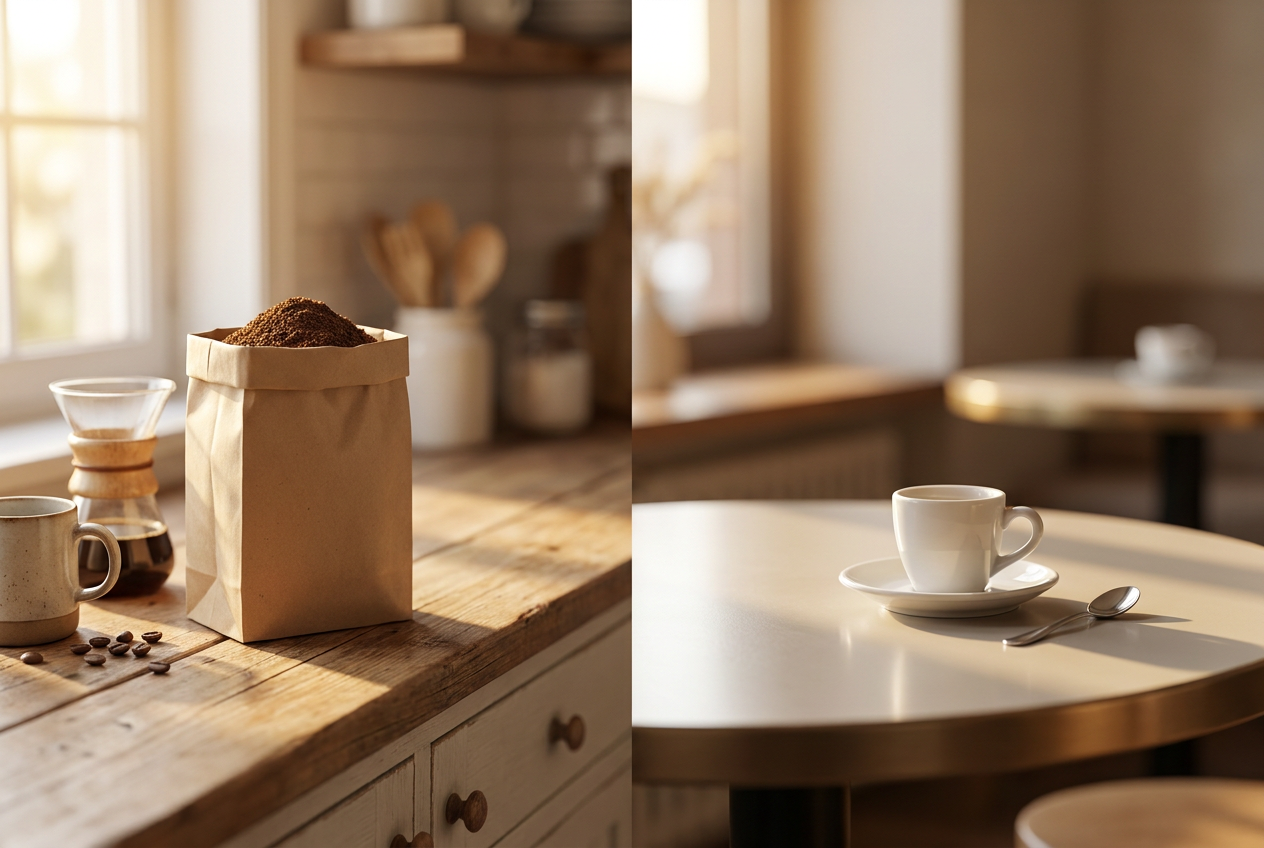
Morning coffee is getting more expensive in Hungary too, but not in the same way everywhere. According to data from the Hungarian Central Statistical Office, in August 2026 the average price of 200–250 gram packs of ground coffee was 1,640 forints in shops, while the average price of a cup of espresso in hospitality venues rose to 643 forints. This matters because shop and café prices are now being shaped in part by different economic factors.
For Hungarian consumers, this is felt mainly in the fact that black coffee has become more expensive both at home and in cafés, but the pace and structure of the price increases are not the same. Based on official and professional sources, the price of packaged coffee in shops may track global market movements more closely, while espresso prices are also being pushed up by labour costs, energy and rent.
Near-record retail price and a new peak in hospitality
According to the consumer average price data compiled by the Hungarian Central Statistical Office, the national average price of 200–250 gram packs of ground coffee was 1,640 forints in August 2026. The same official dataset also shows that the average price of espresso coffee in hospitality venues rose to 643 forints, which counts as a new peak based on the data currently available.
These two figures alone show that coffee has not dropped off the list of products and services affected by inflation. At the same time, the process behind prices on shop shelves is not the same as what is happening at café counters.
Why have retail and café pricing diverged?
According to the market summaries available, the price of packaged coffee in shops has partly followed the correction in global green coffee prices in recent months. According to Pénzcentrum’s September summary, the price of 200–250 gram packs of ground coffee was 12 per cent lower than the peak a year earlier, meaning that some easing was visible in retail compared with the previous extreme levels.
In hospitality, however, the situation is different. The price of a cup of espresso includes not only the cost of coffee beans or ground coffee, but also staff wages, energy use, rent, tax burdens and other operating expenses. That is why the price of an espresso can still rise even if the commodities market is showing temporary signs of easing.
Taken together, the Hungarian Central Statistical Office’s figures and market reports show that retail saw some moderation compared with the peak at the start of 2026, while price increases continued in hospitality. This helps explain why many consumers may feel that their daily routine is becoming more expensive faster in cafés than on shop shelves.
Hungary is entirely dependent on imports
One basic feature of coffee prices in Hungary is that the country covers 100 per cent of its coffee needs through imports, according to an analysis by the Oeconomus Economic Research Foundation. This means Hungarian prices are directly affected by global commodity prices, international shipping costs and the forint exchange rate.
If the forint weakens, sourcing imported products can become more expensive even if international exchange-traded prices are not rising significantly at the same time. In the opposite case, with a more favourable exchange rate and weaker commodity prices, some correction may also appear in retail prices, but this typically does not reach consumers immediately or in full.
What is happening on the global market?
Based on reliable business press reports, mixed effects have been at work in the global coffee market in recent months. According to a February 2026 article by Világgazdaság, an improvement in the Brazilian harvest may have reduced pressure on commodity exchanges, while HVG previously wrote that the USDA forecast global coffee production could rise, mainly because of expanding robusta supply.
That does not mean coffee will necessarily become cheaper over the longer term. According to a market summary by Kávéáruház.hu, arabica prices have eased compared with earlier peaks, but exchange rates and logistics costs may still keep consumer prices high. The future stability of retail coffee prices therefore remains uncertain.
Climate change may keep putting pressure on prices over the longer term
The rising price of coffee may have not only short-term but also structural causes. According to Forbes Hungary’s analysis summarising research, by 2050 around 43–58 per cent of current coffee-growing areas could become unsuitable for cultivation. For now, this is an estimate, but it clearly shows why market participants are also factoring in more persistent risks.
If growing areas shrink or extreme weather becomes more frequent, that could affect supply and, through it, prices as well. In addition, growing Asian demand is also mentioned by several market analyses as a factor that could sustain the era of more expensive coffee over the longer term.
How much does a cup of coffee really cost at home?
Based on the retail average price, making coffee at home can still be far cheaper than drinking it in a café, but this depends greatly on the amount used and the method of preparation. With an average price of 1,640 forints for a 200–250 gram pack of ground coffee, one pack can be divided into several servings, so the raw material cost of a homemade cup typically remains well below the 643-forint average in hospitality venues.
However, this does not include milk, sugar, capsules, electricity costs or the premium charged for higher-end ingredients. Even so, the gap remains substantial, but the final amount may vary from one household to another. The main takeaway is that the café price no longer simply reflects the cost of the raw material, but that of a full service.
What should consumers watch in the coming months?
Based on the current data, there are two separate processes worth following. One is the movement of retail prices, driven mainly by the international coffee market, import costs and the forint exchange rate. The other is the price of espresso in hospitality venues, where the domestic cost environment is at least as important a factor.
This also means that easing on the global market alone does not guarantee cheaper espresso in cafés. Based on official and professional sources, what emerges instead is that cost pressure on the service side may be more persistent than swings in the raw materials market.
Overall, it is not the same thing getting more expensive, we are just drinking the same thing
Based on the Hungarian Central Statistical Office’s data for August 2026, Hungarian consumers are seeing both high retail coffee prices and record-expensive espresso in hospitality. But the two phenomena are driven by different economic logic. The price of packaged coffee is closer to global market movements, while café prices are increasingly shaped by domestic operating costs.
In short, morning coffee may remain expensive, but it matters where you drink it. At home, import exposure and the exchange rate matter more, while in a café it also depends on how much it costs to keep the venue itself running.
Sources used
- 1.Fogyasztói átlagárakksh.huverified
- 2.Egyre drágább szenvedéllyé válhat a kávézásoeconomus.huverified
- 3.Kávépiaci Indexkavearuhaz.huverified
- 4.Újabb kegyetlen kávédrágulás keserítheti a magyarok reggeleitpenzcentrum.huverified
- 5.Vége a szűk esztendőknek a kávépiaconvg.huverified
- 6.Enyhülhet a nyomás a kávé áránhvg.huverified
- 7.Kávédrágulás, árutőzsde és klímaváltozásforbes.huverified
These sources were used during our editorial fact check.