
Gazdaság & Életmód
Food prices: what the August inflation data shows
According to the HCSO's August data, food prices did indeed fall, but not every household will feel it in the same way. In many cases, any relief at the checkout may be partly or even fully offset by further rises in service costs.
2026-09-15 · 5 min read
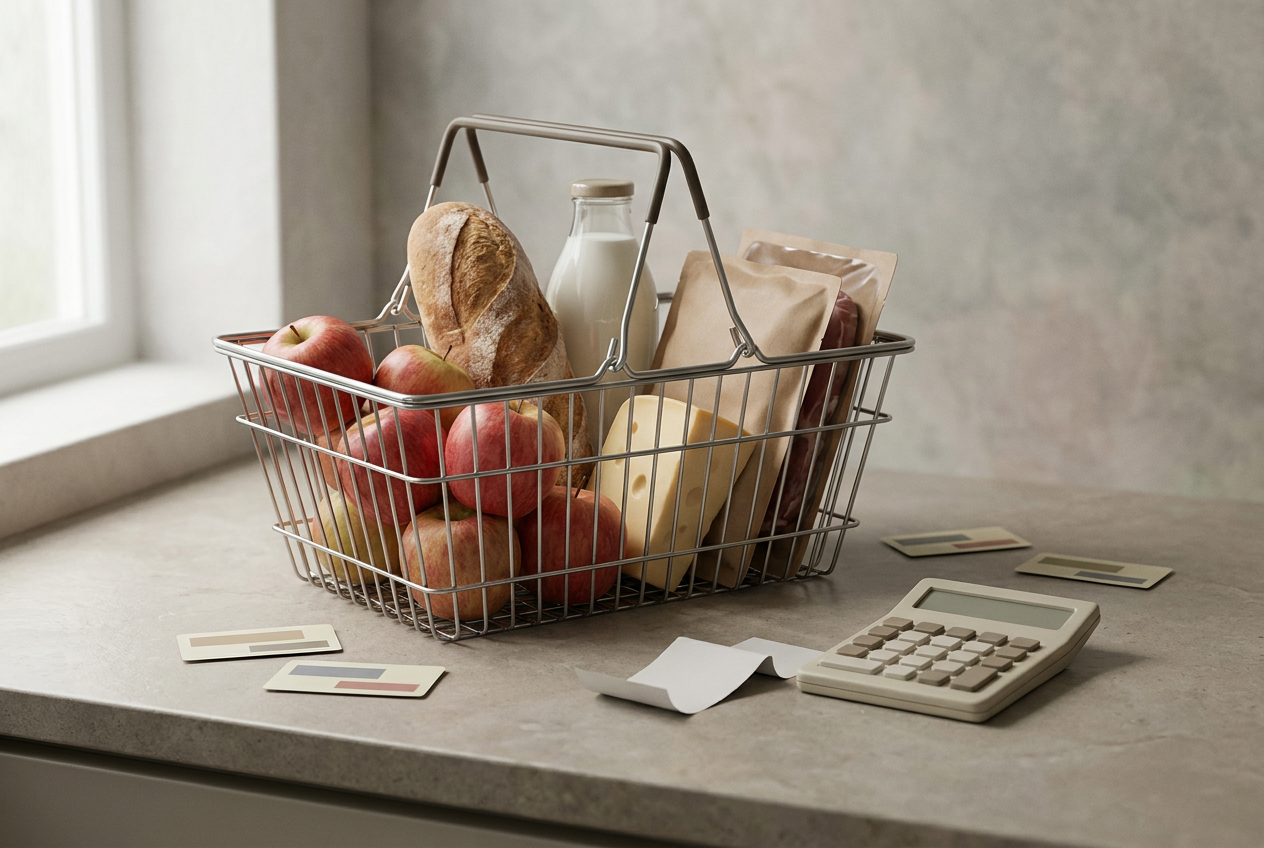
The HCSO's August flash report points to a rarely seen shift in Hungarian prices: in August 2026, consumer prices were on average 1.3 per cent higher than a year earlier, while food prices fell by an average of 1.4 per cent. This stands out because in recent years most households have been dealing with persistent price rises in shops.
The picture is not uniform, however. According to HCSO data, service prices rose by 5.0 per cent over the year, meaning that any relief seen in grocery shopping can quickly be dampened by other expenses. That is why both of the following can be true at the same time: several staple foods have become cheaper, and many people still do not feel that day-to-day life has become cheaper overall.
What exactly does the latest HCSO data show?
According to the official release, annual inflation was 1.3 per cent in August 2026, while prices rose by 0.2 per cent month on month. This means that the overall consumer basket was still becoming more expensive, but at a much slower pace than during the earlier period of high inflation.
For food, it is important to distinguish between the average category and supermarket shopping. According to the HCSO, food prices fell by an average of 1.4 per cent year on year, while shop food prices excluding catering services fell by 4.8 per cent. This difference matters a great deal for a family's monthly spending, because the situation is not the same if someone mainly buys ingredients, as opposed to spending more often in restaurants, snack bars or other catering venues.
Where is the price decline likely to be felt most?
The most visible changes may appear in products that feature regularly in many households' weekly shop. According to the HCSO's August flash report, over one year the price of canned meat fell by 27.0 per cent, fruit by 15.6 per cent, butter and butter cream by 15.5 per cent, pork by 12.9 per cent, and cheese by 11.1 per cent.
According to Store Insider's report, a similar trend was visible in other products as well, such as milk and pasta. How much of this people actually feel in their own wallets depends largely on which products they buy regularly, how much they cook at home, and how much ready-made food or catering services they use.
Why does not everyone feel this in the same way?
There can easily be a gap between statistics and everyday experience. According to Telex's report, many people's sense of prices is worsened by the fact that restaurant, snack bar and other service-related spending continues to rise, so the decline in shop prices does not necessarily show up in full in the end-of-month balance.
The situation is different for someone who mostly cooks at home and whose shopping consists mainly of ingredients, compared with someone who frequently orders food, regularly visits catering venues, or uses many services. The HCSO's figures therefore show a real rearrangement, but not in the same way across every consumer basket.
Rising service costs can take back much of the relief in shops
According to the HCSO's August flash report, service prices rose by 5.0 per cent over one year. Based on the same HCSO data, theatre ticket prices rose by 17.6 per cent, freight transport by 13.9 per cent, and taxi services by 11.0 per cent.
These items do not carry the same weight in every household, but they clearly show that part of the inflation burden has shifted. According to Privátbankár's analysis, the persistent rise in service prices may mean that the improvement in purchasing power is more limited than many people might first assume from shop prices alone.
What does this mean in practice for an average household?
The change may be felt most clearly where a large share of monthly spending goes on day-to-day shopping. Families that regularly buy dairy products, meat, cheese, fruit and other ingredients needed for home cooking are more likely to encounter more favourable prices than a year earlier.
Even so, the full monthly balance may remain tight. A more expensive repair, more frequent taxi use, a few catering-related purchases or another service item can easily absorb the amount saved in the shop. That is why the headline inflation figure on its own does not tell you whether a given family is actually better off.
Where can the monthly budget start to slip?
One important lesson from the current data is that it is not enough to watch food prices alone. If a household's spending is heavily service-centred, price rises may still remain clearly visible at the end of the month even if the shopping basket has become cheaper.
This may be especially noticeable for those who regularly spend on catering or day-to-day convenience services. In such cases, savings in shops and rising service costs are present at the same time, and what ultimately matters is which of the two accounts for more spending in a given month.
What is worth paying attention to when shopping?
Based on the current figures, it may be especially worth watching prices more consciously for ingredient-type products. If someone replaces part of their more expensive catering spending with cooking at home, the more favourable retail trend is more likely to show up in their monthly expenses.
It may be useful to treat shopping and service spending separately, because these two areas are now moving in different directions. That can make it easier to see whether, by the end of the month, it is food prices or rather other everyday expenses that are taking away the surplus.
- It is worth separately tracking the prices of staple foods you buy regularly.
- It may be useful to note how much is spent each month on catering and other services.
- Real savings are shown not by individual promotions, but by the structure of total monthly spending.
What could this mean for inflation as a whole?
One important message from the August data is that the structure of inflation has changed markedly. Based on the official figures, it is no longer mainly food sold in shops that is pushing prices higher, but rather services.
According to Portfolio's analysis, the fall in food prices may reflect a process that has been under way for several months. Even so, this alone does not mean that all major household expenses are easing on a lasting basis, because service prices have remained on an upward path.
Summary: where is the drop in prices felt most, and where is it not?
Based on the HCSO's official data, the decline in food prices is likely to be felt most in products bought in shops for home consumption. People who buy a lot of fruit, cheese, pork, butter or other staple foods may genuinely find the situation at the till more favourable than a year earlier.
By contrast, services, catering and several convenience-related expenses are still pushing monthly costs upwards. That is why both of the following can be true at the same time: food prices in shops have fallen, and many households still do not feel that life has become cheaper overall.
Anyone who wants a clearer picture of their own situation may now find it particularly useful to separate shopping spending from service spending. What the August inflation data shows most clearly is that these two areas are now telling very different stories.
Sources used
- 1.KSH: Augusztusban 1,3 százalékkal nőttek a fogyasztói árakstoreinsider.huverified
- 2.Tényleg olcsóbb lett az élelmiszer? Ezt mutatják az augusztusi inflációs adatoktelex.hu
- 3.Évtizedek óta nem látott árcsökkenés a boltokbanprivatbankar.hu
- 4.Hogyan alakult a magyar áremelkedés? Itt a friss adatportfolio.hu
- 5.Rekord mértékben esett az élelmiszerek áraazenpenzem.hu
These sources were used during our editorial fact check.