Sport & Városfejlesztés
Budapest 2036 Olympics: shortlist plan and city impact
The IOC has confirmed that Budapest is among the locations it is in talks with over the 2036 Summer Olympics. This is not hosting rights yet: Hungary is expected to decide in 2028, and the IOC in 2029. We summarise what the leaked master plan contains, what the government says, and what all this could mean for Budapest residents.
2026-10-09 · 5 min read
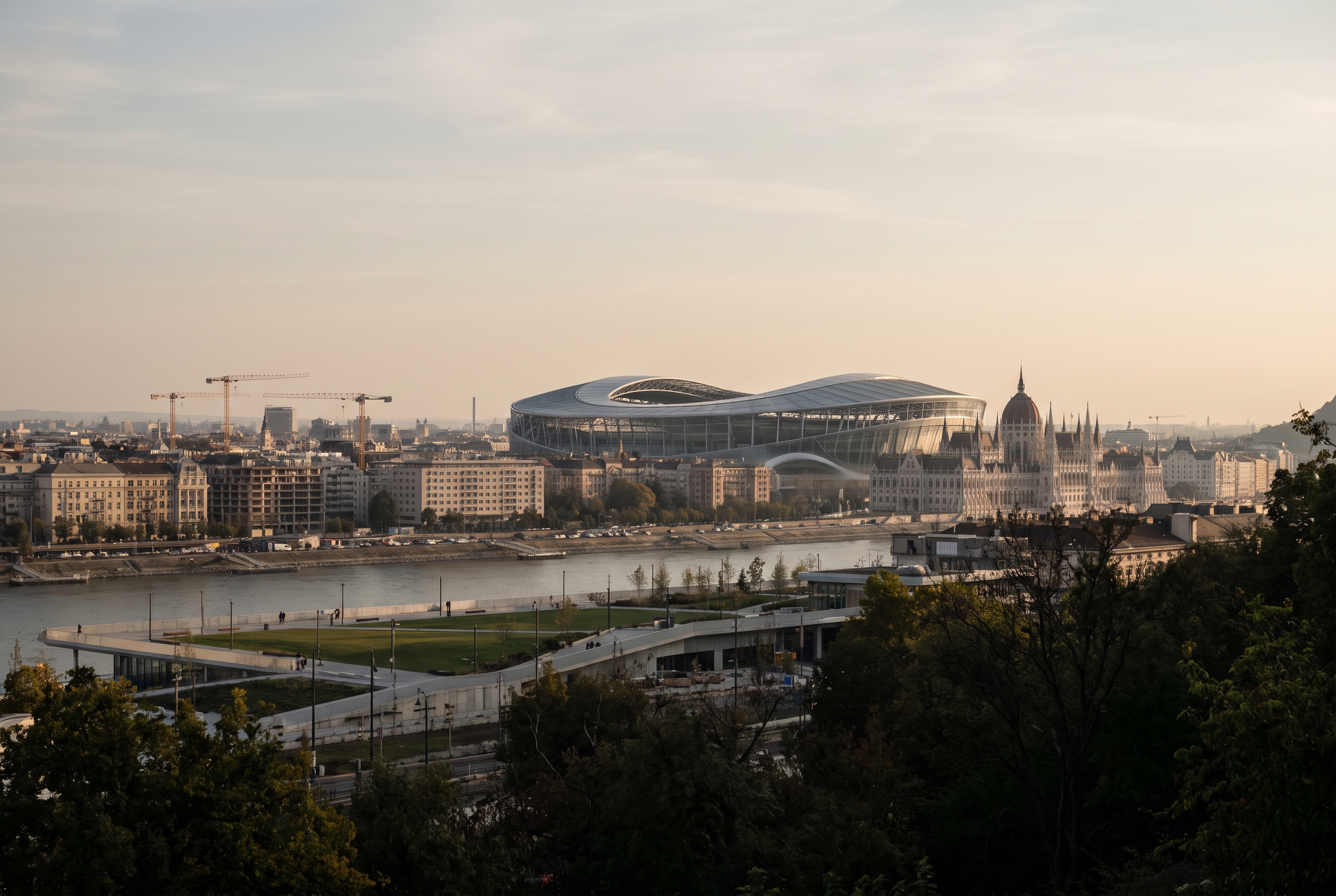
The International Olympic Committee (IOC) has confirmed that Budapest is also on the shortlist of locations with which the organisation is holding discussions about hosting the 2036 Summer Olympic Games. At first glance, the news may seem like a major step, but in reality it marks the beginning of a longer process. In this article, we look at what the list actually means, what plans have been outlined in the press, where the different positions clash, and what may depend on all this for people living in the capital.
What the shortlist means, and what it does not
According to a 24.hu report published on 6 October, the Hungarian Olympic Committee (MOB) presented feedback from the IOC stating that Budapest is among the seven candidates with which the IOC is conducting an informal dialogue about the 2036 Games. The news was also confirmed by HVG.
An important distinction is that this is not a winning bid, nor is it a binding application. In recent years, the IOC has changed the way hosts are selected: instead of the previous open bidding competition, it now maintains an ongoing dialogue with interested cities and countries. At this stage, the parties shape the concept together, while final commitments come later.
The timeline: Hungary decides in 2028, the IOC in 2029
According to reports by 24.hu and Nemzeti Sport, an official Hungarian commitment to host will have to be decided in 2028, while the IOC may announce in 2029 who will host the 2036 Summer Olympics. In other words, years still remain between the current announcement and the final decision.
This period is intended to allow the concept to be developed in greater detail: venues, costs, financing and urban development elements may all take more final shape during this time. The Hungarian Olympic Committee is led by president Zsolt Gyulay, and according to 24.hu, the organisation is taking the concept forward on the basis of the IOC's feedback.
What does the leaked master plan include?
What has reached the public so far is not an official final document, but a leaked master plan, the details of which were reported by HVG. According to the paper, the plan would designate iconic public spaces in Budapest as competition venues, while also factoring in regional and foreign locations.
According to HVG's report, the leaked plan would place the Olympic Village in the northern part of Csepel Island, on the site of the former Student City project. For now, this detail is known only from the leaked document and has no official confirmation, so it should be treated with caution.
According to a summary by Forbes Hungary, the master plan would place most venues within a 10-kilometre radius, which could benefit both athletes and spectators because of shorter travel times. The same report mentions three new sports investments: a velodrome, a hockey stadium and a tennis centre.
Contradiction: new facilities, or Olympics without new stadiums?
The most important open question is whether new sports facilities need to be built. According to a report by Nemzeti Sport, investment minister Dávid Vitézy said that no new stadium construction linked to the Olympics would be financed until 2030, and that the return model would follow Barcelona. Based on 24.hu's reporting, the Hungarian Olympic Committee also said that there was no need for new stadiums and sports facilities.
In the international sports press, Inside The Games also described the Hungarian concept as one built on existing facilities and transport development, without new permanent stadiums.
By contrast, the leaked March master plan presented by HVG and Forbes Hungary considers the construction of the velodrome, hockey stadium and tennis centre indispensable, according to those publications. For now, there is no public answer as to how the two approaches can be reconciled. It is also worth bearing in mind that the ministerial statement applies to the period up to 2030, so it says nothing about what might happen after that.
What could all this mean for Budapest residents?
From the perspective of people living in the capital, the real stakes of the Olympics are not the two-week sporting event itself, but what lasting developments remain afterwards. Most people are likely to be interested in whether new transport links will be built, whether public transport will improve, and whether usable housing or community space will remain on the sites of Olympic venues.
According to Forbes Hungary, the capital supports only those developments that serve residents' needs. This condition could be an important factor in later negotiations, especially regarding the post-Games use of the Olympic Village and transport investments.
The Barcelona example mentioned by the government is interesting because the 1992 Games are generally cited as a case in which hosting was used as a tool for comprehensive urban renewal. Whether a similar model can be implemented in Budapest will depend on the final concept and the financing.
What does public opinion think?
According to a Medián poll reported by Telex, 64 per cent of the Hungarian population and 57 per cent of Budapest residents support the idea of hosting the Olympics. Based on the survey, support rises to 86 per cent if hosting would be combined with comprehensive urban development.
The figures suggest that people in the capital are somewhat more cautious than the country as a whole, and that support depends to a significant extent on whether hosting brings tangible benefits. In the coming years, this may also become a defining consideration in political debates.
What is worth watching in the coming period?
Being placed on the shortlist is the first step in a long process, not a final decision. In the coming months and years, the following questions may determine where Budapest's Olympic plan goes:
- The official concept: how far the final plan differs from the currently leaked master plan.
- The facilities: whether the contradiction over new sports investments can be resolved.
- The financing: who would cover the costs, and in what proportion, and what happens after 2030.
- Urban development: what transport and housing investments would be linked to hosting.
- The milestones: Hungary's commitment in 2028, and the IOC's decision in 2029.
Until then, the most important thing is to treat official decisions and leaked plans separately: the former reflect the position of the government and the Hungarian Olympic Committee, while the latter are details from a working document that may still change significantly.
Sources used
- 1.Budapest 2036 olimpia MOB reakció24.huverified
- 2.Budapesti olimpia 2036: NOB megerősítés és a szűkített listahvg.huverified
- 3.Olimpia 2036: A kormány reagált Budapest rendezési szándékáranemzetisport.huverified
- 4.A budapesti olimpia mesterterveforbes.huverified
- 5.Hungary 2036 Olympic Conceptinsidethegames.bizverified
- 6.Medián felmérés a budapesti olimpia támogatottságáróltelex.huverified
These sources were used during our editorial fact check.