
Technológia
AI data centres in space: Google teams with Blue Origin
Google says a Blue Origin rocket could launch Project Suncatcher's AI satellites in the first quarter of 2029. The aim is to harness solar energy, but cooling, radiation and costs also need to be addressed.
2026-11-22 · 4 min read
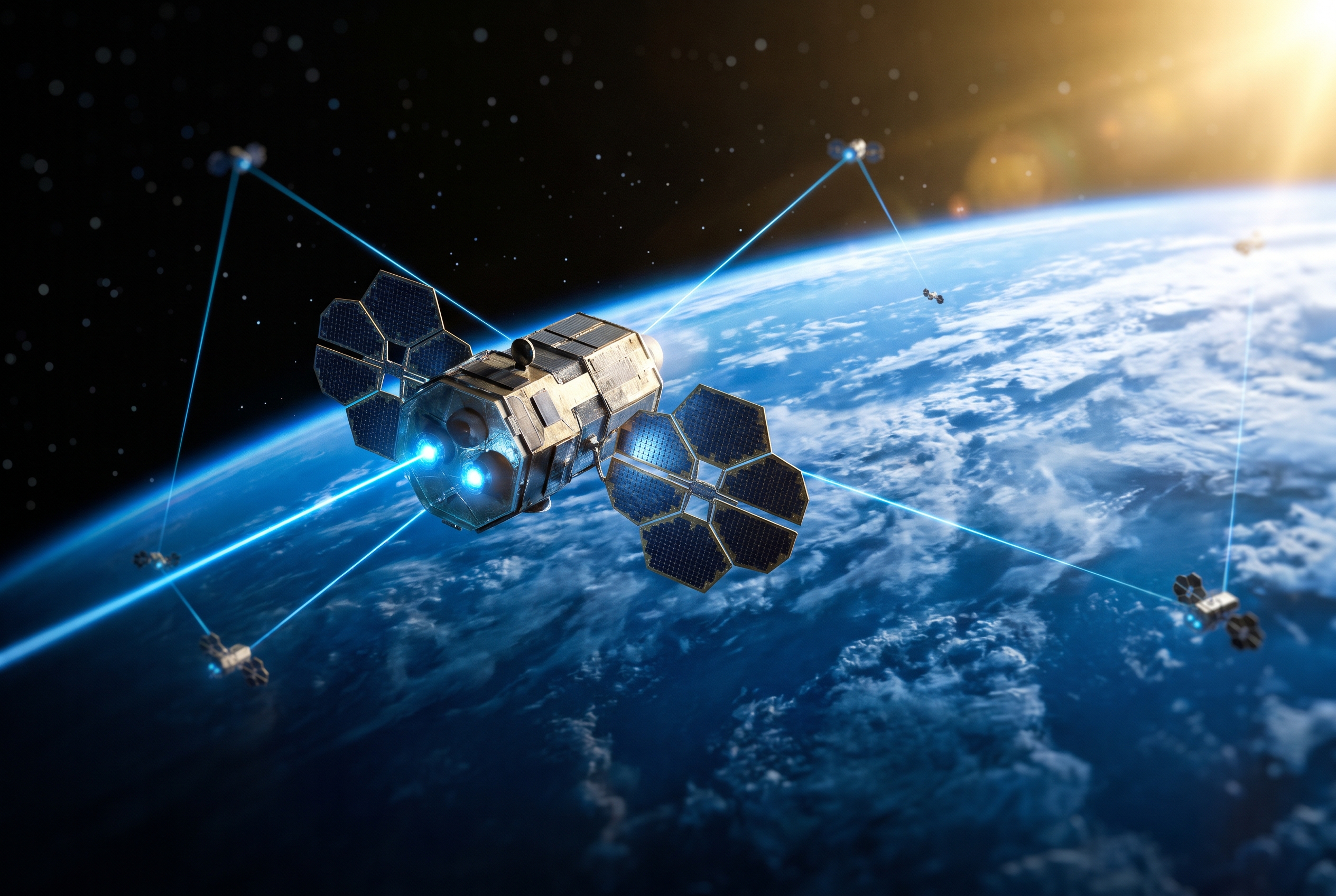
Google wants to expand AI computing capacity not in another server building on Earth, but on satellites orbiting the planet. According to the company's announcement on 19 November, it has selected Blue Origin's New Glenn rocket for Project Suncatcher's next major launch, scheduled for the first quarter of 2029.
The idea centres on harnessing solar energy in space. However, Google's plan does not mean that replacing terrestrial data centres is already a settled decision: the company is preparing infrastructure that must address cooling, data transmission and the difficulties of operating in space, as well as its power supply.
Bringing computing closer to solar energy
Google says Suncatcher aims to use the abundant solar energy available in Earth orbit to expand AI computing capacity. The approach is not simply about finding a new energy source for conventional data centres, but also about rethinking where the computing equipment is located.
This is an important distinction from the idea of transmitting solar energy from space to Earth. Based on Suncatcher's stated purpose, the computers themselves would operate in orbit: energy would be used locally, and the system's value would lie in the computation it performs.
However, the promise of sustainability should be distinguished from proven results. Using solar energy does not, in itself, answer how much the entire system would cost, how much terrestrial capacity it could replace, or what its environmental footprint would be over its full lifetime.
2029 is the planned major launch, not the start of testing
According to Google's announcement, New Glenn would place the satellites into a sun-synchronous orbit in the first quarter of 2029. This is a planned launch date, not the opening date of an operational space-based data centre. The partnership sets out how the equipment for the next phase would be sent into space.
According to PCMag, an earlier prototype was tested in October 2026: a satellite built on Planet's platform travelled into space on a SpaceX rocket, then sent back a haiku after executing an AI instruction. The test described by the publication therefore preceded the planned launch with Blue Origin.
There is, however, a significant difference between such a demonstration and a larger computing system. Successfully completing one task does not yet show how numerous devices work together, how durable the system is, or what it would cost to provide the service. These questions are what make the next steps significant, rather than the mere fact that a computer has already operated in space.
One satellite is not an entire server farm
Google's announcement compares the computing power of each planned satellite to roughly that of a single rack in a terrestrial data centre: a server rack filled with equipment. Blue Origin says the satellites would be equipped with Google's own AI accelerators, known as TPUs.
The server-rack comparison helps put the term “space-based data centre” into perspective. A single satellite would not be equivalent to an entire terrestrial server farm. Rather, the rationale behind the plan is that multiple computing units could form a coordinated system.
That is why the capabilities of each individual satellite are not the only consideration. Equally important are how tasks can be distributed between them and how efficiently they can exchange data. Numerous separate computers only become useful infrastructure if they also work together effectively.
Laser links would connect the computing units
According to Google Research's technical overview, optical, or laser, data links are planned between the system's satellites, targeting data transfer rates on the order of terabits per second. This is a central element of the proposed system design, not merely an additional communications feature.
In simple terms, the links would prevent the satellites from operating as isolated computers. The connections would provide the basis for separate devices to participate jointly in computations. The targeted data transfer rate should therefore be understood as a technical goal for now, rather than the verified performance of an operational service.
Solar energy does not solve cooling or radiation protection
Google Research's overview lists heat dissipation in a vacuum, radiation protection and coordinated satellite formation flying among the main challenges. In other words, even the developers' own description makes clear that sending computing units and solar panels into space is not enough: a system adapted to the entire operating environment must be created.
The central cooling issue is that supplying energy and managing the resulting heat are two separate questions. Having the energy needed to operate the equipment does not automatically resolve its thermal management. Space therefore cannot simply be regarded as a place where all the operational problems of terrestrial data centres disappear.
Radiation protection and formation flying also illustrate why this is more than a conventional server development project. The tasks listed by Google Research span both computing and spacecraft operations. For the project to succeed, these elements must function properly together.
Sunlight alone does not establish economic viability
According to Trending Topics, neither the value of the agreement nor the exact number of satellites planned for the 2029 launch has been disclosed. The announcement therefore does not establish how much total computing capacity would be built or how much it would cost to create.
An economic comparison would require more than examining the energy source alone. Launches, equipment lifetimes, replacements and operations would also need to be taken into account. Similarly, assessing any environmental advantage would require looking at the impact of the entire system, rather than solely its use of solar energy.
Suncatcher's significance at this stage therefore lies in testing the potential of a new type of infrastructure. Google and Blue Origin's announced partnership attaches a concrete launch plan to this idea, but does not prove that computing in space will be cheaper or more sustainable than computing on Earth. The next major question is whether these individually promising elements can come together in a system that operates reliably over time and can be scaled up substantially.
Sources used
- 1.Google partners with Blue Origin on Project Suncatcher heavy-lift launchblog.googleverified
- 2.Google Selects Blue Origin's New Glenn for Project Suncatcherblueorigin.comverified
- 3.Exploring a space-based, scalable AI infrastructure system designresearch.googleverified
- 4.Google Selects Blue Origin to Launch Its AI Satellitespcmag.comverified
- 5.Google Suncatcher: Blue Origin New Glenn launchtrendingtopics.euverified
- 6.Google Will Place Solar-Powered AI Data Centers in Spaceautoevolution.com
- 7.Project Suncatcher Video Analysisyoutube.com
These sources were used during our editorial fact check.
Related Articles


Latest Articles

Zene és Koncert
André Rieu Budapest 2027: concert and ticket information
2026-11-22 · 4 min read

Igényelhető támogatások és kedvezmények
December pension arrives on 2 December: plan to January
2026-11-22 · 4 min read

Magyar film / Mozipremier
Hogyan tudnék élni nélküled? 2. breaks 29-year record
2026-11-22 · 4 min read