Utazás
Protests in France: what travellers need to know
Protests in France may cause transport disruption, local closures and restrictions introduced at short notice. Here is how Hungarian tourists and business travellers heading to France or already there can prepare.
2026-11-09 · 5 min read
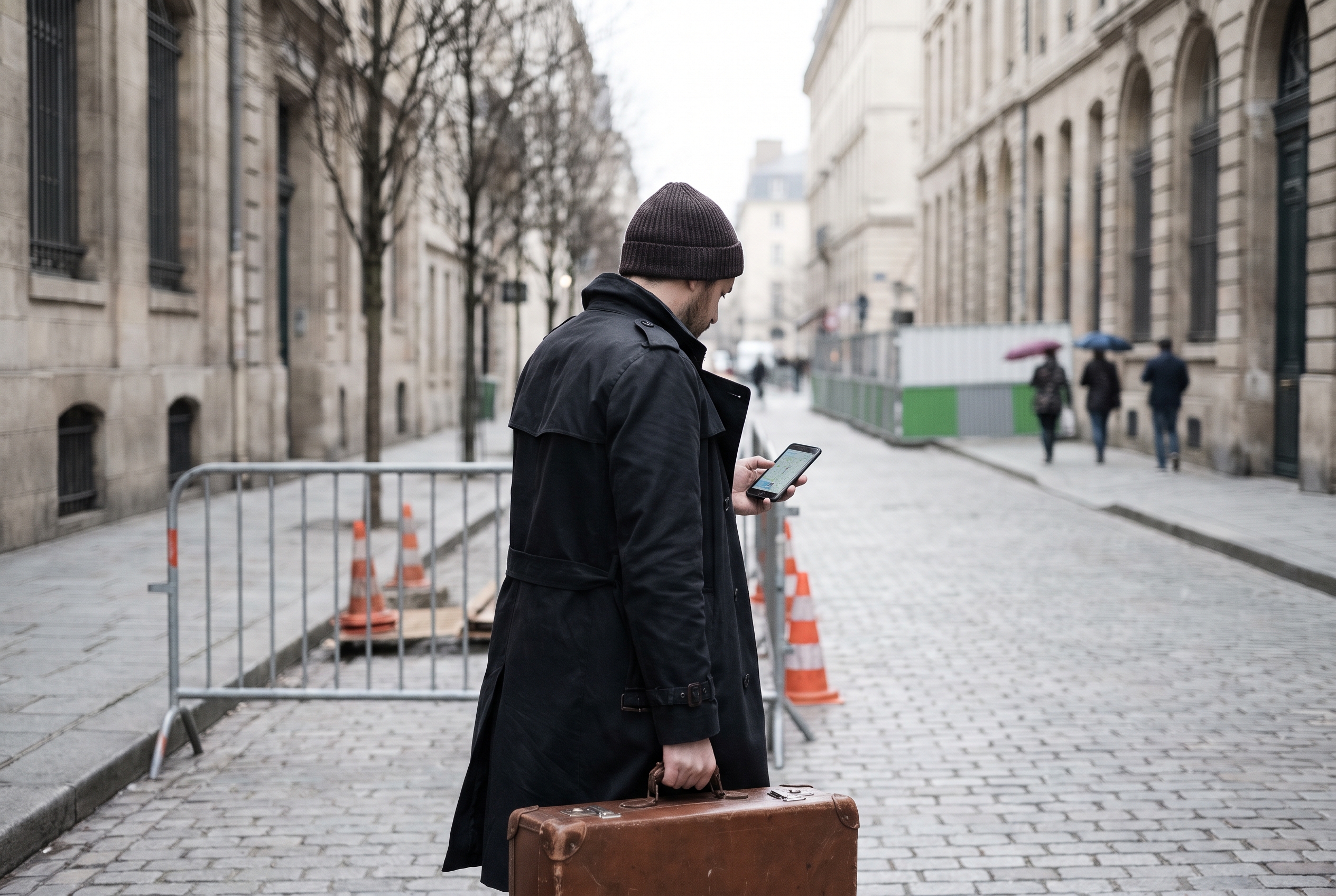
Protests and, in some cases, violent clashes may disrupt daily life in several French cities. Conditions vary by area and can change quickly, so travellers should regularly check the latest transport and official information both before departure and while in France.
The most important precaution is to avoid demonstrations, large gatherings and streets with a heightened police presence. This is advisable even if an event appears peaceful, as circumstances can change within a short time.
Why can the wave of protests affect tourists too?
Protests are not necessarily confined to a single square or district. March routes, police cordons and transport restrictions may also affect areas containing hotels, railway stations, business districts or tourist attractions.
According to the UK government's travel advice for France, demonstrations can cause disruption and some may turn violent. The guidance recommends that travellers stay away from protests, follow the instructions of local authorities and monitor local media.
Police operations and crowd movements may also affect surrounding streets. It is therefore unsafe to approach a demonstration to take photographs or record video.
What to check before departure
It is advisable to keep existing travel plans flexible. The opening hours of a venue or event may change, while a booked train or local service may be delayed, rerouted or cancelled.
- Check the area around your accommodation, particularly major squares, government buildings and transport hubs.
- Review the latest information from your airline, railway operator and local public transport provider.
- Keep your accommodation's address and telephone number somewhere other than your phone.
- Check your insurance terms for cancellations, interrupted journeys and exceptional events.
- Make copies of your most important travel documents and store them separately from the originals.
- Allow extra time to reach the airport or railway station.
Insurance policy terms vary, so general guidance is no substitute for consulting your insurer. It is worth confirming in advance which events are covered and what evidence may be required when making a claim.
Metro and rail services can change quickly
According to the US Embassy's Paris security alert dated 22 October 2026, travellers should monitor information from the Paris public transport operator and the French railways. It also warns that protests and strikes may cause unexpected disruption to metro and rail services, as well as road closures.
It is worth planning at least two routes between your accommodation, railway station, airport and important meetings. The alternative should not rely solely on another metro line, as the same closure may affect several services.
For business travel, it is advisable to warn the other party in advance that meeting times may change because of transport disruption. If the venue is in an area affected by protests, agreeing on another location or remote participation may be safer.
Local restrictions must be checked separately
The UK government's general travel advice for France highlights disruption linked to protests, the risk of violence and the need to follow local authorities' instructions. By contrast, the US Embassy's alert for Paris dated 22 October 2026 also mentioned the possibility of night-time restrictions alongside the local transport disruption at that time.
Restrictions do not necessarily apply across France or throughout an entire city. Details may change at short notice, so the latest official announcement for the relevant municipality or district should always take precedence.
According to a report by Világgazdaság, night-time curfew restrictions were imposed in parts of Paris and in Lille. However, this does not mean that the same rules will continue to apply unchanged at a later date or in other districts.
What should you do if you approach a protest?
If a large crowd, police cordon, smoke or road closure suddenly becomes visible in a street, it is inadvisable to move closer, even to take photographs. The safest route will generally lead away from the crowd and the site of the police operation, but instructions from authorities at the scene should always take priority.
- Do not attempt to cross a police cordon or move through a marching crowd.
- Do not stop near the scene to record footage.
- If leaving is temporarily unsafe, find a calm, sheltered place.
- Tell your travel companion, accommodation provider or contact that you are safe.
- Only continue your journey after checking the latest official and transport information.
If there are signs that an irritant is present, leave the area in accordance with official instructions. Seek local emergency assistance if you experience health problems; general travel guidance is no substitute for medical care.
Social media is no substitute for local information
Videos from the scene may appear quickly on social media, but they often do not show exactly when or where they were recorded. A striking video cannot reliably indicate which streets are passable or how long a closure will remain in place.
Travellers should therefore not attempt to assess at the scene how peaceful a particular crowd is. It is safer to avoid approaching the area altogether and choose a diversion based on information from local authorities and transport operators.
Reports issued at different times about people injured or detained may differ. For travel decisions, the latest official alert for the relevant district is more useful than these figures.
A short checklist for travellers
- Before departure and before every longer journey, check local news, official warnings and transport announcements.
- Avoid demonstrations, large gatherings and streets affected by police operations.
- Allow extra time and plan at least one alternative route using a different mode of transport.
- Keep your phone charged and ensure you have a working internet connection.
- Keep your travel documents, accommodation address, contact person and insurer's details readily accessible.
- If local restrictions apply, always follow the latest official instructions for the relevant area.
The situation does not affect every destination and district in France to the same extent. Rather than automatically cancelling a trip, travellers should assess the specific area and timing. However, approaching demonstrations or attempting to bypass closures presents an unnecessary risk.
Sources used
- 1.Foreign travel advice: Francegov.ukverified
- 2.Security Alert - U.S. Embassy Parisfr.usembassy.govverified
- 3.Franciaország tüntetések és kijárási tilalomvg.huverified
- 4.France Travel Advisorytravel.state.gov
- 5.France Travel Advicesmartraveller.gov.au
- 6.Párizs hírek és cikkekportfolio.hu
- 7.Franciaországi zavargások: beváltak a kijárási tilalmakpenzcentrum.hu
These sources were used during our editorial fact check.