Tudomány
2026 Chemistry Nobel Prize: why mirror molecules matter
Henri B. Kagan and Kenso Soai received this year’s Nobel Prize in Chemistry. Their research showed how tiny asymmetries in molecules can be amplified. Below, we explain what this means for drug research and for understanding the origin of life, and where the boundary lies between basic research and pharmaceutical manufacturing.
2026-10-13 · 5 min read
The 2026 Nobel Prize in Chemistry was awarded to Henri B. Kagan and Kenso Soai. According to the Royal Swedish Academy of Sciences’ statement of 7 October, they received the honour for the discovery of nonlinear effects in asymmetric organic synthesis and of autocatalysis. At first, the subject may seem abstract, but it is in fact linked to one of the fundamental questions in drug research and the origin of life: how one of a pair of mirror-image molecules comes to outnumber the other.
What is chirality, and why is it compared to our hands?
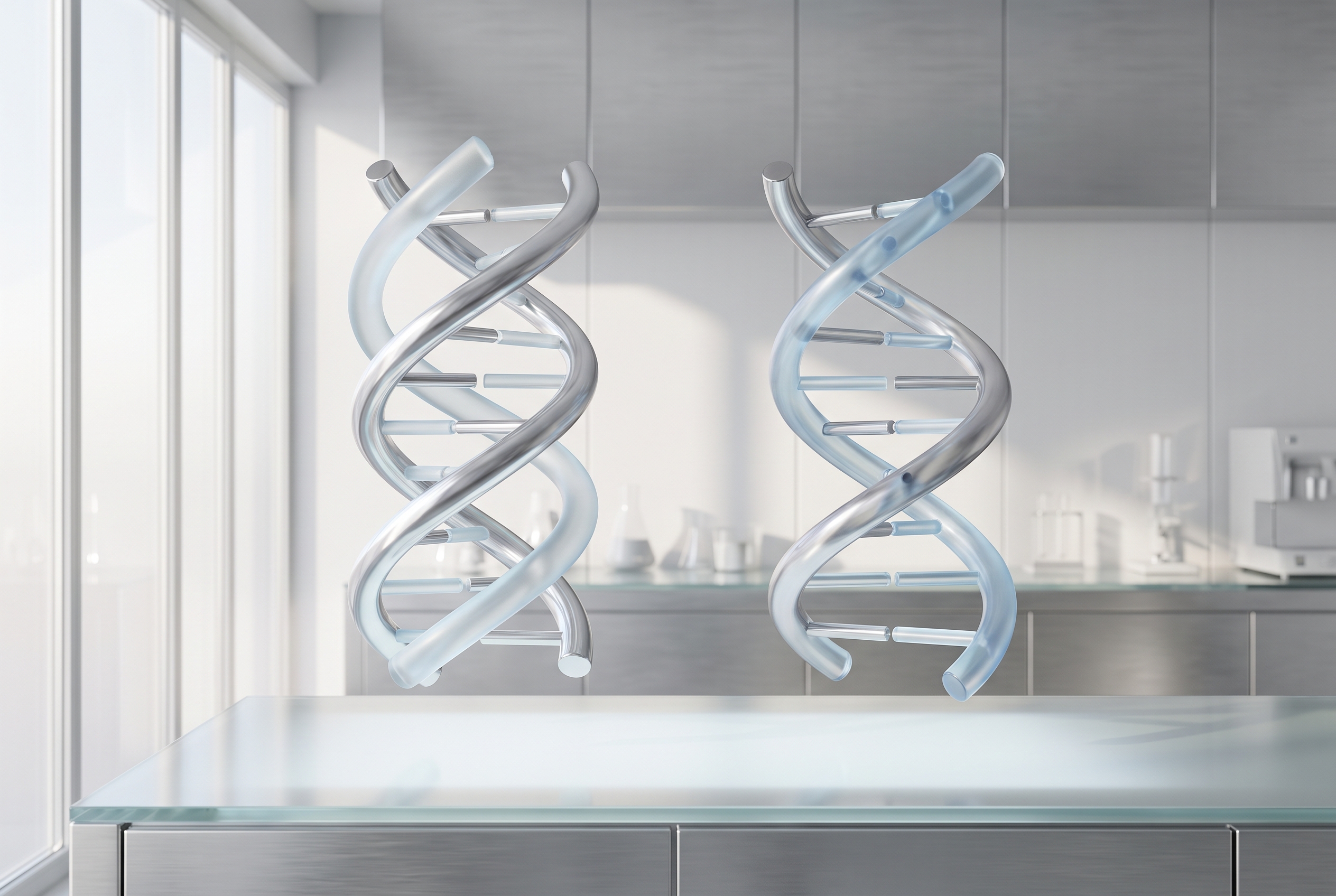
Certain molecules behave like our left and right hands. They are made up of the same elements, and their atoms are connected in the same way, yet they cannot be superimposed because they are mirror images of each other. This property is called chirality, and the two mirror-image forms are known as enantiomers.
The difference is familiar from everyday life too: a glove made for the right hand does not fit the left. In the world of molecules, the situation is similar. If a molecule has to bind to a partner that is also chiral, such as a protein, it matters greatly which mirror-image form it is.
Why does this matter in medicines?
According to a summary by the Hungarian Academy of Sciences, methods of asymmetric synthesis are especially important in drug research because, of the two mirror-image forms of a molecule, often only one has the desired therapeutic effect. The Royal Society of Chemistry, the UK’s professional body for chemistry, also stresses that enantiomers can have different biological effects: one may heal, while the other may be ineffective or could even cause harmful side effects.
According to The Guardian’s report, experts explain this by noting that the targets of medicines in the body, proteins, are themselves chiral. A drug molecule may therefore fit its target in one mirror-image form, while in the other it may not fit at all, or may instead trigger a completely different process.
Kagan’s insight: the end product can be purer than the starting point
Chemists have long been looking for ways to produce only one, the desired, mirror-image form of a molecule. To do this, they often use a chiral catalyst, meaning a substance that steers the reaction in one direction. For a long time, it seemed self-evident that the product could be no “purer” than the catalyst itself.
According to the Royal Swedish Academy of Sciences’ detailed scientific background paper, Henri B. Kagan showed in 1986 that this is not always true. Through so-called nonlinear effects (NLE), the excess of one enantiomer in the reaction product can exceed the purity of the catalyst used. Put more simply: even a starting material that is not perfectly pure can produce a final product that is more uniform than expected.
The Soai reaction: when the product replicates itself
Kenso Soai went a step further. According to the Academy’s background paper, he developed asymmetric autocatalysis, now known as the Soai reaction. In this process, the product formed during the reaction also acts as a catalyst, meaning it helps the formation of its own mirror-image form.
This has a striking consequence. As the document describes, even an extremely small initial asymmetry can give rise to an almost completely pure enantiomer. The Hungarian Academy of Sciences summarised the work of the two laureates by saying that their methods make it possible to amplify molecular asymmetry.
An answer to an old mystery: why is life “single-handed”?
The significance of these discoveries goes beyond the laboratory. The building blocks of living organisms typically occur in only one of the two mirror-image forms; this phenomenon is called homochirality. Scientists have long been interested in how this one-sidedness could have emerged in an environment where, in principle, chemical processes might produce both forms with equal likelihood.
According to the statement by the Academy awarding the Nobel Prize, the discoveries of Kagan and Soai provide an answer to this question. Self-reinforcing mechanisms of asymmetry show how an initially tiny, even random, difference could have grown to such an extent that one form eventually became dominant.
Basic research or a pharmaceutical manufacturing process?
In news reports about the prize, two things can easily become blurred: scientific significance and direct industrial application. In its analysis, the Catalan chemical research institute ICIQ cites Jordi Burés as pointing out that the prize-winning reactions are not directly the reactions used in mass industrial pharmaceutical production. In his assessment, the work primarily clarifies fundamental, theoretical questions.
This does not diminish the weight of the discoveries; it simply makes clearer where their impact is worth looking for. This theoretical understanding may help researchers design the selective production of mirror-image molecules more effectively. The MTI news summary puts it by saying that the results may provide an indirect or direct basis for designing more efficient and safer pharmaceutical manufacturing processes. Professional assessments place different emphasis on how direct this is in practice, so the pharmaceutical impact is better understood as a longer-term, indirect process.
Hungarian links and the details of the prize
The prize also has a Hungarian connection. According to a statement by the Institute of Mathematics at the Budapest University of Technology and Economics, Kenso Soai previously visited BME and also published jointly with Hungarian researchers. This shows clearly that the question of amplified asymmetry is of interest not only to chemists but also to mathematicians who model such processes.
According to The Guardian’s report, the award comes with prize money of 12 million Swedish kronor, to be shared by the two scientists. In the Hungarian press, Qubit also covered the prize in detail and the pharmaceutical background to the synthesis of mirror molecules.
What is worth remembering about the 2026 Nobel Prize in Chemistry?
This year’s prize highlighted two insights that changed how researchers think about mirror-image forms of molecules. Kagan showed that a reaction product can be purer than the catalyst, while Soai found a reaction in which the product replicates itself, creating an almost uniform result from a tiny initial difference.
- Scientific significance: the discoveries offer an explanation for how the molecular one-sidedness of life may have arisen.
- Drug research: because mirror-image forms can have different effects, understanding selective production is fundamentally important.
- An important nuance: the prize-winning reactions are primarily theoretical breakthroughs, not pharmaceutical factory mass-production processes directly.
The prize is therefore also a good example of how basic research that at first seems abstract can, over decades, become an important starting point for practical science.
Sources used
- 1.The Nobel Prize in Chemistry 2026 Press Releasenobelprize.orgverified
- 2.Advanced Information: The Nobel Prize in Chemistry 2026nobelprize.orgverified
- 3.ICIQ Analysis on Nobel Prize in Chemistry 2026iciq.orgverified
- 4.Kenso Soai and the BME Mathematics Institutemath.bme.huverified
- 5.Nobel Prize in Chemistry awarded for work on mirror-image moleculestheguardian.comverified
- 6.Nobel Prize for Chemistry 2026rsc.org
- 7.Henri Kagan és Kenso Soai kapta a kémiai Nobel-díjat 2026-banqubit.hu
These sources were used during our editorial fact check.