
World
Ceuta: thousands got into Spain — soldiers deployed at the border
Thousands of border-crossers entered the North African Spanish enclave on Thursday by swimming and climbing over the breakwater. Madrid has deployed soldiers to the city, and has agreed with Morocco on an accelerated return process.
2026-08-03 · 8 min read
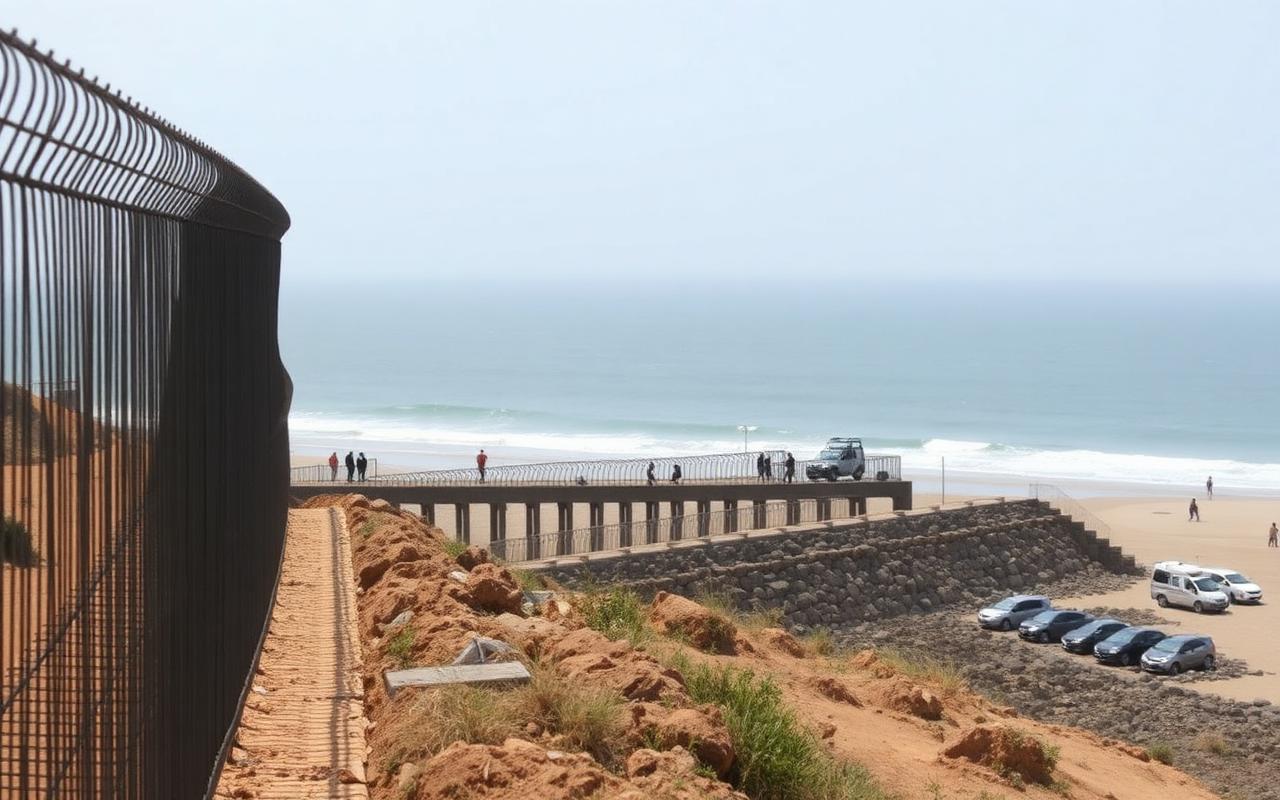
Ceuta is a Spanish autonomous city of barely twenty square kilometers on Africa's northern coast, right next to Morocco. That is precisely why it is one of the most sensitive points on the European Union's external border: anyone who gets past the fence or through the sea formally sets foot on EU soil.
Chaos broke out here on Thursday after a serious breakdown occurred in border control on the Moroccan side. According to estimates by Spanish public television, two to three thousand people got in within a few hours: many swam around the coastal fence in the sea, others made their way in over the breakwater or by climbing the security fences.
Madrid's response: soldiers and accelerated returns
The Spanish government has deployed soldiers to the enclave to reinforce border security, and has also supplemented law enforcement forces. In parallel, Madrid and Rabat have agreed on the swift transfer of those who arrived in Ceuta — meaning the vast majority of those who got in over the past few days will be returned to the Moroccan side after a brief procedure.
The practical significance of the agreement is large, but it is legally sensitive: human rights organizations regularly object to accelerated returns, arguing that they fail to guarantee individual assessment of asylum claims, especially in the case of unaccompanied minors.
Why now?
Mass crossings in Ceuta are never purely a demographic phenomenon — they are almost always linked to the strictness of Moroccan border control. When Rabat eases up, pressure appears at the fence within hours; when it tightens, crossings practically stop. This is why the intensity of border enforcement is regularly described in diplomatic circles as a “pressure tool.”
Behind this lies a wider picture as well: migration along the West African route has been at a historic scale for years. Boats arrive at the Canary Islands mainly from Senegal, Mauritania and Gambia, often after a journey of several hundred kilometers at sea with deadly risk. Reception centers on the islands are overwhelmed, and local authorities regularly report that the system is at breaking point — a state of emergency has previously been considered.
What does this mean for the EU?
Ceuta and the Canary Islands together illustrate well the basic dilemma of EU migration policy: protecting the external border relies largely on agreements with third countries — in this case Morocco and the West African states. These can be effective, but they also create political dependency, and a partner country's domestic political or diplomatic interests can override them at any time.
The Spanish-Moroccan agreement that has now come into force will likely calm the situation in Ceuta in the short term. However, summer sea-route traffic typically peaks precisely at this time of year due to favorable weather conditions, so in the coming weeks the number of boats arriving at the Canary Islands will be the real measure to watch.
This article was compiled based on international news agency and press reports.