
Environment
Drought 2026: a year worse than 2022 may be coming to Hungarian fields
Without nationwide, soaking rain, the water shortage keeps deepening: in several regions, unirrigated row crops are in worse condition than during the historic drought of 2022. What can be expected for yields, prices and livestock farming?
2026-08-02 · 9 min read
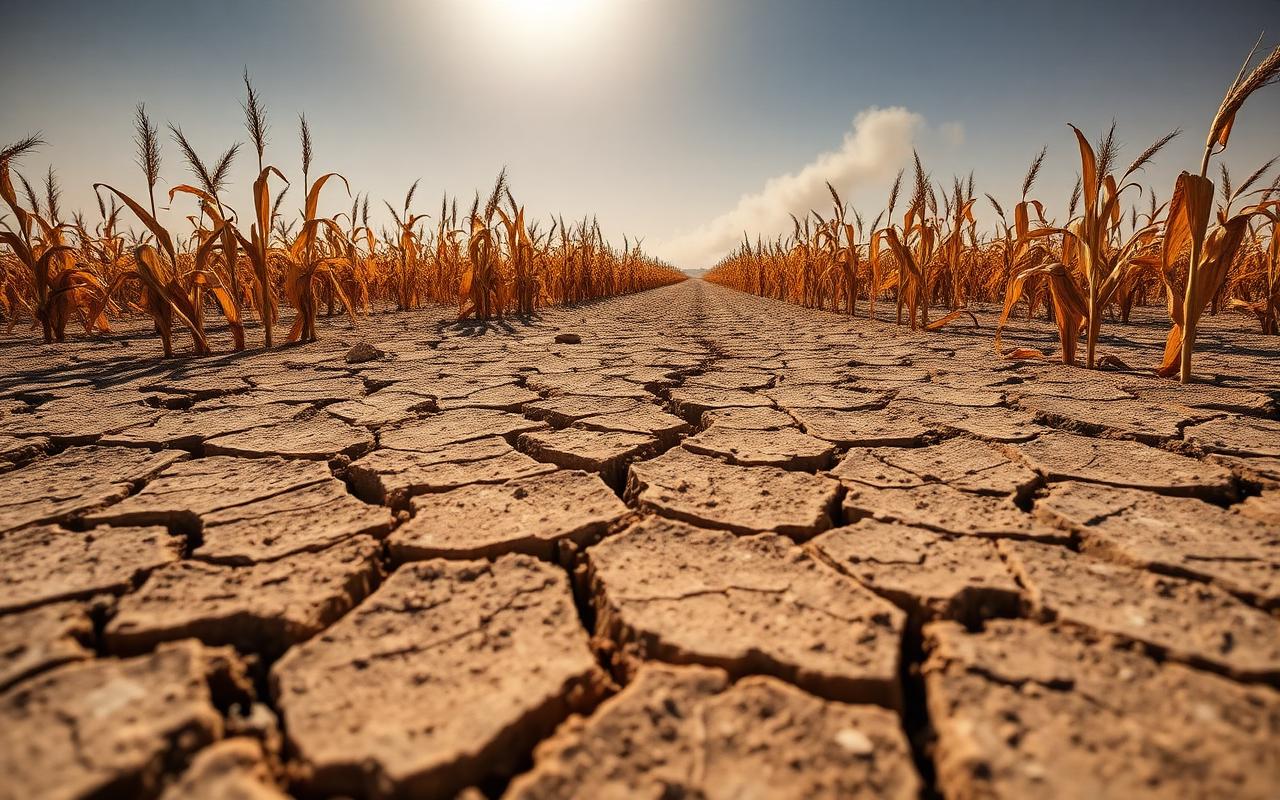
This year's growing season has been marked by a lack of rainfall almost throughout. Dry spring sowing conditions were followed by early-summer heatwaves, and by July soil moisture had dropped to critical levels across much of the country. According to agrometeorological reports, rainfall over the past 30 days has typically fallen 20-60 millimeters short of the long-term average, but looking at the longer, 90-day period, the shortfall is already dramatic in many places.
Where is the situation worst?
The most severe water shortage has developed in the central and southern parts of the Great Hungarian Plain, but drought conditions also persist between the Danube and Tisza rivers and in the eastern half of Transdanubia. Scattered showers and thunderstorms look impressive but leave barely a trace in the soil: on the dried, cracked surface, the sudden downpour mostly runs off before it can seep into the root zone.
Experts say the key difference compared to 2022 is that this year even the deeper soil layers started out dry — meaning there is no water reserve left to buffer the summer shortfall as there was, to some extent, in previous years. In several regions, unirrigated row crops are in worse shape than during 2022, which is remembered as a historic drought.
What will happen to the harvest?
Corn is the most vulnerable loser: water shortage during flowering and grain fill directly reduces yield, and this loss cannot be made up later no matter how much rain falls in August. Sunflowers tolerate drought somewhat better, but the drop in oil content will still be noticeable. For cereals, the picture is less dramatic thanks to early harvesting, although yields here too remained below average.
Agricultural economists agree that this year's crop losses can no longer be meaningfully mitigated. Extraordinary preparedness is warranted, but intervention options are limited: irrigation only works where infrastructure and available water resources exist — in Hungary, that's a fraction of arable land.
Not just crop farming is affected
Livestock farms are being squeezed from two directions. On one hand, heat stress reduces milk yield and weight gain; on the other, costs are rising due to a shortage of feed — mainly corn and roughage. Pastures have burned dry in many places, forcing farms into premature feed use: reserves meant for winter must be fed out in summer.
What's visible in the shops?
The effects of drought on consumer prices typically appear with a delay of several months, and rarely one-to-one. Rising feed costs will eventually be built into meat, milk and egg prices, while for vegetables the tighter supply is already noticeable. For bread and bakery products, Hungary is a global player in the grain market, so world market prices matter more here than the domestic harvest alone.
There is a solution — just not a fast one
At the heart of the professional debate is water management. The system built up over decades was designed fundamentally to drain water away quickly, not to retain it — even though retention is exactly what's needed today. Water retention, canal network reconstruction, reservoirs and the spread of micro-irrigation are not a single-season task but a decade-long program.
In the short term, soil cultivation also matters: moisture-conserving, no-till technologies, soil cover, and well-structured, organic-matter-rich soil retain more water. These won't solve the drought, but the difference between a field following good versus poor practice can amount to several tons per hectare.
This year is thus mainly a warning: extreme dry summers are no longer an exception in Hungary but a recurring scenario that agriculture must structurally prepare for.