
Digitális világ
AI Data Centres: Limits Behind the $2.5tn Drop
The sell-off, which hit AI hardware companies particularly hard, showed that the spread of artificial intelligence depends on more than chips and capital. Data centres’ energy and water demands, grid capacity and local opposition could all reshape growth expectations.
2026-11-06 · 5 min read
A sharp sell-off swept through US technology stocks on 5 November 2026. According to CNN Business, the technology sector sell-off erased approximately $2.5 trillion in market value in a single day. That is 1,000 times the $2.5 billion figure mentioned in some coverage of the subject.
However, the story is not simply about one bad day on the stock market. Investors began reassessing how quickly the data centres needed to meet demand for AI could be built, and when those investments might generate enough revenue to deliver a return. The infrastructure behind artificial intelligence requires not only advanced processors but also sufficient electricity, grid connections, cooling, water and local approval.
Hardware companies were at the centre of the sell-off
According to CNN Business, the Nasdaq Composite fell 5.5%, the S&P 500 dropped 4.4%, and Nvidia shares declined 9.3%. According to Business Insider’s analysis, the Nasdaq 100’s intraday loss reached 6.36%, while the iShares Semiconductor ETF fell 11%.
Hardware manufacturers’ vulnerability stems from the growth expectations built around them. If data centres are built more slowly, fewer accelerators, servers, networking devices and related components may be needed than previously assumed. Even the possibility of more moderate capacity growth can significantly alter company valuations that reflect rapid expansion.
According to a summary by the Kingy AI blog, major technology companies that also offer software-based AI services suffered smaller losses: Alphabet fell 2.2%, Microsoft 3.6% and Meta 3.9%. This difference may suggest that the market treated the direct beneficiaries of infrastructure construction differently from diversified companies with service revenues.
A data centre is more than just a building
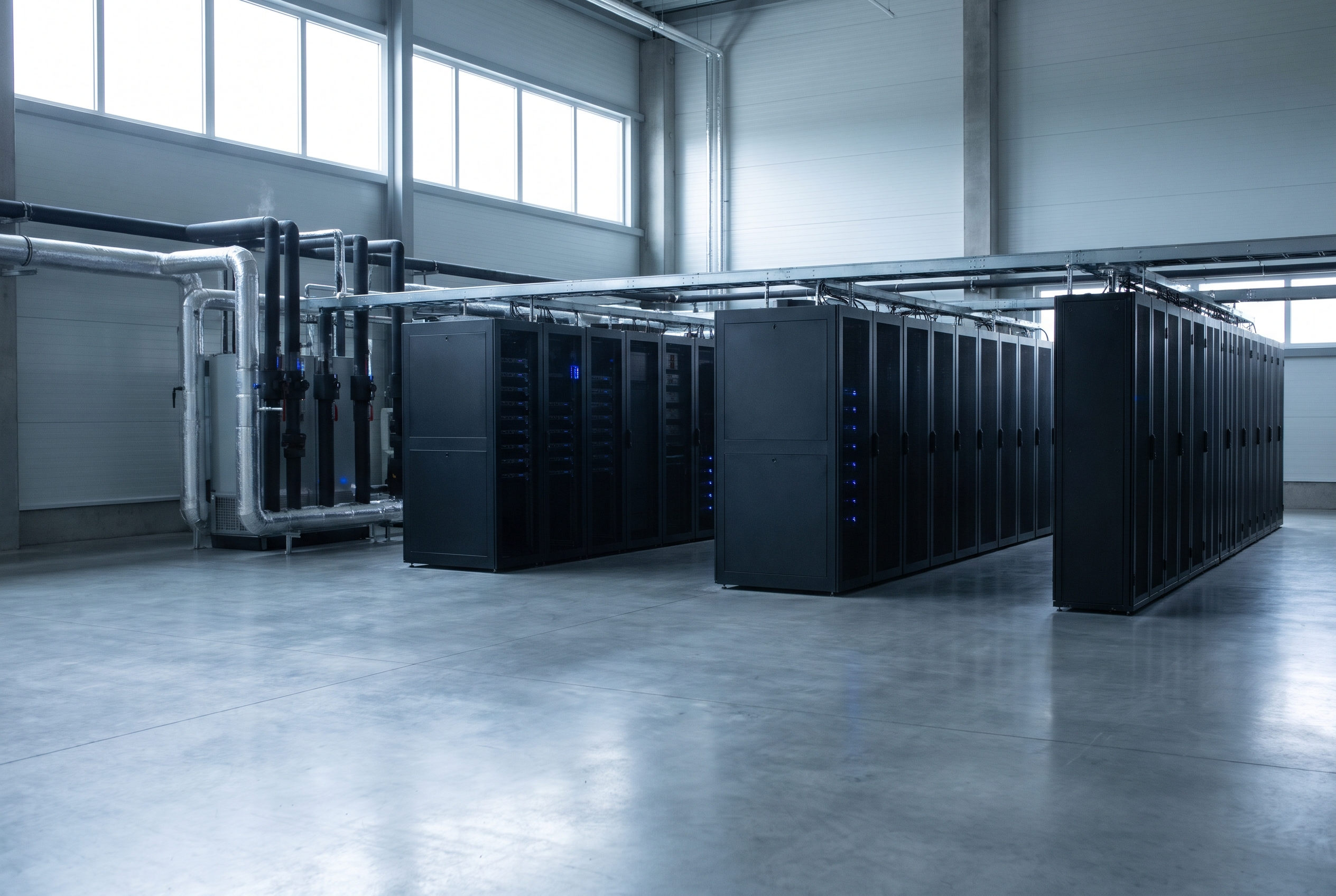
AI data centre development is often described as a technology investment, but implementation is just as much a matter of energy and land use. High-performance computing systems require a continuous power supply, adequate cooling and strong network connectivity. If any of these are missing, the availability of chips alone cannot make it possible to bring new capacity online.
Developing the electricity grid is a complex process. Utilities and investors must also consider whether sufficient generating capacity, transmission infrastructure and cooling solutions are available. As a result, the pace of AI infrastructure growth may increasingly be determined by physical feasibility rather than solely by financing or chip availability.
These constraints do not necessarily mean that demand for AI will disappear. Instead, they may cause investments to be delayed, moved to other locations or redirected towards more energy-efficient solutions. This could also reshape the hardware market: alongside raw computing power, the amount of work performed per watt of energy may become more valuable.
Local opposition has become a global market factor
According to Al Jazeera’s report based on Reuters, 45 local measures seeking to restrict data centres appeared on ballots in the United States, and voters supported 39 of them. The report said opposition was driven primarily by data centres’ electricity and water use.
Local decisions matter to global investors because the site of a large data centre cannot be replaced overnight. Site selection depends on the electricity grid, data connectivity, the tax environment, cooling options and permitting. If developers must look for a new location, this can cause delays and additional costs.
CNN Business also linked the sell-off to election results in Texas and to political promises to introduce a moratorium on new data centres and abolish tax incentives. For now, these should not be treated as restrictions already in force: political pledges can become enforceable rules only after further decisions and legislative steps.
In any event, public acceptance may become a distinct investment risk. According to a survey cited by Moomoo Financial Research, 71% of respondents would have opposed the construction of a new AI data centre in their own neighbourhood. As this research figure was reported second-hand, it indicates the possible scale of opposition rather than the views of every US community.
US concerns quickly reached Asia
The semiconductor industry relies on international supply chains, so changes in US demand expectations can quickly reach Asian manufacturers as well. According to Unite.AI’s summary, Taiwan’s TAIEX index fell 8.99%, while TSMC closed 9.6% lower. The figures in the report indicate that the market viewed the developments not simply as a local US issue, but as a risk affecting the entire AI supply chain.
The economic logic of the ripple effect is simple: if investors expect fewer data centres, or expect them to be completed later, this could affect the future revenues of many companies, from chip designers and contract manufacturers to suppliers of memory, networking components and servers. The actual impact, however, depends on whether orders really decline or are merely postponed.
Correction or a turning point in the AI investment cycle?
A single trading day cannot establish whether the rapid expansion of AI infrastructure has ended for good. The steep fall in share prices may also represent a correction of excessive expectations, after which investment continues, only at a more measured pace. Changes in share prices alone do not prove that underlying demand has collapsed.
Investors may therefore need to look not only at chipmakers’ quarterly revenue, but also at the investment plans of major technology companies, the time required to connect data centres to the grid and developments in local permitting. It is also worth monitoring how much revenue companies can generate from new computing capacity. If revenue remains persistently below the amount spent on infrastructure, this could place further pressure on valuations.
Meanwhile, technology companies need to address site selection, energy supply and community consultation from the outset of their investment strategies. The shift may benefit regions and service providers that offer predictable permitting, adequate grid capacity and competitively priced energy. Energy-efficient chips, advanced cooling systems and solutions that reduce grid load may also become more valuable.
Physical constraints have returned to valuations
One possible lesson from the November slump is not that AI development will necessarily stop, but that digital growth has very real physical requirements. Servers must be housed, powered and cooled, while developments may also require local political support.
In the coming period, the factor separating the winners and losers in AI infrastructure may be which companies can support their technological promises with workable plans for energy, grid access and returns. The latest market movement is not yet enough to establish a lasting industry trend, but it is a warning that unlimited growth in data centre capacity cannot be taken for granted. This article provides general economic information and is not personalised investment advice.
Sources used
- 1.Business Insiderbusinessinsider.comverified
- 2.Al Jazeera / Reutersaljazeera.comverified
- 3.Moomoo Financial Researchmoomoo.comverified
- 4.Unite.AIunite.aiverified
These sources were used during our editorial fact check.