
Tudomány
Orionids 2026: When and How to Watch from Hungary
The Orionids’ main peak is expected on the night of 21–22 October 2026. Moonlight may make the pre-dawn hours better for watching the meteors, and no telescope is needed.
2026-10-19 · 5 min read
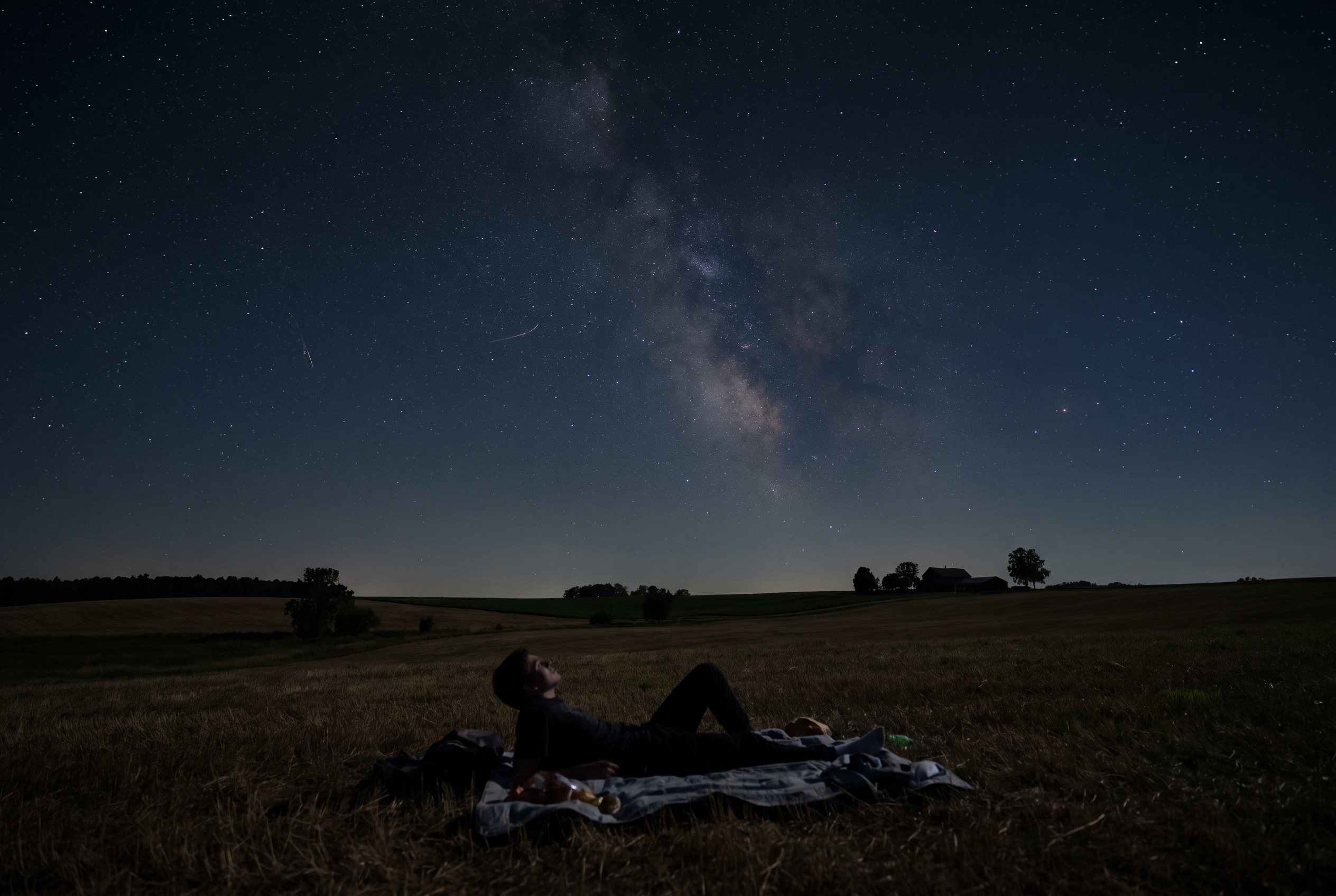
Anyone planning to observe the Orionids should mark the night of 21–22 October 2026: according to information from the Svábhegy Observatory, this is when the meteor shower’s main peak is expected. Under ideal conditions, an average of 15–20 meteors may appear per hour, but the number actually visible will also depend on cloud cover, light pollution, moonlight and the observing location.
The main peak will be on the night of 21–22 October
Although Orionid activity is not limited to a single brief moment, the main peak in 2026 is expected on the night of 21–22 October. This also means that the shower will not yet have reached its predicted main peak on 19 October, so it will still be worth trying over the following nights.
According to the Svábhegy Observatory, the Moon will set at around 2:35 am that night. According to The Planetary Society’s guide, light from the waxing Moon may obscure fainter meteors during the first half of the night. The period after moonset and before dawn therefore looks more favourable.
The chances of seeing the most meteors may therefore be better from roughly 2:35 am until the sky begins to brighten at dawn. This does not guarantee a particular meteor count: high, thin cloud, fog, high humidity or nearby artificial lights can mean far fewer flashes are visible even at the peak.
You do not need to look directly at Orion
The meteor shower’s radiant—the point from which the meteors appear to spread—is located in the constellation Orion. According to The Planetary Society’s overview, the Orionids can be observed from both the Northern and Southern Hemispheres.
However, the radiant only indicates the direction from which the meteors appear to originate. It is not advisable to keep looking directly at Orion, because meteors can appear anywhere in the sky and often produce longer trails farther from the radiant.
It is worth choosing a dark area of sky that offers a wide field of view and contains no distracting lights or buildings. A comfortable, slightly reclined position can help observers scan the sky for longer without becoming tired.
Watch with the naked eye rather than a telescope
No telescope or binoculars are needed to observe a meteor shower. According to The Planetary Society, naked-eye observation is the most effective approach because it allows a much larger area of sky to be monitored at once than the narrow field of view provided by an optical instrument.
It is best to use phone screens, torches and car lights as rarely as possible. According to the Natural History Museum in London, the eyes may need at least 10–20 minutes to adjust to the dark. Looking at a bright, white-lit screen can impair this adaptation.
Observation requires patience. Meteors do not arrive at regular intervals: there may be a long pause, followed by several flashes within a short period. It is therefore worth spending a longer, uninterrupted period under the sky.
A dark, open location matters more than direction
City lights brighten the background sky, making fainter meteors easy to miss. A better observing location may be an open area farther from settlements, with a broad view of the sky and no nearby buildings or trees blocking the horizon.
You do not necessarily need to choose a well-known hiking destination. A field edge, hilltop or sparsely populated area that can be reached safely and legally may also be suitable if there is little street lighting. Private land may only be entered with the owner’s permission, while the visitor rules of protected natural areas must also be observed.
If possible, the site should be assessed while it is still light. Ditches, rocks and uneven ground are harder to spot in the dark, so it is important to arrange a stable place to sit or lie down and plan a safe route back.
What does 15–20 meteors per hour mean?
The Svábhegy Observatory estimates an average of 15–20 meteors per hour at the peak under ideal conditions. The American Meteor Society’s meteor shower calendar gives the same range for typical Orionid activity.
This figure does not mean that every observer is certain to count that many meteors. The theoretical rate assumes favourable skies, a suitable radiant altitude and a wide field of view; considerably fewer events may be visible from a city balcony or under partly cloudy skies.
Meteors also vary in brightness. From a dark location, fainter flashes can be detected, while under strong moonlight or the glow of a settlement, usually only the brighter meteors remain visible.
They arrive in the wake of Halley’s Comet
According to information from the Svábhegy Observatory, the Orionids are associated with debris left behind by Halley’s Comet. When Earth passes through this dust-rich region, tiny particles enter the atmosphere and produce brief, bright meteor phenomena.
According to American Meteor Society data, Orionid particles enter the atmosphere at around 66 kilometres per second, making this one of the faster meteor showers. The Natural History Museum in London explains that the striking flash is associated with the particle interacting with the atmosphere and the glow of the resulting ionised channel.
According to a Sortir à Paris report, the Orionids may include brighter meteors and trails that remain visible briefly. Their appearance cannot be guaranteed, however: the phenomena visible from any given observing location depend on current activity and local conditions.
Practical checklist before setting out
- Timing: based on the Svábhegy Observatory’s forecast, the period after moonset and before dawn may be more favourable on the night of 21–22 October 2026.
- Location: look for a dark, open area that can be reached safely, away from street lighting.
- Equipment: rather than a telescope, a sleeping mat, reclining chair or blanket may be useful.
- Dark adaptation: based on the Natural History Museum’s guide, allow at least 10–20 minutes for your eyes to adjust to the dark.
- Lighting: limit the use of phones and other bright light sources.
- Clothing: for a longer period of waiting without much movement, layered clothing suited to the evening weather and a warm drink can make observing more comfortable.
- Weather: check local cloud cover, fog and precipitation before setting out.
Even the peak does not guarantee a spectacle
On the night of 21–22 October, after the Moon has set, dark and clear skies may offer the best chance of seeing several meteors. However, the peak only marks the expected high point of activity and does not guarantee a spectacle at every location.
Ultimately, the state of the local sky will determine the outcome of the observation. The hourly estimate should therefore be treated as a guide: seeing even a single bright meteor can make observing the autumn sky memorable.
Sources used
- 1.Orionidák: a Halley-üstökös nyomában érkező meteoroksvabhegyicsillagvizsgalo.huverified
- 2.Meteor Shower Calendaramsmeteors.orgverified
- 3.Your Guide to Watching Meteor Showersplanetary.orgverified
- 4.Meteor shower guidenhm.ac.ukverified
- 5.Orionids 2026: the peak of the meteor shower is nearingsortiraparis.comverified
- 6.Orionidák az ősz leglátványosabb meteorrajasvabhegyicsillagvizsgalo.hu
- 7.Érkeznek az Orionidáksvabhegyicsillagvizsgalo.hu
These sources were used during our editorial fact check.