Egészség & Környezet
Heating Season May Worsen Air Pollution Exposure
Air quality in Hungarian cities compares unfavourably with the rest of Europe. During the heating season, it is especially important to monitor local measurements, time ventilation carefully, and use solid-fuel heating appliances correctly.
2026-11-04 · 5 min read
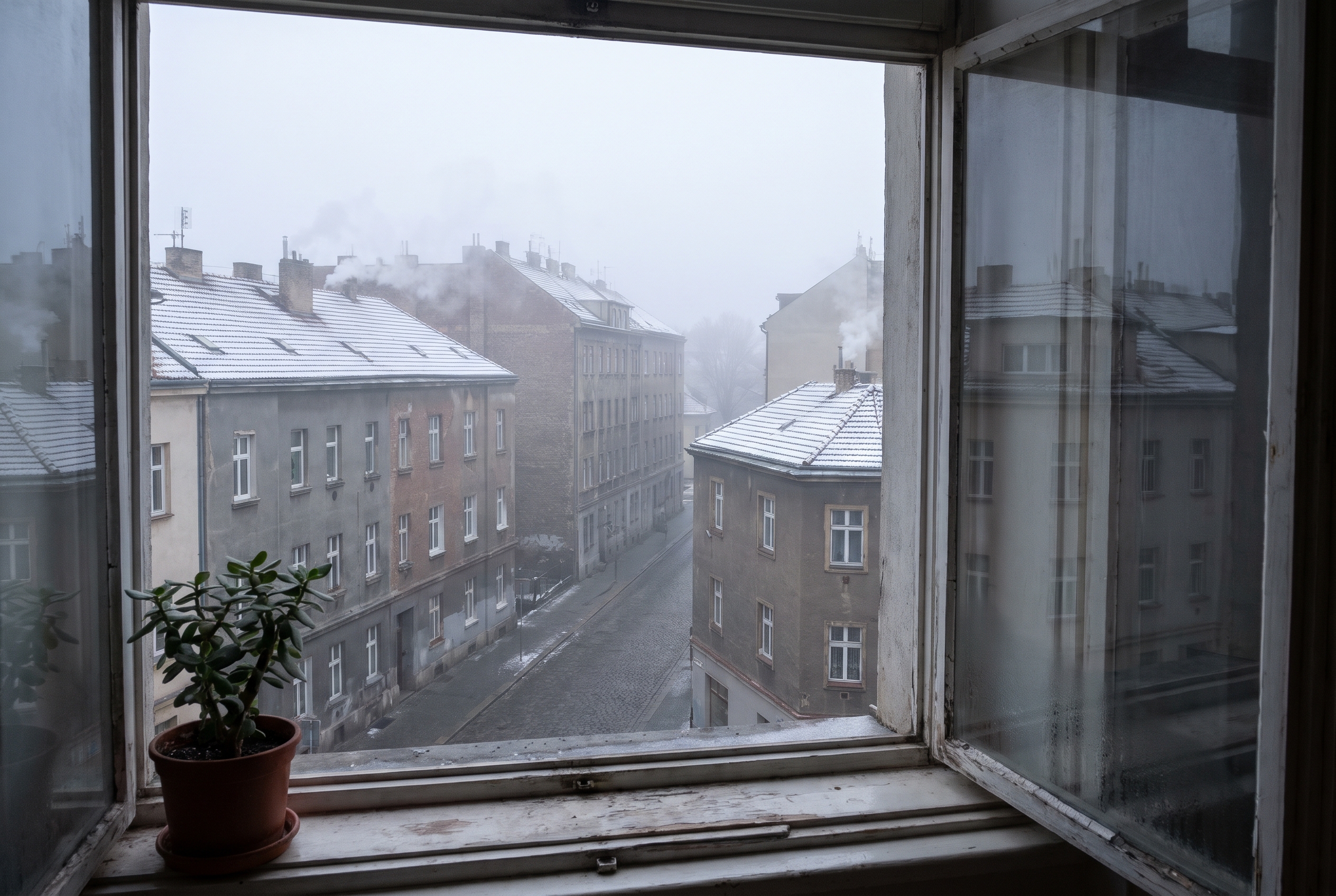
The start of heating, transport emissions and weather conditions that hinder the dispersal of pollutants can together significantly worsen air quality in towns and cities. According to Qubit, an analysis of 761 cities by the European Environment Agency placed Hungarian municipalities, with the exception of Sopron, in the more polluted categories.
Air pollution is not merely an environmental issue: it can directly affect health and everyday life. Exposure cannot be avoided entirely, but it can be reduced through a few deliberate measures, while households can also take steps to cut their own emissions.
Why does air quality often worsen in autumn and winter?
During the colder months, emissions from heating may rise just as atmospheric conditions become less favourable. According to information from the National Centre for Public Health and Pharmacy, during a temperature inversion, a warmer layer of air above prevents vertical air mixing, allowing pollutants to become trapped near the ground.
According to information attributed to the Ministry of Agriculture on Kormány.hu, around 30 per cent more air pollutants enter Hungary from beyond its borders than leave the country. The statement says that the topography of the Carpathian Basin can make it even more difficult for pollutants to disperse during winter.
Fine particles are one of the main risks
PM10 and PM2.5 refer to airborne particles that are small enough to be inhaled. Smaller particles can travel deeper into the respiratory tract, so air quality cannot be assessed solely on the basis of visible smoke or unpleasant smells.
According to Qubit, PM2.5 and PM10 particles from residential solid-fuel burning are among the most significant health risks during the heating season. Based on information from the NNGYK, poor air quality may cause short-term respiratory irritation, while prolonged exposure may increase the risk of certain cardiovascular, cancer-related and neurological diseases.
Those who may be more vulnerable include children, older people, pregnant women, and people living with respiratory or cardiovascular diseases. Assessing symptoms and individual risks is a medical matter; this article provides general information and does not replace professional medical advice.
Plan your day using air-quality measurements
Current air quality can vary between municipalities and even by time of day. Before setting out or planning outdoor activities, it is therefore worth checking data from the Hungarian Air Quality Monitoring Network rather than relying solely on visibility or smells.
When air quality is poor, it may be advisable to reschedule longer or more strenuous outdoor activities. Exercise causes the body to take in more air, so avoiding busy roads and heavily smoke-affected areas may be particularly advisable at such times. Anyone experiencing shortness of breath, chest symptoms or unusual discomfort should consult a professional.
Ventilation is necessary even when outdoor air is poor
Indoor air does not automatically remain clean when windows are closed. Pollutants can also accumulate indoors due to cooking, heating, moisture and household activities, so avoiding ventilation entirely is not a good solution.
According to the NNGYK, during polluted periods it is advisable to exchange the air with brief, intensive cross-ventilation, preferably at a less polluted time of day, such as early afternoon or during windier weather. By contrast, leaving a window tilted open for a long time can prolong the entry of outdoor pollution while also allowing the room to cool more.
The right time also depends on local conditions. The daily pattern of pollution may differ beside a busy road and in a residential area where intensive solid-fuel burning begins in the evening. Alongside monitoring-network data, it is therefore worth paying attention to smoke levels in the immediate surroundings.
Steps can also be taken to keep indoor air clean
During polluted periods, it is worth avoiding activities that unnecessarily increase indoor particle levels. These may include smoking, frequently burning candles or incense, and cooking that produces heavy smoke without adequate extraction.
Regular dusting, preferably with a damp cloth, can reduce the amount of settled dust that returns to the air. Proper kitchen extraction and the correct operation of heating appliances are also important, but technical systems should preferably be inspected and maintained by a professional.
The effectiveness of air purifiers depends on the size of the room, the appliance’s airflow, the condition of its filter and the pollutant that needs to be removed. Before buying one, it is therefore not enough to consider only the floor area stated in advertising; the cost and frequency of filter replacement must also be taken into account.
Correct heating also protects your neighbours’ air
The way solid fuel is burned directly affects the amount of smoke produced. The Clean Air Action Group recommends that people heating with wood try lighting the fire from the top rather than from below, as this may reduce initial smoke and soot formation.
According to the organisation’s guidance, untreated, properly seasoned firewood or another approved fuel should be used. The guidance mentions a drying period of at least one to two years for firewood and stresses the importance of regular chimney cleaning and ensuring an adequate air supply for combustion.
Burning household waste, painted or treated wood, and other materials not intended as fuel can heavily pollute the air. Heating appliances must always be used in accordance with the manufacturer’s instructions, while the safe condition of the chimney and appliance should be assessed by a professional.
Personal caution cannot replace emission reductions
Air-quality problems cannot be solved solely through individual precautions. Transport, residential heating, industry, agriculture and transboundary pollution all shape the situation, so measures are also needed at municipal, national and EU level.
According to 24.hu, Hungary is among six EU member states that are failing to meet at least one of the national emission-reduction commitments in force since 2020. This indicates that, alongside changes in household habits, reducing emissions at a systemic level remains a major task.
The most important everyday measures can be summarised simply: regularly checking local air quality, sensibly timing outdoor activity, using brief cross-ventilation, and heating more cleanly and safely can together reduce exposure. These measures will not eliminate air pollution, but they may help ensure that the heating season creates less avoidable exposure in homes and their surroundings.
Sources used
- 1.Nemzeti Népegészségügyi és Gyógyszerészeti Központ tájékoztatójanngyk.gov.huverified
- 2.Fűtési szezon vagy füstszezon?levego.huverified
- 3.A magyarországi városok levegője a legszennyezettebbek közé tartozik Európábanqubit.huverified
- 4.Európai Környezetvédelmi Ügynökség jelentése24.huverified
- 5.A helyes fűtéssel sokat tehetünk a légszennyezettség visszaszorításáértkormany.huverified
- 6.Az EU levegőminőségi politikája és irányelveiconsilium.europa.eu
- 7.Országos Légszennyezettségi Mérőhálózat adatailegszennyezettseg.met.hu
These sources were used during our editorial fact check.