Otthon
Budapest District Heating: How to Check Radiators
According to FŐTÁV’s update of 17 October 2026, district heating had started in every connected Budapest home by then. At the start of the season, it is worth checking whether radiators are heating up and valves are working, but bleeding should only be carried out with care.
2026-10-28 · 5 min read
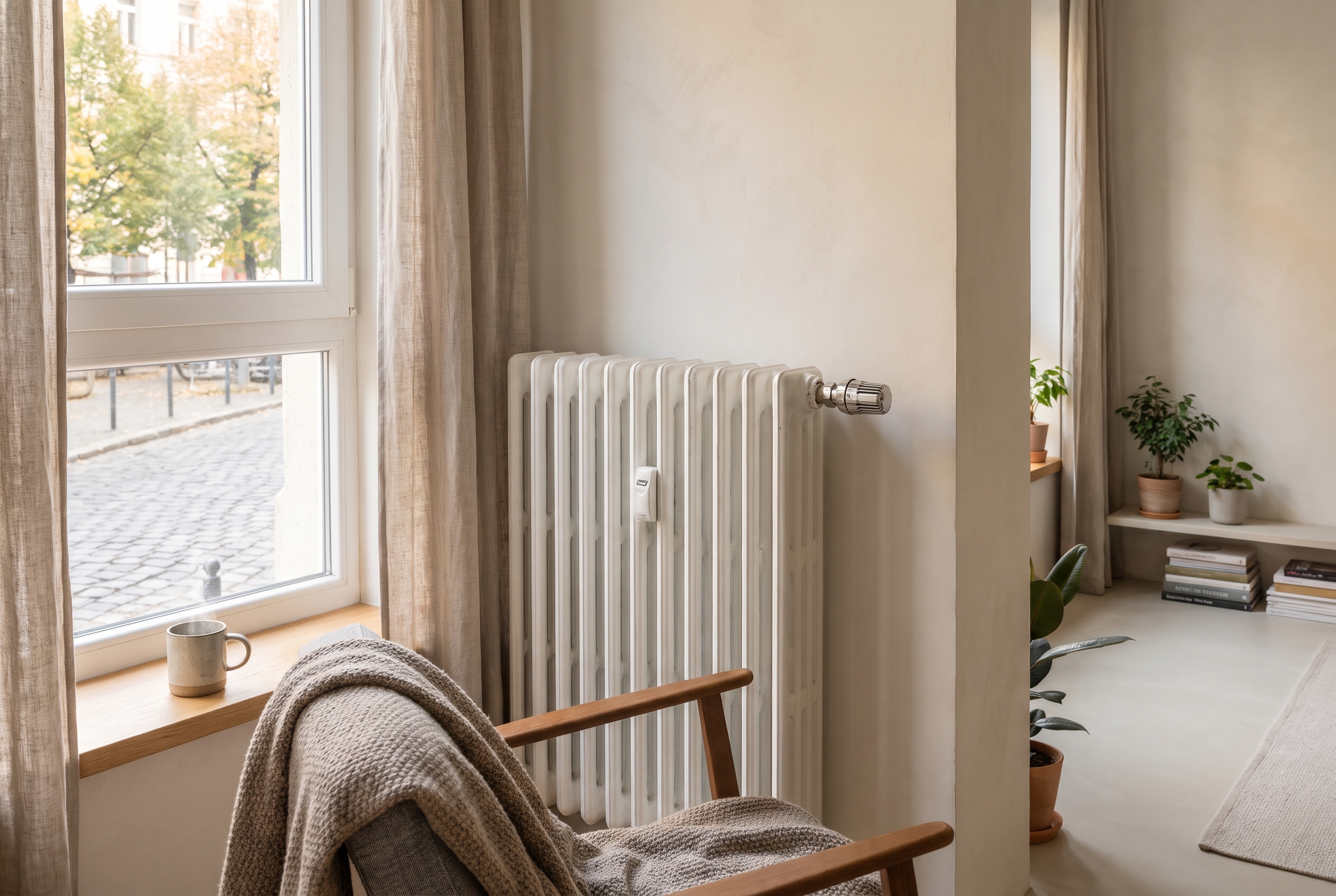
After the heating is switched on, radiators in homes may not necessarily warm up immediately or evenly. The condition of the building’s internal system, the position of the radiator valves and the settings for the block can all affect when the heating becomes noticeable.
For a check at the start of the season, first observe whether every radiator is warming up, whether there are any unusual noises and whether there are signs of leakage. Before attempting any work, it is advisable to establish whether it can be carried out independently or whether a heating engineer, caretaker or building manager needs to be involved.
Budapest’s heating start-up was completed by 17 October
According to FŐTÁV’s update of 17 October 2026, heating had been switched on in all 241,000 Budapest homes connected to district heating by then. This does not mean that the service started in every home on the same day: the gradual heating start-up was completed by that date.
The launch of the service also does not mean that radiators in every home reach the same temperature at the same time. If the radiators in a home remain cold for an extended period, it is worth asking the neighbours as well. This can help establish whether the problem affects a single radiator, an entire riser pipe or the whole building.
Keep the radiator valve fully open during the first week
FŐTÁV’s energy-saving guide recommends keeping radiator valves at their highest setting, namely 5, during the first week after the heating starts. According to the provider, this helps air trapped in the system to escape and reduces the risk of the valve sticking.
This setting is specifically intended for the start of the season. Once the system is working properly, a lower setting may be sufficient to maintain the desired room temperature. If the radiator does not warm up, the valve can be turned carefully between its two end positions, but it should not be forced or dismantled.
The numbers do not indicate heating speed
According to Agroinform’s guide, the scale visible on a thermostatic radiator valve, typically ranging from 0 to 5, indicates the desired room temperature rather than how quickly the room will warm up. Based on the temperature detected around it, the valve regulates the amount of heating water flowing through the radiator.
The actual temperature corresponding to each setting may vary depending on the type of valve and local conditions, so the manufacturer’s instructions should be followed. The thermostatic head should not be covered by a thick curtain or trapped behind furniture, as it may then fail to detect the room’s representative temperature.
After changing the setting, allow time for the room temperature to adjust. Rather than repeatedly turning the valve up and down, it is advisable to find the setting that maintains a comfortable temperature over time.
Heat distribution can help identify the problem
The radiator surface should only be checked carefully, as it may be hot. According to Dambat’s practical guide, trapped air may be indicated when the bottom of the radiator is warm but the top is cold or only lukewarm. Air collecting at the top can prevent water from circulating evenly.
A different type of problem may be indicated if the radiator is warm at the top but remains cold at the bottom. This may be caused by circulation difficulties or deposits, which simple bleeding may not resolve. If the entire radiator is cold, first check the valve position and then whether the heating is working in other homes.
If there is moisture or dripping, the fitting should not be disturbed further. The problem should be reported to the building operator or a heating engineer.
Radiators cannot be bled independently in every block
Bleeding a radiator may appear straightforward, but in a block with district heating, the radiator forms part of a shared system. Not every radiator has a manual bleed valve that residents can operate safely, and the building’s operating rules may determine who is permitted to handle the fittings.
The first step should therefore be to ask the building manager or operator for guidance. If the work may be carried out independently, the system and radiator must be allowed to cool before starting. The time required may also depend on the system’s design, so the radiator manufacturer’s instructions and the operator’s guidance should be followed.
A container and an absorbent cloth can be placed beneath the bleed valve, which should only be opened slowly and slightly. Once the hissing stops and water begins to flow steadily, the valve should be closed again carefully. Completely unscrewing or forcing the valve, or opening a hot system, can cause injury and water damage.
This guide provides general information and does not replace an on-site inspection by the building operator or a qualified heating engineer. A damaged, corroded or stiff bleed valve should not be handled.
Adjust the setting while airing the room
A thermostatic valve responds to the temperature of the air around it. If cold air entering through an open window reaches it directly, the valve may open further while some of the generated heat escapes from the home.
District heating providers advise turning the thermostatic valve to the frost-protection setting while airing the room, then returning it to its previous setting after closing the window. As valve markings can vary, the meaning of the star or snowflake symbol should be checked in the product instructions.
Brief, intensive airing can reduce unnecessary heat loss. A sofa placed in front of the radiator, clothes draped over it or a heavy curtain can also obstruct the free circulation of warm air.
When should you seek help?
If every radiator is cold, first check whether the heating is working in other homes in the building. A fault affecting a single radiator may indicate a problem within the home, while the same complaint in several flats above one another may point to a fault with the shared riser pipe.
Involving the operator or a professional is particularly advisable if water is leaking, the valve is stuck, the radiator remains noisy or the heat distribution does not improve after the radiator has been bled safely. Draining or modifying the shared system without authorisation, or replacing fittings without permission, may also affect heating in other homes.
The purpose of a start-of-season check is not to dismantle the radiator immediately. First, following FŐTÁV’s seasonal recommendation, open the valve fully, then observe the radiator’s heat distribution, any noises and possible leaks. If the fault cannot be identified safely, the building operator or a qualified heating engineer should be involved.
Sources used
- 1.Budapesten mindenhol bekapcsolták a távfűtéstfotav.budapestikozmuvek.huverified
- 2.Energiatakarékos tippek és tanácsokfotav.budapestikozmuvek.huverified
- 3.Elindult a távfűtés Budapestentelex.huverified
- 4.Jak odpowietrzyć grzejnik - instrukcja krok po krokudambat.plverified
- 5.Termosztatikus radiátorszelep: hogyan állítsd be, hogy ne fűtsd túl a helyiségetagroinform.huverified
- 6.Fűtési tanácsok - Termosztatikus szelepek használatatszol.huverified
- 7.Termosztatikus szelepek használatatermostar.huverified
These sources were used during our editorial fact check.