
Kiberbiztonság
Deepfake blackmail: how families can prepare for abuse
A manipulated image can still involve real abuse. Prevention requires not only privacy settings, but also conversations built on trust and carefully considered ways to seek help.
2026-11-16 · 5 min read
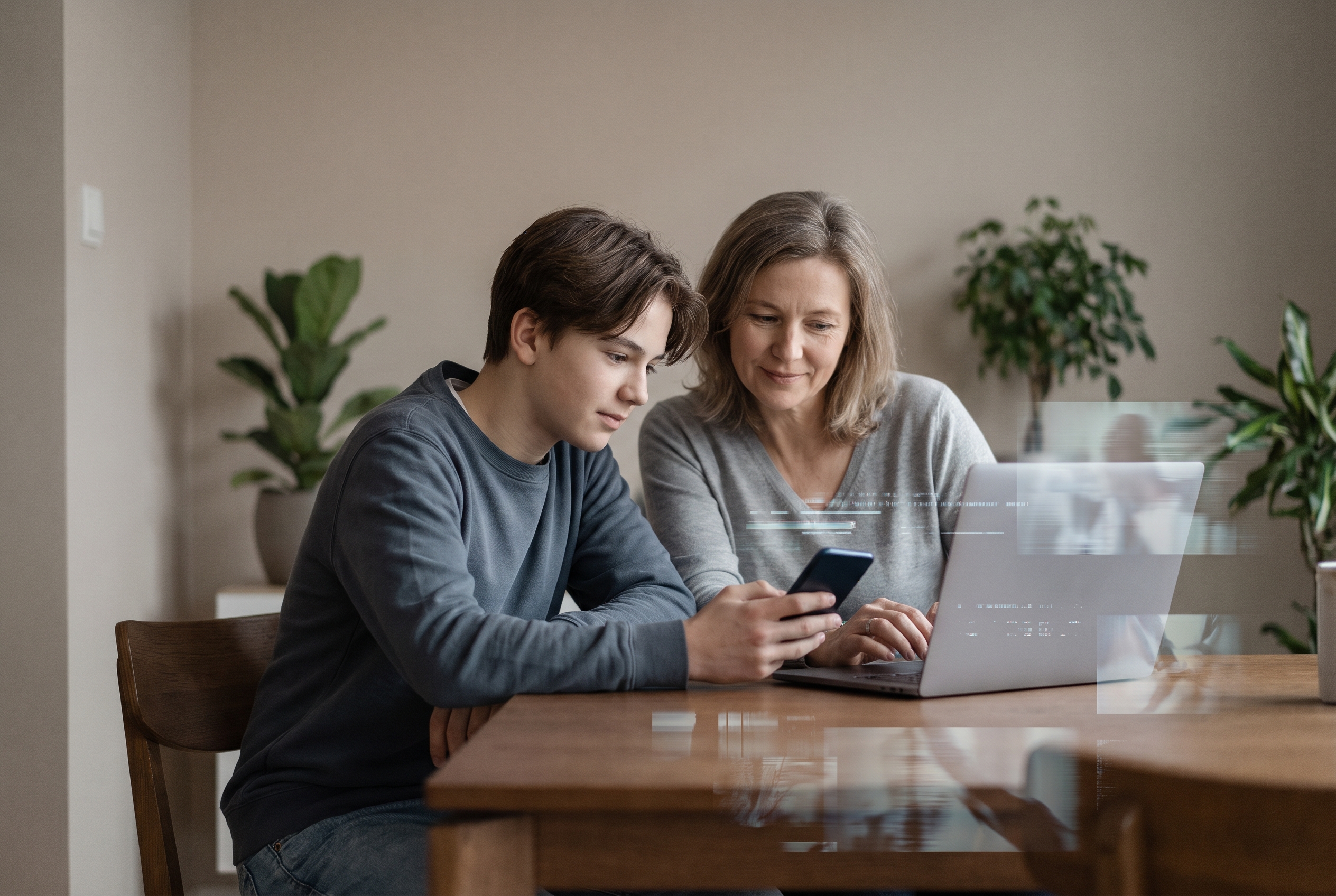
AI-generated sexual images can constitute serious abuse even if the situation depicted never happened. According to an UNICEF statement, deepfake abuse causes real harm, while The Guardian reports that fabricated images can be used to demand money or further images from young people. Alongside technical precautions, families therefore need somewhere to turn, without fear of being shamed becoming a barrier to seeking help.
A genuine intimate image is not needed to threaten someone
A deepfake is an artificially created or altered image, audio recording or video that can depict someone in a seemingly real but fabricated situation. According to a summary by the Youth Justice Legal Centre, readily available generative tools have lowered the technical barriers to creating fabricated sexual images. This means abuse does not necessarily require the person targeted to have previously taken or shared an intimate image of themselves.
According to The Guardian's report, such content can also become a tool for blackmail: the person making the threats may demand money or genuine images in exchange for not publishing it. This form of blackmail involving sexual content is known as sextortion. Responsibility lies with the person committing the abuse, not with the person whose likeness has been used.
Different figures measure different things
As an indication of the scale of the problem, UNICEF reports that at least 1.2 million children were affected, based on a survey covering eleven countries. The survey examined the conversion of children's photographs into sexual deepfake content during the previous year. This figure relates to the countries and period covered by that particular study and should not automatically be treated as a worldwide case count.
A survey examining the accounts of those affected should not be confused with the volume of reports received by a reporting system. One describes people's experiences, while the other describes incoming reports; they support different conclusions. Interpreting a figure showing a sharp increase therefore also requires understanding exactly what was counted, over what period and using which method.
Preparation can begin with a calm conversation
A useful starting point may be an agreement within the family that help is available even when a situation involves a threatening message, an embarrassing image or uncertainty about what has happened. It is worth making clear that the first response will be support and an effort to understand the situation, rather than blame. The conversation does not need to rely on frightening examples or detailed sexual content.
The family can consider together which trusted adult a young person could turn to if they found it difficult to speak to their parents. They could also discuss what the young person would do if a humiliating image of a classmate, rather than themselves, were being circulated. The aim can be to develop a shared understanding that asking for help is not telling tales, and forwarding an image is not a harmless joke.
What is worth reviewing for digital self-protection?
Prevention should not be expected to depend on a single setting. A starting point is to review the privacy options offered by the services the family uses, alongside the images and information family members share about others. However, limiting public visibility should not be presented as complete protection against abuse or as the victim's responsibility.
- Visibility: check who can access the profile, photographs and previous posts.
- Contact: review who can send messages, tag someone in an image or add them to a group.
- Uploading images: before using an unfamiliar image-editing service, read what it says about how uploaded photographs are handled.
- Family sharing: discuss images posted of a child and take their views into account.
These are general considerations, not personalised security or legal advice. The service's own help pages and privacy notice can provide more detailed guidance on the specific options available.
When threats are made, support should come first
If a young person shows someone a blackmail message, a supportive opening may be to tell them that they are not alone and are not responsible for another person's threats. Give them space to explain what happened in their own words, without having to account for every detail immediately. Rather than debating whether the image is genuine, the first priority should be to take the threat and the person's safety seriously.
Further steps should, where possible, be considered in consultation with a trusted adult and, if necessary, a child protection professional or the police. During the conversation, it may help to establish which platform the message arrived on, what is being demanded and whether the person feels in immediate danger. In cases involving sexual content, it is also advisable to seek professional guidance on handling evidence, rather than trying to arrange help by forwarding it among acquaintances.
It is worth exploring reporting and removal options separately
According to information from NCMEC, CyberTipline is a system for reports relating to the online sexual exploitation of children, while the organisation's Take It Down service offers help based on digital fingerprints to counter the spread of intimate content. Consult the organisation's own information for its terms of use, the content covered and the steps to follow. Professional help may also be appropriate when choosing the right reporting route for a particular case.
However, the burden of prevention should not fall solely on families. UNICEF's statement calls for the mandatory adoption of Safety-by-Design, an approach that builds safety into the design process. Its underlying principle is that services must account for the risks of abuse as they are developed, rather than relying solely on handling complaints after the event.
The most important foundation for family preparedness may be ensuring that a young person knows they can ask for help when threatened and do not have to deal with the situation alone. Reviewing privacy options, handling images of others responsibly and discussing ways to seek help in advance can together provide a considered starting point. A fabricated image does not make the abuse insignificant, nor does it make the person whose likeness has been misused responsible.
Sources
- UNICEF: Deepfake abuse is abuse. Source type: official organisational statement. Reliability level: high.
- UN News: Millions of children face AI deepfake exploitation. Source type: secondary, official UN news service report. Reliability level: high.
- Youth Justice Legal Centre: AI Child Sexual Abuse Material Highlights. Source type: secondary, professional summary of the Internet Watch Foundation's findings. Reliability level: high.
- Holyrood: Artificial intelligence fuels major rise in child sexual abuse images. Source type: secondary news report. Reliability level: medium.
- NCMEC: CyberTipline Data. Source type: primary, information provided by the organisation operating the reporting system. Reliability level: high.
- Neural Defend: Minor Safety and Synthetic Explicit Media. Source type: secondary analysis. Reliability level: low; not used as the sole basis for factual claims.
- The Guardian: AI-related child sexual abuse material rise. Source type: secondary news report. Reliability level: high.
Sources used
- 1.UNICEF - Deepfake abuse is abuseunicef.orgverified
- 2.Youth Justice Legal Centre - AI Child Sexual Abuse Material Highlightsyjlc.ukverified
- 3.CyberTipline Data & Take It Downmissingkids.orgverified
- 4.UN News - Millions of children face AI deepfake exploitationnews.un.orgverified
- 5.Holyrood - Artificial intelligence fuels major rise in child sexual abuse imagesholyrood.com
- 6.Neural Defend - Minor Safety and Synthetic Explicit Medianeuraldefend.com
These sources were used during our editorial fact check.