Kultúra / Koncert
Chaplin’s Modern Times with a Live Orchestra at Müpa
Charlie Chaplin’s Modern Times will be screened with live symphonic accompaniment by the Danubia Orchestra at Müpa on 7 November 2026. The evening also highlights the important role music played in Chaplin’s creative world.
2026-10-21 · 5 min read
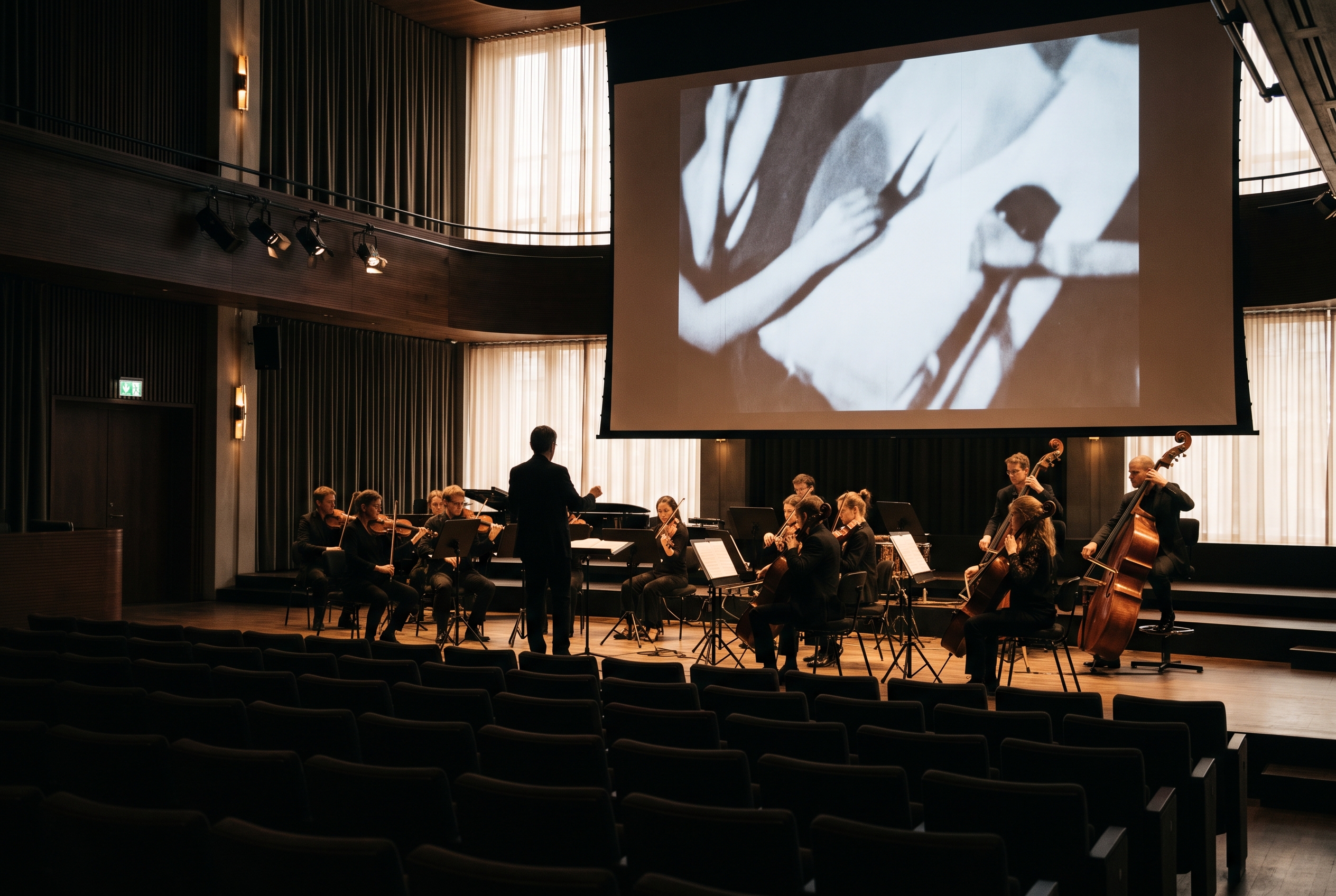
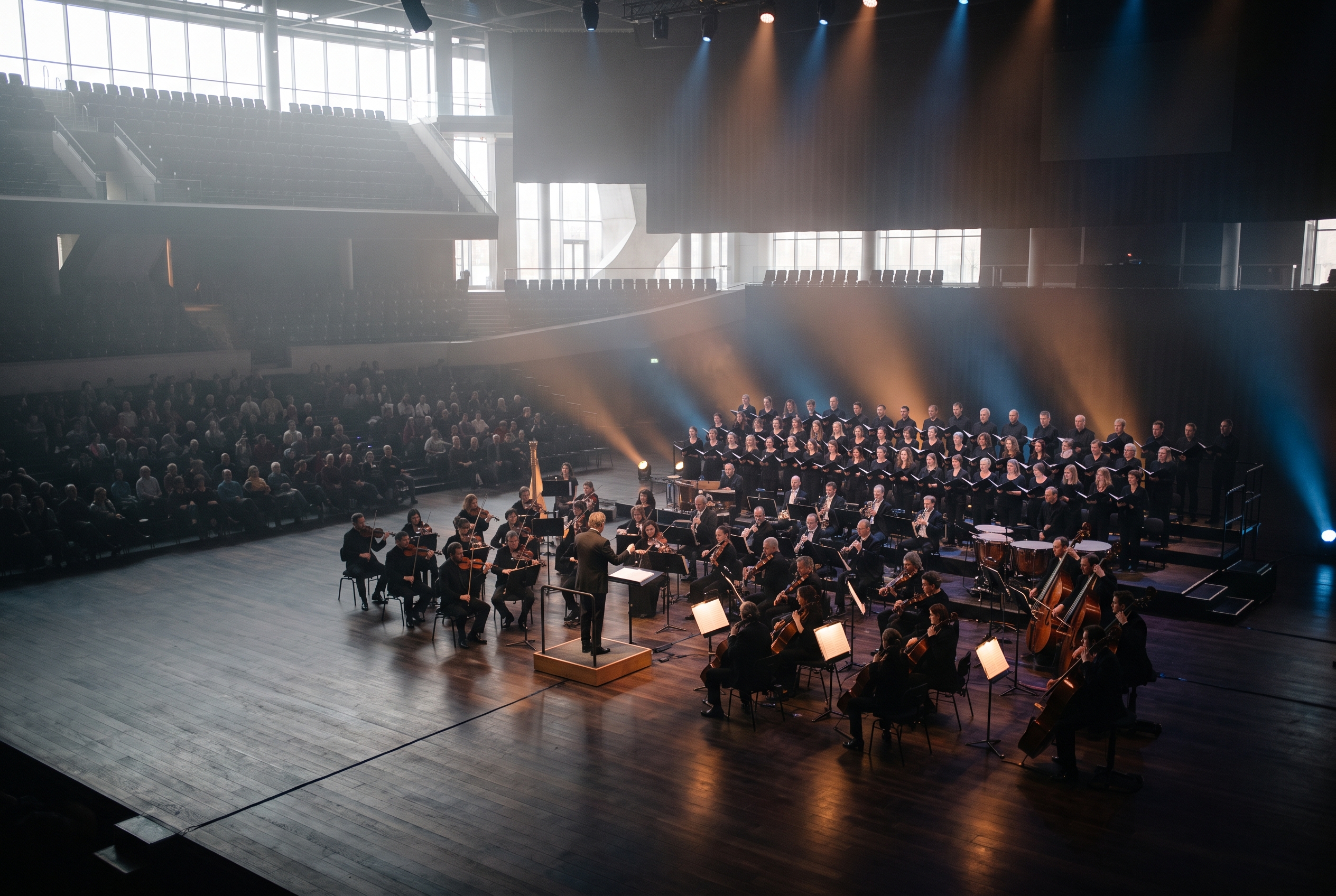
One of Charlie Chaplin’s best-known works will come to life in a concert hall setting in Budapest: according to the Müpa programme page, the screening of Modern Times will be accompanied by the Danubia Orchestra in the Béla Bartók National Concert Hall on 7 November 2026, conducted by Ábel Tompa. The film concert is not simply a cinema screening with orchestral accompaniment: it is a coordinated performance combining the moving image with music played on stage.
What makes the evening special is that the audience can follow Chaplin’s satire of an increasingly mechanised world while experiencing the musical accompaniment as it unfolds live. The film’s humour, social criticism and emotional moments are thus accentuated not by a recorded soundtrack, but by an ensemble performing in the same space as the audience.
What do we know about the Müpa film concert?
According to Müpa, the screening will take place in the Béla Bartók National Concert Hall, with the musical accompaniment performed by the Danubia Orchestra under conductor Ábel Tompa. Before the programme, film historian Márton Kurutz will give an introduction that may help place the work in the history of cinema and provide insight into its musical background.
According to the Jegy.hu programme page, the performance is part of Müpa’s SILENT – FILM – MUSIC series. The series title neatly sums up the essence of the format: the cinema screen and the concert stage do not operate alongside each other, but come together as a single performance.
Information about ticket prices has been published in varying levels of detail. The Mazsihisz event listing gives a price range of HUF 4,500 to HUF 10,900, while the Koncert.hu event page lists different categories and fees. Before making a purchase, it is therefore advisable to check current prices and available seats on Müpa’s programme and ticketing platform.
A film concert is more than a simple screening
In a conventional cinema, the film score is played as a recorded soundtrack, so it is heard in the same form at every screening. At a film concert, by contrast, the accompaniment is performed by live musicians who must follow the events on screen. The conductor’s role is not only to coordinate the orchestra, but also to maintain the timing between the music and the images.
This demands exceptional concentration from the musicians. A musical phrase linked to a gesture, cut or change of scene must be played at precisely the right moment, while the performance must remain natural and musically cohesive. What the audience primarily perceives is a more direct connection between image and sound.
The immediacy of a live performance also changes how the film is experienced. Viewers can not only follow the story, but also see and hear how the orchestra constructs the film’s emotional and rhythmic world. Even a familiar scene can acquire a different emphasis when its melodies and effects are performed with a symphonic sound in the acoustics of a concert hall.
Chaplin was more than a director and actor
Chaplin is most often associated with the Little Tramp, his distinctive movement and visual humour. Müpa’s programme description also draws attention to the defining role music played in his creative work. In the case of Modern Times, the film concert therefore does not add music selected afterwards to the images, but brings the work’s own musical world to the fore.
According to the AllEvents event description, the symphonic arrangement heard in the performance is based on music composed by Chaplin himself. This is significant because the melodies do more than create atmosphere: they connect the scenes, emphasise the comic rhythm and provide emotional direction even in passages where the characters do not communicate through conventional dialogue.
The film’s music can therefore be heard as an integral part of Chaplin’s storytelling. The lighter, playful motifs and more lyrical passages can reinforce the same contrast that appears in the story: set against an inhuman mechanical system are the protagonist’s vulnerability, humour and desire for connection.
The moment the Little Tramp finds his voice
Modern Times is usually associated with the silent-film tradition, but it also uses sound. According to Müpa’s description, Chaplin himself sings the gibberish-language number Nonsense Song (Titine) in the finale. The programme listing highlights this as the first time the Little Tramp’s voice is heard.
The scene’s significance lies not merely in the fact that sound can be heard in a work created primarily with the techniques of silent film. Chaplin allows his character to speak without tying him to any real language. The gibberish preserves the character’s internationally accessible humour: viewers can follow the situation through the performance, rhythm and gestures even though the words have no conventional meaning.
Why does Modern Times suit this format?
The film’s central theme is the tense relationship between humanity and a mechanised world. The rhythm of the assembly line, the repetitive movements and the pace of work that disciplines the body can themselves be perceived as musical organising principles. Live orchestral accompaniment makes this rhythm audible and can highlight how precisely Chaplin layers movement, editing and sound.
At the same time, the symphonic performance may enhance more than just the mechanical scenes. In quieter or more emotional passages, the music can provide a counterpoint to the turbulent world and bring the characters’ personal stories closer to the audience. This means the film concert may offer an experience that is not necessarily louder, but more richly detailed than a conventional screening.
The format can also provide an entry point for those who rarely attend symphonic concerts. The story unfolding on screen offers a framework for engaging with the music, while the sight of the orchestra reveals how many elements go into creating the film’s sonic world. Fans of classic cinema, meanwhile, can rediscover familiar scenes from a concert-hall perspective.
Practical information for the evening
- Date: 7 November 2026, according to Müpa’s programme page.
- Venue: the Béla Bartók National Concert Hall, according to Müpa.
- Film: Charlie Chaplin’s Modern Times, listed as a 1936 work on Müpa’s programme page.
- Performers: the Danubia Orchestra, conducted by Ábel Tompa, according to Müpa.
- Introduction: film historian Márton Kurutz, according to Müpa’s programme page.
- Series: SILENT – FILM – MUSIC, according to Jegy.hu.
The November performance offers a cinematic, concert-hall and film-historical experience in one evening. With a live orchestra, Chaplin’s visual humour and musical world may become more immediate, while the introduction can help the audience approach Modern Times not only as a classic comedy, but also as a carefully composed audiovisual work.
Sources used
- 1.Müpa Hivatalos Programoldalmupa.huverified
- 2.Jegy.hu Programoldaljegy.huverified
- 3.Koncert.hu eseményoldalkoncert.huverified
- 4.AllEvents Budapestallevents.inverified
- 5.Music of Our Desire Event Listingevents.musicofourdesire.com
- 6.Jegyvasarlas.com Programjegyvasarlas.com
- 7.TicketSwap Event Pageticketswap.com
These sources were used during our editorial fact check.