Pénzügy
ATM Cash Withdrawals Abroad: How to Avoid Costly DCC
Euronet was fined more than HUF 63 million over misleading ATM menus. The case also highlights the need to check ATM fees, the conversion method and the selected service when withdrawing cash.
2026-10-18 · 5 min read
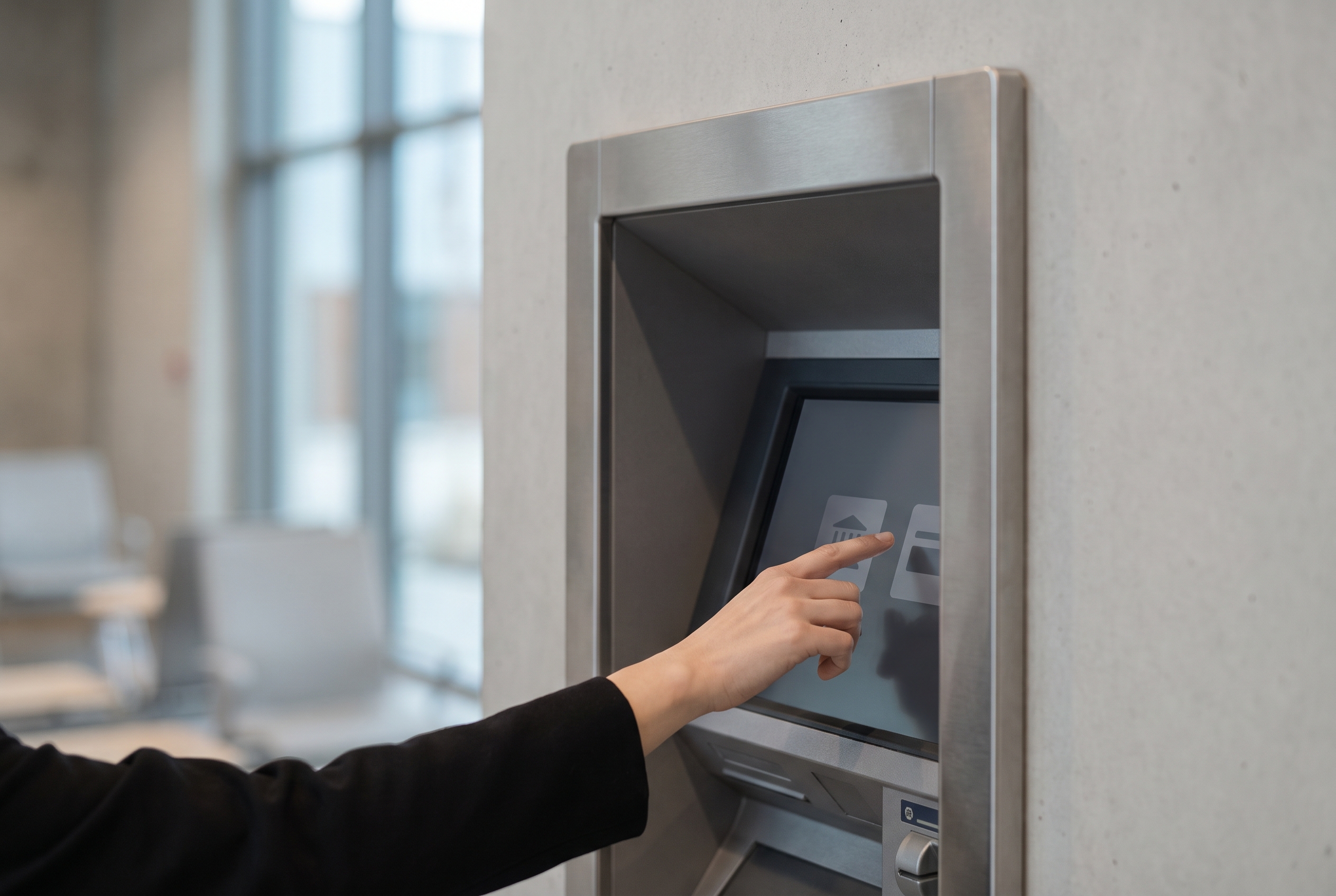
Using an ATM may seem straightforward, but the decisions presented one after another on the screen can significantly affect the final cost of withdrawing cash. This is particularly important abroad, where customers should check not only the amount they want to withdraw, but also the currency, exchange rate, any ATM fee and the selected service.
According to the Hungarian Competition Authority’s announcement of 14 October 2026, Euronet Banktechnikai Kft. was fined HUF 63,112,000. The case did not directly concern currency conversion, but it clearly shows why every ATM screen should be read carefully.
Why did the GVH fine Euronet?
According to the GVH, between 2023 and 2025 Euronet used a start-screen menu that could give the impression that cash could only be withdrawn together with a balance enquiry. When using the combined service, customers had to pay the fees for both services, while the option to withdraw cash on its own was available behind another menu item.
According to the authority, this arrangement was capable of steering users towards the more expensive option. The GVH also stated that the company admitted the infringement and changed its ATM menus in Hungary and several neighbouring countries.
In its own statement, Euronet acknowledged the decision. The company said it had used the previous combined “Cash & Balance” menu option for customer convenience and satisfaction, but had since updated the start screen.
ATM fees and conversion costs are not the same
The total cost of withdrawing cash may consist of several separate charges. The ATM operator may impose a fee, while the card-issuing bank may also charge for cash withdrawals or apply other costs. If the transaction currency differs from the account currency, the method of conversion also affects the final amount.
It is therefore impossible to determine the cost of the transaction solely from an apparently favourable exchange rate or a prominently displayed amount in forints. A separate fee charged by the ATM is usually shown before approval, while charges imposed by the customer’s own bank are determined by the terms of the account package.
Cancelling the transaction is not in itself a mistake. If the screen shows an unexpected fee, unclear wording or an unwanted service, it is advisable to go back and restart the transaction only after clarifying the terms.
What does DCC mean on an ATM screen?
DCC, or dynamic currency conversion, means that the ATM operator converts the transaction amount into the currency of the account linked to the card at the time of the cash withdrawal. In a eurozone country, for example, the ATM may offer to charge the amount immediately in forints rather than euros.
This may seem convenient because the customer can immediately see an amount in forints. According to information from the Hungarian National Bank, however, on-the-spot conversion may be significantly less favourable because of the exchange rate and markup applied than when the settlement is handled by the cardholder’s own bank.
When abroad, it is therefore generally advisable to choose to be charged in the local currency. In a eurozone country, this means euros; in Poland, zlotys; and in the Czech Republic, Czech korunas. An option showing a guaranteed or fixed amount in forints usually means accepting the ATM’s conversion offer.
Which button should you choose?
ATMs do not use standardised wording. The choice may be presented as a question about currencies, accepting an exchange rate, a conversion offer or a guaranteed amount. The key factor is therefore not the colour of the button or its position on the screen, but which option keeps the charge in the local currency of the cash being withdrawn.
- Look for the local currency: the ATM will then not convert the transaction into forints.
- The conversion offer can be declined: “decline conversion” generally means rejecting only the ATM’s own conversion, not cancelling the cash withdrawal.
- Read the final screen as well: the ATM may offer DCC again in another prompt.
- Check the separate ATM fee: choosing the local currency does not automatically remove any other fee charged by the operator.
Choosing the local currency does not mean the conversion will be free. The settlement rules of the card network and the bank that holds the account will apply, so customers should also check their own bank’s fee schedule and account package terms in advance.
The markup can help with comparison
According to the Hungarian National Bank’s information on European Union rules, before a transaction DCC providers must clearly display the percentage markup over the European Central Bank exchange rate for conversions between the relevant EU currencies. This figure shows how far the offered conversion differs from the rate used as the basis for comparison.
However, the markup does not necessarily represent every cost of the cash withdrawal. A separate ATM usage fee and bank fee may also apply, so the entire screen should be reviewed. If the terms are unclear, looking for another ATM may be the more prudent option.
A short checklist before withdrawing cash
Taking a few seconds to check the details can help prevent a quick cash withdrawal from becoming unnecessarily expensive. The following points are useful both at home and abroad:
- Look for an ATM in a trusted location, preferably one operated by or attached to a bank branch.
- Check the daily cash withdrawal and card limits before the transaction.
- Make sure the selected menu option includes only a cash withdrawal.
- When abroad, choose the local currency rather than forints for the charge.
- Before approval, review the separate ATM fee, conversion markup and charging currency.
- Keep the receipt or electronic confirmation, then check the posted transaction.
If the ATM does not dispense cash but a charge appears on the account, or if the amount settled differs from the amount approved, the customer should contact the card-issuing bank as soon as possible. In the event of a dispute, the receipt, ATM location, time and transaction details may assist the investigation.
An informed choice matters more than button order
The Euronet case showed that even the arrangement of menu options can influence consumer decisions. However, changing the interface and imposing a fine do not eliminate the need for individual checks: fees, conversion offers and banking terms may vary by ATM, country and account package.
The most important practical rule when withdrawing cash abroad is to look for the option to be charged in the local currency while also checking the ATM’s separate fee. This is general information, not personalised financial advice; before travelling, it is advisable to review your own bank’s current fees and foreign-currency settlement terms.
Sources used
- 1.Trükkös ATM-ek üzemeltetőjére csapott le a GVHgvh.huverified
- 2.Helyszíni átváltással drágább lehet a külföldi bankkártyahasználatmnb.huverified
- 3.Az Euronet közleménye a Gazdasági Versenyhivatal döntésével kapcsolatbaneuronetatms.huverified
- 4.3a. cikknek való megfelelésmnb.huverified
- 5.GVH Euronet ATM bírsághvg.huverified
- 6.GVH ATM Euronet büntetésvg.hu
- 7.DCC útmutatóbiztosdontes.hu
These sources were used during our editorial fact check.