
Film
Johnny Depp as Scrooge: what critics say of Ebenezer
Johnny Depp plays Scrooge in Ti West’s new Dickens adaptation, according to the Paramount+ overview. The trade press frames the release as a studio comeback, while reviews weigh the story’s originality alongside its sombre atmosphere.
2026-11-13 · 5 min read
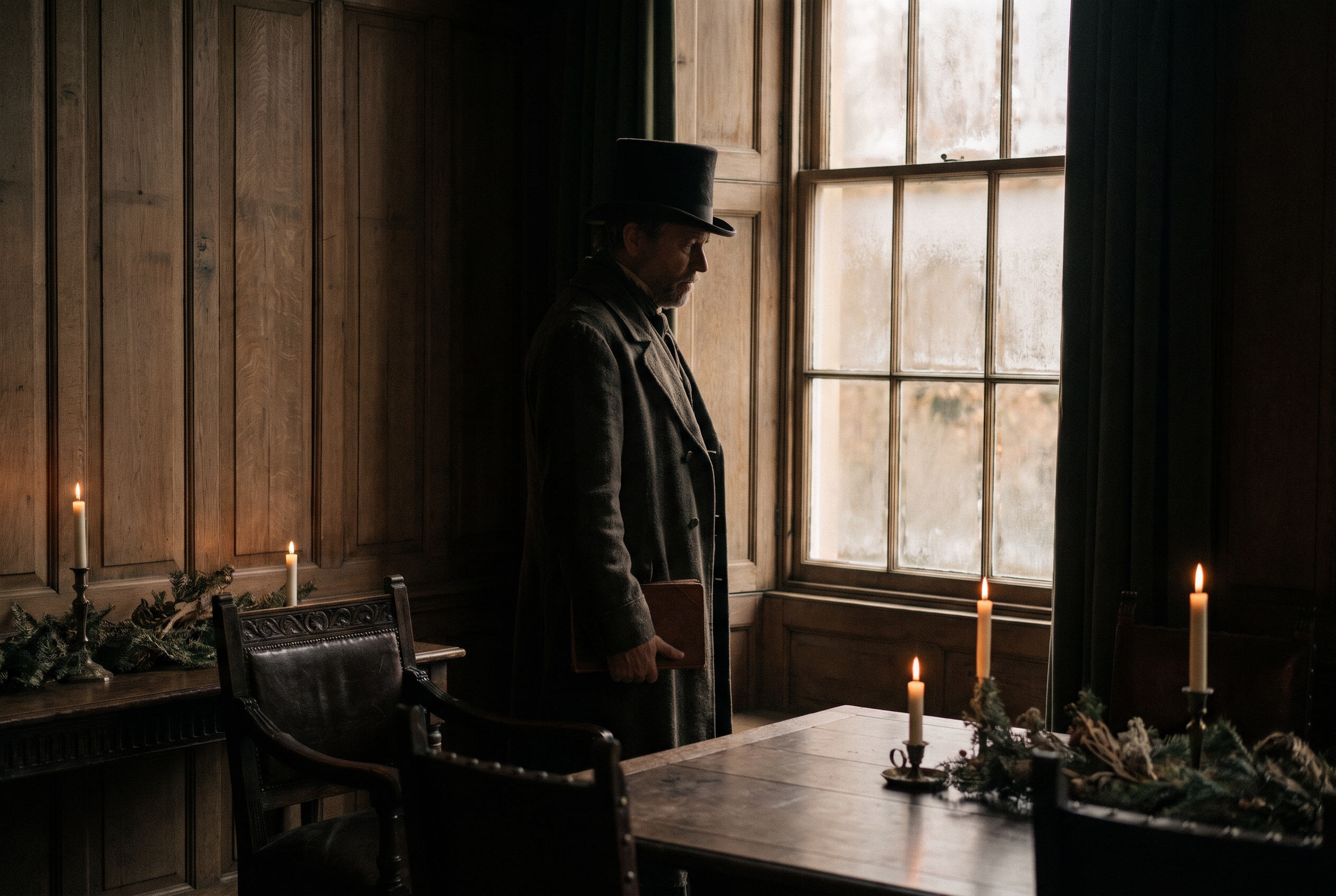
Johnny Depp appears as Ebenezer Scrooge in Ti West’s Ebenezer, according to the Paramount+ overview. Screen Daily discusses the Dickens adaptation as a comeback for the actor, while TheWrap’s review focuses on how much this darker version has to offer that is new. The release therefore brings together two separate questions: what does this leading role mean for Depp’s career, and how does the new A Christmas Carol work as a film in its own right?
A familiar story with a prominent leading role
According to the Paramount+ overview, Ebenezer is based on Charles Dickens’s A Christmas Carol, with a screenplay by Nathaniel Halpern and direction by Ti West. The same overview names Depp as Scrooge. The creative team and literary source establish the film’s starting point, but do not in themselves reveal what kind of experience the adaptation offers.
A new adaptation of a familiar story does not necessarily need to surprise viewers with its plot. Presenting a character in a different light, deepening a relationship or shifting the emotional emphasis can be just as important. The question is whether the new version has a recognisable perspective of its own.
Depp’s involvement can also be considered separately. A leading actor’s presence may attract interest, but the film must also work for viewers who are not watching it as the next chapter in an acting career. The significance of the casting cannot replace clarity, rhythm and emotional strength in the storytelling.
What does a studio comeback mean?
Screen Daily’s UK and Ireland cinema release preview presents Ebenezer as Depp’s comeback, reporting that Paramount is releasing the film in cinemas across the territory. This interpretation places the leading role in the context of the actor’s career. It does not, however, amount to a claim that the film has already achieved artistic or commercial success.
In this case, the comeback is primarily an industry framing: it draws attention to the significance of a studio film in Depp’s career. Assessing a performance, however, calls for different questions. How consistent is the character, is his inner transformation apparent, and does the performance fit the director’s overall approach?
These two perspectives need not be set against each other, but they are worth keeping separate. A film can be an important career milestone even if its storytelling divides opinion. Equally, the value of a convincing performance is not determined solely by the expectations surrounding the release.
The cast extends beyond Depp
The Paramount+ cast overview lists Rupert Grint as Bob Cratchit and Ian McKellen as Jacob Marley. The studio’s information also names Andrea Riseborough as the Ghost of Christmas Past and Tramell T. as the Ghost of Christmas Present. The cast list indicates that several familiar figures from Dickens’s story appear in the adaptation.
In a story built around its protagonist’s transformation, supporting characters do more than surround the central figure. His encounters with them can reveal how he relates to others and what might move him away from his habitual behaviour. The interplay between performers can therefore be at least as interesting as individual acting moments.
The casting alone, however, does not establish how successfully this works. A list of familiar names tells us who is involved, but offers no assessment of how the scenes play out. The film’s test is whether these figures form genuine relationships or merely move the plot forward.
A darker atmosphere does not necessarily mean a new approach
TheWrap’s review discusses Ebenezer as a dark-toned Dickens adaptation, while judging that it offers no substantial innovation in its storytelling. This is the publication’s critic’s assessment, not a general audience view. It highlights a distinction that matters when assessing a new adaptation: changing the atmosphere is not the same as reinterpreting the story.
A sombre atmosphere can serve a dramatic purpose if it helps us understand a character’s fears, withdrawal or decisions. Visuals that make an inner state tangible have a different effect from those that merely provide a consistent backdrop. A darker tone should therefore be regarded as neither a virtue nor a flaw in itself.
Originality does not necessarily require rewriting familiar plot turns, either. A differently structured scene, a more nuanced relationship or a more consistent perspective can give the same source material new meaning. TheWrap’s reservations can be read in this light: the criticism questions not simply the familiarity of the story, but the added value of the adaptation.
What kind of Scrooge did the AP critic see?
The Associated Press review describes Depp’s portrayal of Scrooge as sombre and closed off. The AP’s assessment thus suggests a more inward-looking figure. This is a critic’s impression of a performance, and does not mean that every viewer will feel the same distance from the character.
When assessing a restrained performance, it can be important to consider how much inner activity is perceptible behind the limited gestures. Silence can be expressive if the scene makes its meaning clear. In other circumstances, the same restraint may make it harder for viewers to connect with the character.
Examining a portrayal of Scrooge therefore involves more than measuring its sombreness. It also matters how the character’s presence changes, when he allows glimpses of his feelings, and how believable the transitions between his different states are. These considerations can help readers interpret both enthusiastic and dismissive reviews more precisely.
A release preview is not a box-office result
The cited Screen Daily article previews the UK and Ireland cinema release; it is not a box-office report covering a completed weekend. A report on distribution therefore cannot automatically be read as evidence of actual admissions or financial success. A cinema release creates an opportunity to reach audiences; the outcome is a separate question.
The same applies to the relationship between reviews and audience reception. A critical assessment is no substitute for box-office figures or aggregated audience ratings. The film’s artistic reception, ticket sales and the course of Depp’s career may be connected, but they cannot be combined into a single, definitive label of success.
The film must work beyond the comeback narrative
The Paramount+ overview foregrounds the filmmakers and cast, Screen Daily emphasises Depp’s comeback, and the reviews from TheWrap and the Associated Press assess the adaptation and the performance. These address different questions. Ultimately, the most important test for Ebenezer is whether, beyond the attention surrounding its leading actor, it can create a compelling story in its own right — one in which the sombre atmosphere deepens the human transformation rather than replacing it.
Sources used
- 1.Ebenezer: Everything You Need to Knowparamountplus.comverified
- 2.UK-Ireland box office preview: Johnny Depp's comeback Ebenezer out in 634 cinemasscreendaily.comverified
- 3.Ebenezer Review: Johnny Depp Stars in Dark Christmas Carol Adaptationthewrap.comverified
- 4.Movie Review: Ebenezerapnews.comverified
- 5.Ebenezer (2026 film)en.wikipedia.orgverified
These sources were used during our editorial fact check.