Figyelmeztetések
Fake parcel notifications: check texts before you pay
Received a text promising parcel tracking or an unexpected cash-on-delivery parcel? Following a seasonal warning from Budapest police, we explain what to check before sharing your details or paying.
2026-11-24 · 4 min read
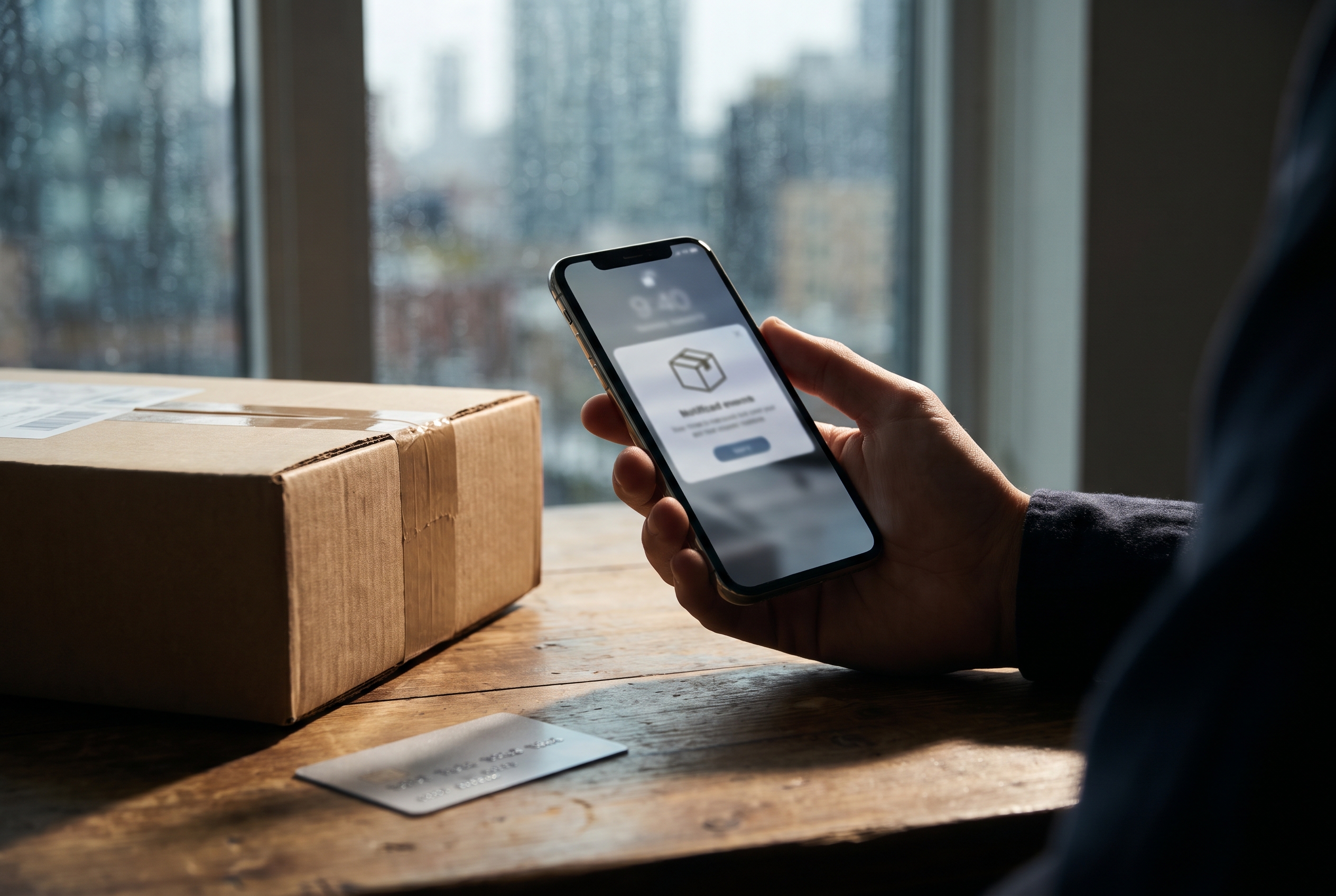
A parcel notification asks you to update your address or pay a small delivery fee, then requests your payment card details: this is a tactic used by scammers, according to a police warning. If you are expecting a parcel, start with your own order rather than the message: first establish whether the notification actually relates to it.
On 23 November 2026, Budapest Police Headquarters warned about scams impersonating delivery companies during the Black Friday and Christmas shopping period. It is worth organising your checks around two situations: when a message asks for information or payment, and when a courier brings a cash-on-delivery parcel you cannot identify.
Do not provide payment card details under the guise of parcel tracking
According to the police, scammers try to obtain payment card details and CVC codes by claiming that delivery information needs updating or a small fee must be paid. The CVC is your card's security code, not your parcel reference number. When checking a request, look not only at how much money is being requested, but also at what information you are being asked to provide.
According to Magyar Posta, the company does not request delivery addresses or other personal information by text or email, because the online shop passes the details provided at checkout to the delivery company. If a message claiming to be from Magyar Posta nevertheless urges you to supply such information, pause and investigate the delivery independently of the message.
Start with your order confirmation, not the text message
Do not try to judge whether a message is genuine or fake in isolation. Compare it with what you already know about your purchase: which shop you ordered from, which delivery option you chose and whether anything remains to be paid. This way, an urgent demand will not dictate your next step.
- Find your order. Check your customer account or the confirmation you received earlier to see which parcel you are expecting.
- Compare the details. Check whether the delivery company mentioned, the tracking number and the payment method match your order.
- Use a separate route to check. Open the delivery company's website or app that you already know, rather than following the link in a suspicious text.
- Clarify any discrepancy. If something does not match, contact the retailer or delivery company using customer service details you already know.
It is worth asking the same questions even when you genuinely are expecting a parcel. Having ordered something does not automatically connect a particular text message to that purchase. The aim is to match any request for payment or information to your own verifiable order history.
Check the sender and cash-on-delivery amount at the door
According to the police warning “Have you accepted a parcel you never ordered?”, scammers also send cash-on-delivery parcels that recipients have not ordered and that may contain worthless items. The police advise you not to accept or pay for an unordered cash-on-delivery parcel from an unknown source.
Before paying, establish who sent the parcel, how much is being requested and who placed the order. If you cannot answer these questions, do not treat the parcel's arrival as proof of a purchase. You can tell the courier that you cannot identify the parcel and therefore do not wish to accept it.
- Did you actually choose cash on delivery? Check which option you selected when buying and whether you have already paid in advance.
- Does the amount match? Compare it with the total in your order confirmation rather than relying on memory.
- Do you recognise the sender? If you cannot connect the sender to your order, check with the retailer first.
- Did someone else in your household order it? Ask before paying, rather than trying to work it out afterwards.
Arrange receipt with family members and neighbours in advance
In the same guidance, the police also highlight the importance of making arrangements in advance: relatives and neighbours should not accept unexpected cash-on-delivery parcels on your behalf without checking with you. Let anyone helping you receive deliveries know which parcel you are expecting and whether they will need to pay for it.
You can make a short list of orders still on their way, including the retailer's name and the payment method. There is no need to share payment card details or other sensitive information: the aim is to identify the parcel when arranging for someone to receive it. You can also agree to call each other first if anything is unclear.
Do not assume you can get your money back after opening the parcel
According to Magyar Posta, the service provider cannot withhold a cash-on-delivery payment it has collected without a decision from the police or another competent authority. Do not therefore pay on the assumption that you can simply ask the delivery person for the money back after checking the parcel's contents. Clarify the order and the cash-on-delivery payment before handing over any money.
If you have already paid for a suspicious parcel, keep the packaging, label, payment receipt and related messages. You can use these documents when seeking information from the delivery company and, if you suspect fraud, the police. This is general information, not personalised legal or financial advice; the circumstances of each case need to be examined individually.
An unsolicited parcel is not the same as a phishing message
According to KiberPajzs, one possible explanation for unexpected parcels is a practice known as brushing: cheap goods are sent to real addresses in an attempt to artificially increase customer activity and reviews. This is not the same as a phishing text demanding payment, and an unfamiliar parcel alone does not establish which method is involved.
What matters more than the label is what you are being asked to do: provide information, pay online or make a cash-on-delivery payment. Before doing any of these, return to your own order and verify the request through a separate channel. If you cannot identify the parcel, follow the police advice and do not pay for it simply because it is already at your door.
Sources used
- 1.Gyanús csomagok lépik el az országotkiberpajzs.huverified
- 2.Adathalász levelet és SMS-t küldenek a Magyar Posta nevébenposta.huverified
- 3.A Posta nevét felhasználva támadnak a csalókpolice.huverified
- 4.Mátrix Projekt - Csomag csaláspolice.huverified
- 5.Átvett egy meg sem rendelt csomagot?police.huverified
- 6.Egyre több a csomagos átveréshazipatika.com
- 7.Kamucsomag – újabb csalási módszerpolice.hu
These sources were used during our editorial fact check.
Related Articles

Zene és Koncert
André Rieu Budapest 2027: concert and ticket information
2026-11-22 · 4 min read
Digitális praktikumok és tudatosság
Free up phone storage without losing important files
2026-11-18 · 5 min read

Közlekedés és Határidők
Green number plate replacement by 30 November: costs
2026-11-17 · 5 min read