
Tudomány & Életmód
Full Moon and Saturn conjunction this weekend
On the first weekend of astronomical autumn, a striking celestial pair will appear: the Full Moon and Saturn will be seen close together in the eastern sky. The event can be observed with the naked eye, but binoculars or a small telescope may reveal even more.
2026-09-26 · 5 min read
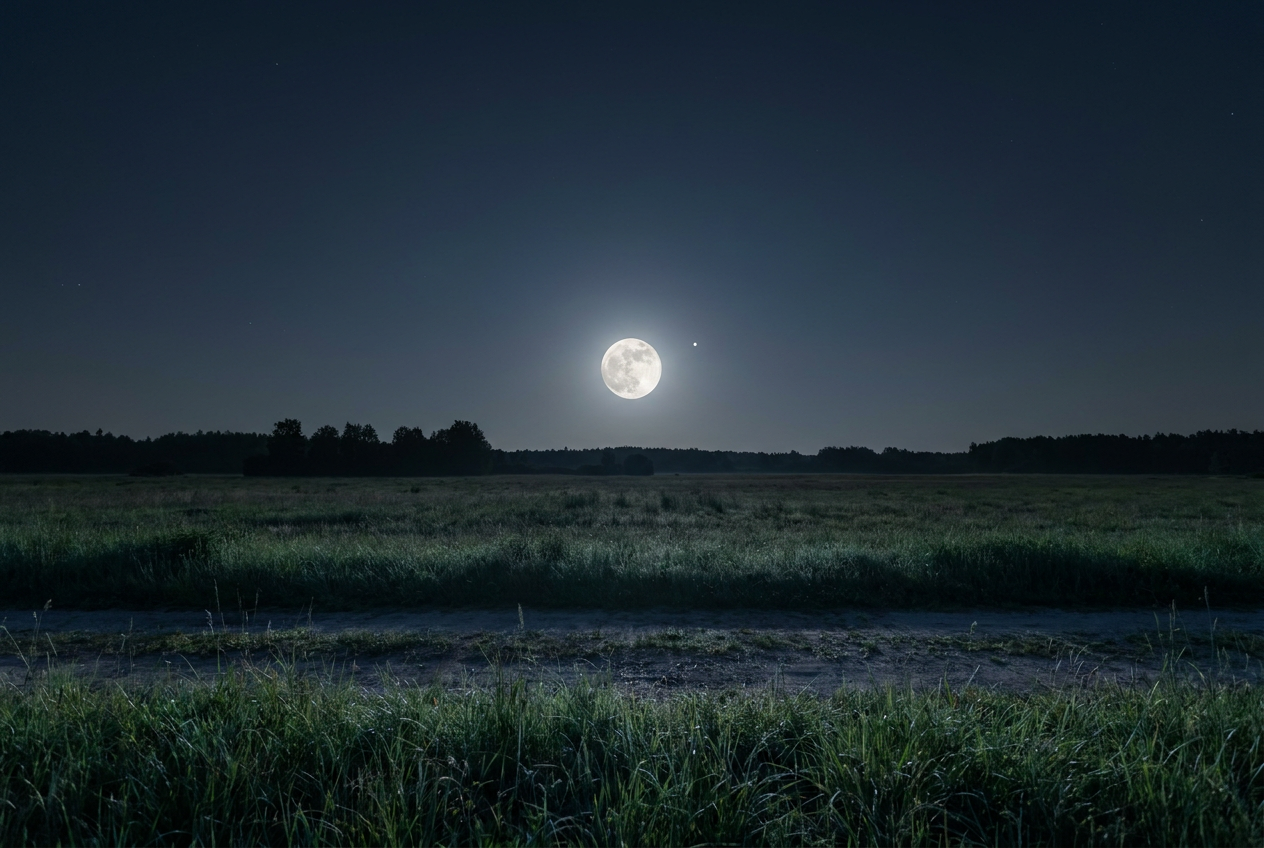
At the end of September, it is worth looking up at the sky for more than just the change of season. On the first weekend of astronomical autumn, the Full Moon and Saturn will appear noticeably close to each other in the eastern sky. This could be a good opportunity even for those who rarely look up at the night sky deliberately to spend a short evening observing it.
The event is particularly rewarding because it can be observed without any special equipment. The Moon will be easy to find, and Saturn will appear nearby, so there is no need to prepare with a complicated star chart for someone to end the evening with a quick sense of success. In clear weather, just a few minutes of attention may be enough for the striking closeness of the two celestial bodies to stand out clearly.
Autumn’s first striking celestial pair
According to the Svábhegy Observatory’s information on September sky events, astronomical autumn began on 23 September 2026 at 02:05. The first weekend after the change of season is therefore already a good opportunity to observe the evening sky, and the closeness of the Full Moon and Saturn makes this period even more interesting.
The September full moon is referred to in some places as the Harvest Moon. It is already a striking sight in itself, and Saturn’s proximity also helps make the weekend sky easier to interpret for those who are not experienced observers.
When is the best time to watch the event?
According to a report by National Geographic Hungary, on 26 September the moonrise time of the full moon varies by region: near the eastern border it appears at around 18:01, in Budapest at 18:12, and in the west at around 18:22. The same report also notes that for a short time it will be possible to see both the light of the setting Sun in the west and the rising Full Moon in the east at the same time.
According to Időkép, Saturn rises roughly 40 minutes after the Moon. In practice, this means that the exact moment of moonrise will not necessarily be the best time, but rather the period afterwards, when the planet is somewhat higher above the horizon and easier to distinguish from haze or bands of cloud.
Where should you look in the sky?
It is mainly worth watching the eastern sky. According to the Hungarian Astronomical Association’s September sky calendar, Saturn is visible in the constellation Pisces, and at the end of September it can be observed well throughout the night.
According to the Svábhegy Observatory, at the time of the conjunction Saturn will be positioned down to the left of the Moon. It may be noticeable even with the naked eye, but it will be much fainter than the Moon, so it helps a great deal if the observation is made from a place where there are no buildings, trees or strong city lights in front of the eastern horizon.
How close will the two celestial bodies appear?
The conjunction does not mean that the Moon and Saturn actually come close to each other in space, but that from Earth they appear next to each other. According to the Svábhegy Observatory, Saturn will appear 7.5 degrees from the Moon, while according to Időkép’s report, on Saturday evening the distance may be around 8 degrees, decreasing to close to 6 degrees by dawn on Sunday.
The two figures do not necessarily refer to the same moment or the same observational estimate. The key point is that Saturn will appear noticeably close to the Full Moon, making it relatively easy to find.
Visible with the naked eye, but equipment may reveal more
One of the biggest advantages of this weekend’s event is that it does not require any special equipment. The Moon will of course be very striking with the naked eye, and Saturn can also be found next to it as a bright, steady point of light.
With binoculars, it becomes easier to distinguish the planet from the surrounding stars, while with a small telescope Saturn’s characteristic ringed appearance may also become noticeable. At the same time, the Moon’s strong light can make it harder to detect fainter objects, so when searching for the planet it is worth watching patiently and allowing a few minutes for your eyes to adapt to the darker surroundings.
Another possible target: Neptune
For those who have binoculars or a telescope, the weekend may also offer another point of interest. According to the Svábhegy Observatory, Neptune reaches opposition on 26 September at 03:26, meaning it enters a position in which observing it is particularly favourable.
According to the information, the planet can be sought in the constellation Pisces, in the area of the Full Moon and Saturn. It is generally not easy to identify with the naked eye, but with optical equipment it may be an exciting additional target for more experienced observers.
How can you improve your chances of observation?
The most important thing is a clear eastern horizon. A hilltop, lakeshore, field edge or open area outside the city is often a better choice than a densely built-up city-centre location. The Moon will still be easy to notice, but when trying to spot Saturn it makes a big difference how much trees, houses and light pollution interfere with the view.
It is worth arriving at the chosen location a few minutes earlier so there is time to adapt to the darkening surroundings. A simple pair of binoculars can help a lot, but the event will remain enjoyable even without them. A phone sky map may also be useful, although with this pair it probably will not be strictly necessary.
Before setting off, it is advisable to check the local forecast, because cloud cover and haze can change even over a short period of time. An area with a clearer sky even a few kilometres away may offer a much better view than a less favourable urban spot.
It may also be worth looking up again on Sunday evening
Anyone who misses the Saturday evening observation still has a good chance of finding a striking sky on Sunday evening. The Moon will remain conspicuous, and Saturn can still be sought nearby, so the atmosphere of the conjunction is not limited to a single short time window.
For those who enjoy photography, this period may be especially interesting. The rising Moon together with an open landscape can create a particularly striking composition, especially where there is no distracting foreground or strong artificial light.
This weekend’s Full Moon–Saturn conjunction is a good reminder that a striking celestial experience does not necessarily require a rare eclipse or meteor shower. A clearer evening, an open eastern horizon and a few minutes of patience may be enough. And anyone who spends longer under the sky after looking at the Moon may also try searching for Neptune as well as Saturn.
Sources used
- 1.Svábhegyi Csillagvizsgáló – Szeptemberi égi jelenségek (2026)svabhegyicsillagvizsgalo.huverified
- 2.Svábhegyi Csillagvizsgáló – A Neptunusz oppozícióbansvabhegyicsillagvizsgalo.huverified
- 3.Időkép – Vendége is lesz a szeptemberi teliholdnakidokep.huverified
- 4.Magyar Csillagászati Egyesület – Égi kalendárium: 2026. szeptembercsillagaszat.hu
- 5.Vasárnap.com – Különleges telihold jön szeptemberbenvasarnap.com
- 6.Agrárszektor – Ami szombaton jön Magyarországon, arra jó, ha mindenki felkészülagrarszektor.hu
These sources were used during our editorial fact check.